
 England
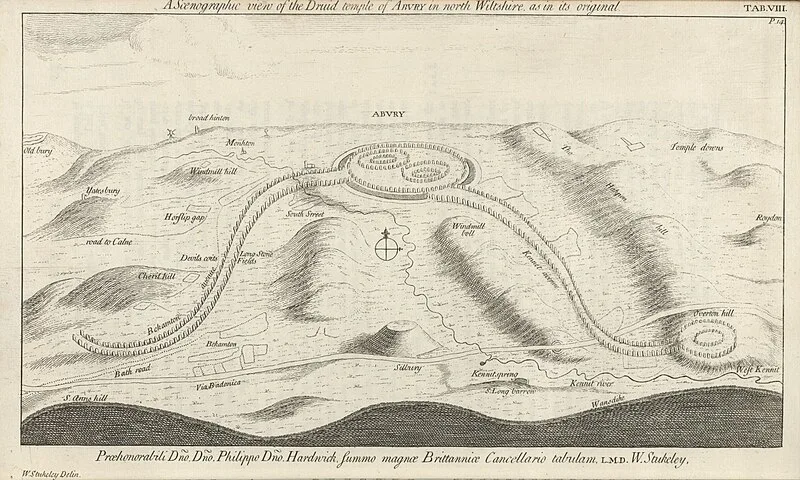
The Beckhampton Avenue was a curving prehistoric avenue of stones that ran broadly south west from Avebury towards The Longstones at Beckhampton in the English county of Wiltshire [1]. It probably dates to the late Neolithic and early Bronze Age [1]. Only one stone, known as "Adam", remains standing and even in William Stukeley's time there was little evidence on the surface of the avenue [1]. The other stones were probably broken up and sold by local landowners in the post-medieval era [1]. Excavations by the University of Southampton in 2000, however, revealed the parallel rows of holes that held the stones [1]. 120 metres of the avenue was uncovered and indicated that the avenue consisted of a double row of stones placed at 15 metres intervals in a similar pattern to those at Kennet Avenue [1]. Before the avenue was built, the site was host to an earlier Neolithic causewayed enclosure [1].
Text: Wikipedia – 'Beckhampton Avenue' (revision of 2026-07-16), CC BY-SA 4.0 · sentences selected and shortened by an AI system · source →Beckhampton Avenue
Also known as: Avenida Beckhampton, Avinguda Beckhampton, שדרת בקהמפטון, ベックハンプトン・アヴェニュー
| Type | Road/avenue/trackway |
|---|---|
| Period | 3000 - 1500 BC |
| Country | England |
| Coordinates | 51.4251° N, 1.8700° W |