
 England
Marden Henge is the largest Neolithic henge enclosure discovered to date in the United Kingdom [1]. The monument is north-east of the village of Marden, Wiltshire, within the Vale of Pewsey and between the World Heritage Sites of Avebury and Stonehenge [1]. Antiquarian accounts of the site describe a huge mound within the enclosure called Hatfield Barrow [1]. Many antlers and a human skeleton were found during excavations at the site, which may have had some ceremonial significance [1]. A record in 1776 stated that Hatfield Barrow was approximately 30 feet tall and was surrounded by a huge trench that tilted outward, indicating that the mound was not used for military defence purposes [1]. The area was designated as a scheduled monument in 1953 [1]. The site was excavated by Geoff Wainwright in 1969; he excavated the north entrance and found a timber circle, and Grooved ware pottery, similar to Durrington Walls [1].
Text: Wikipedia – 'Marden Henge' (revision of 2026-07-27), CC BY-SA 4.0 · sentences selected and shortened by an AI system · source →Marden Henge
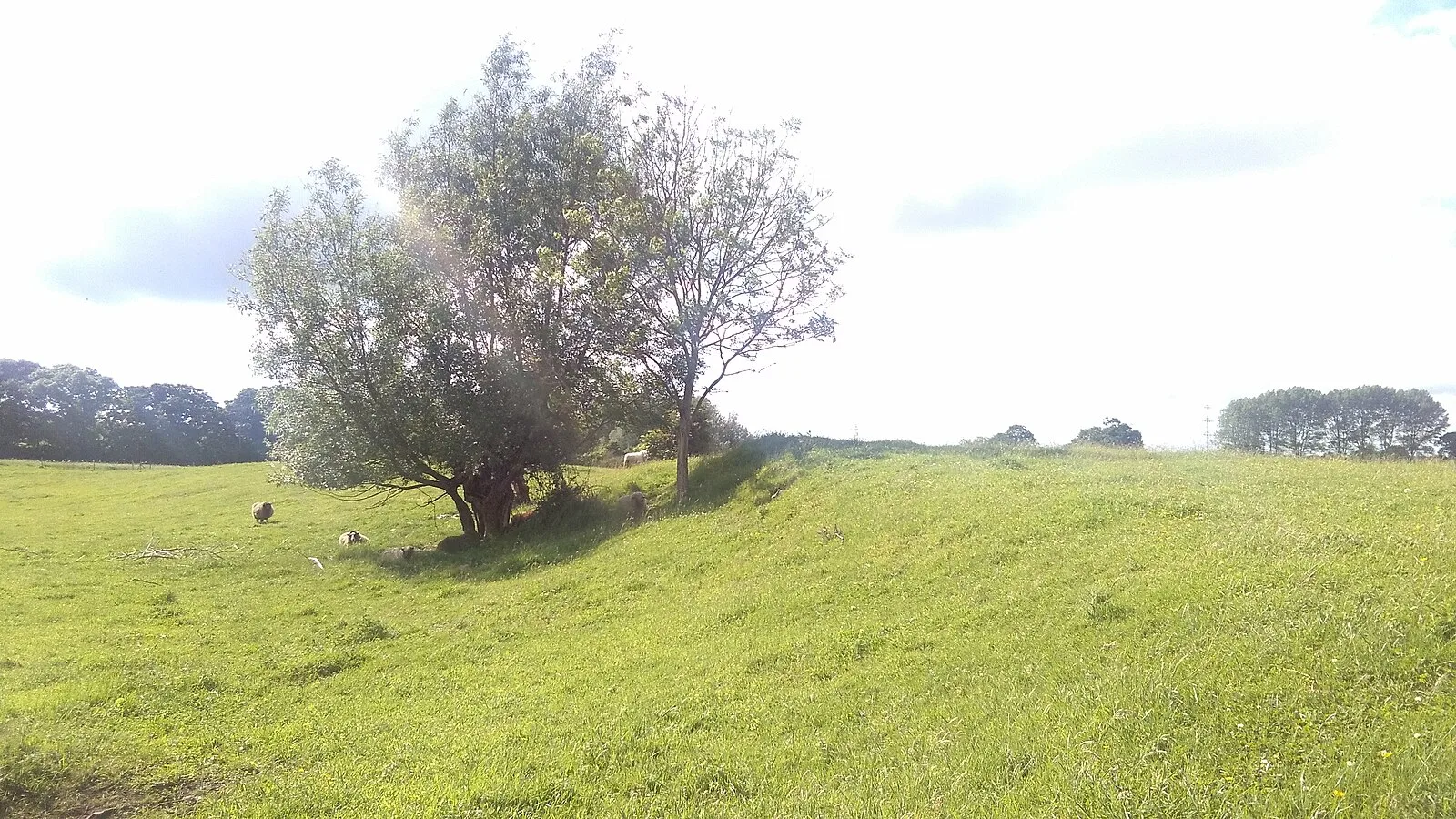
Also known as: Henĝo Marden, The Hatfield Earthwork: a henge enclosure, henge and remains of monumental mound at Marden, マーデンヘンジ, 馬登圓
| Type | Henge |
|---|---|
| Period | 3000 - 1500 BC |
| Country | England |
| Coordinates | 51.3235° N, 1.8712° W |