
 England
A 3rd-4th century AD courtyard villa near Rudston in East Riding of Yorkshire, first excavated in 1839. Notable for outstanding mosaics including the Venus Mosaic (discovered 1933) depicting animals labeled 'TAVRVS OMICIDA' (man-killing bull) and the Charioteer Mosaic (c. 325-350 AD) showing a four-horse chariot. Built from local chalk blocks and imported sandstone, the villa included a bath house with the Aquatic Mosaic in its changing room. Mosaics attributed to a northern Roman school centered at York. All mosaics now displayed at Hull and East Riding Museum since 1963.
Rudston Roman Villa
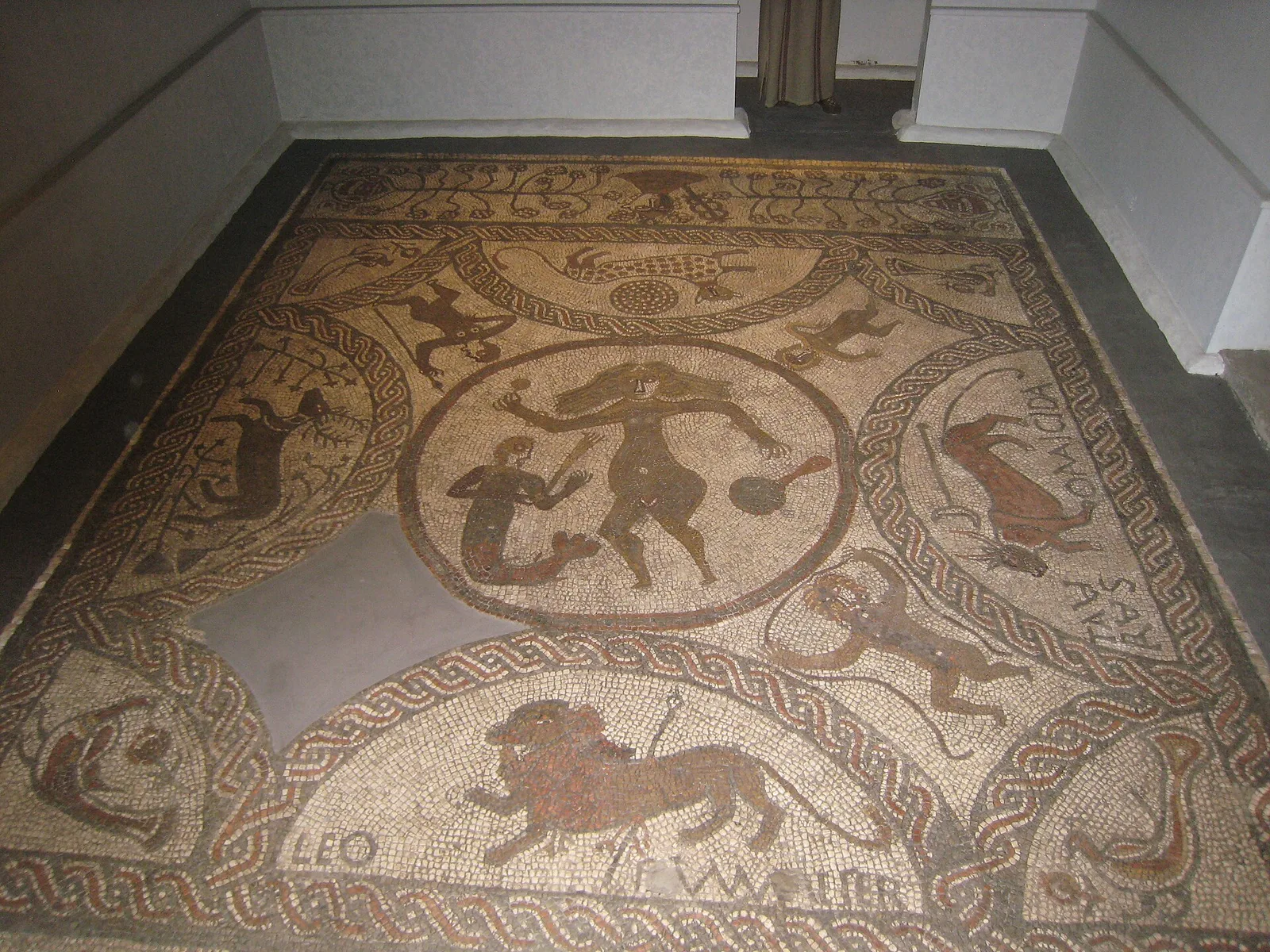
Also known as: Rudston villa, Villa rustica (Rudston)
| Type | Residence/villa/farmhouse |
|---|---|
| Period | 1 - 500 AD |
| Country | England |
| Coordinates | 54.0850° N, 0.3361° W |