
 England
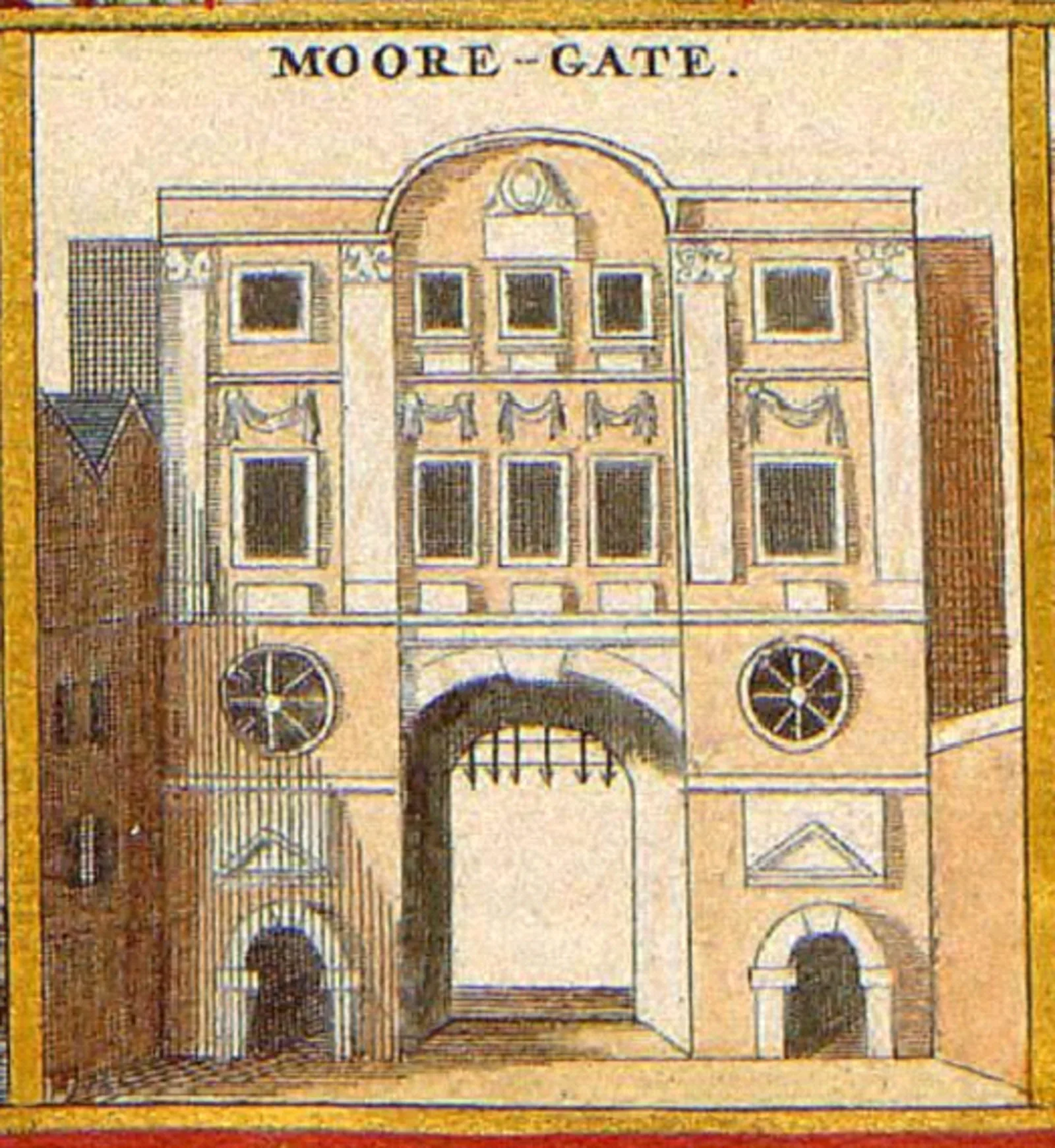
Moorgate was one of the City of London's northern gates in its defensive wall, the last to be built [1]. The gate was demolished in 1762, but gave its name to a major street, Moorgate [1]. The earliest descriptions of Moorgate date from the early 15th century, where it was described as only a postern in the London city wall [1]. Located between Bishopsgate and Cripplegate and leading to a marshy open space known as Moorfields, it was not one of the larger or more important of the city gates [1]. In 1415 an ordinance enacted that the old postern be demolished [1]. It was replaced with a newer and larger structure located farther to the west, which included a wooden gate to be shut at night [1]. This gate was enlarged again in 1472 and 1511, and then damaged in the Great Fire of London in 1666 [1]. Although the City gates had ceased to have any modern function apart from decoration, it was replaced along with Ludgate, Newgate, and Temple Bar with a stone gate in 1672 [1].
Text: Wikipedia – 'Moorgate' (revision of 2026-09-01), CC BY-SA 4.0 · sentences selected and shortened by an AI system · source →Moorgate
Also known as: Moorgate Street, Murgeyt, Моргейт, Мургэйт, მურგეიტი, مور گیٹ, مورگیٹ, মুরগেট, ムーアゲート, 沼泽门, 沼澤門
| Type | Gate/archway/bridge |
|---|---|
| Period | 1000 - 1500 AD |
| Country | England |
| Coordinates | 51.5177° N, 0.0887° W |