
 England
Lavatrae, also known as Lavatris, was a Roman fort in the modern-day village of Bowes, County Durham [1]. The Romans built a fort with wooden ramparts at Lavatrae in the early AD 70s, after an invasion of the region by Governor Petilius Cerealis [1]. It was intended as a waypoint on the northern leg of the Roman equivalent of Watling Street in the section connecting Luguvalium (Carlisle) to Eboracum (York) and points south [1]. It guarded the eastern entrance to the Stainmore Pass through the Pennines, overlooking the River Greta [1]. Stone walls were built around the site in the 130s, and an external settlement called a vicus was constructed to the north of the fort, with a bathhouse to the south-east [1]. The bathhouse was 30 by 20 feet, tiled and appears to have been destroyed in a fire, and then rebuilt [1]. The Cambridge Museum of Archaeology has a stone altar from the bathhouse, erected by the 1st Cohort of the Thracians [1]. Only earthworks and the parts of the stone walls of the bathhouse survive in the 21st century [1].
Text: Wikipedia – 'Lavatrae' (revision of 2026-07-19), CC BY-SA 4.0 · sentences selected and shortened by an AI system · source →Lavatrae
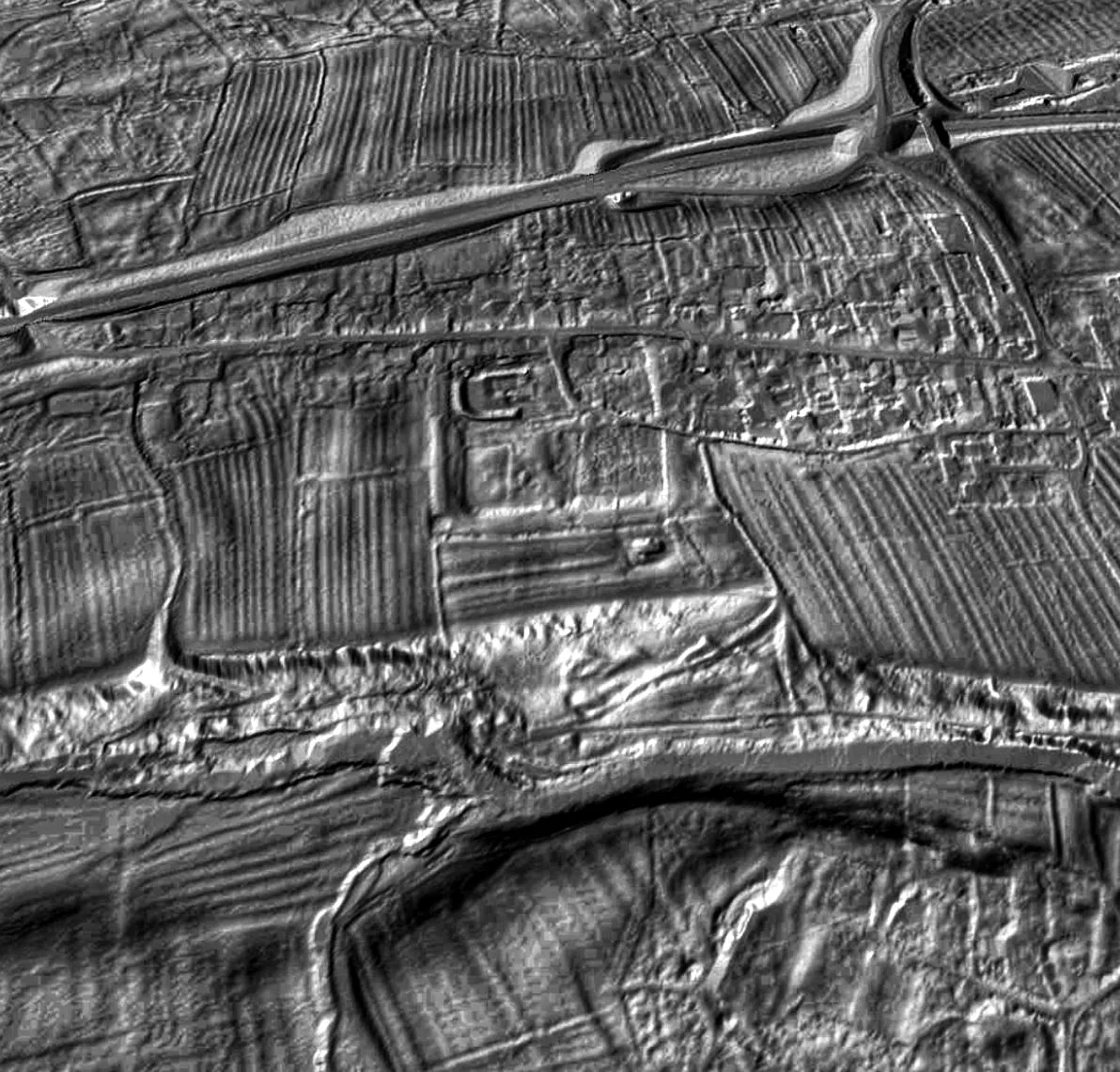
Also known as: Lavatrae Roman Fort, Lavatris
| Type | Fortress/citadel |
|---|---|
| Period | 1 - 500 AD |
| Country | England |
| Coordinates | 54.5168° N, 2.0135° W |