
 England
Vinovia or Vinovium was a Roman fort and settlement situated just over 1 mile to the north of the town of Bishop Auckland on the banks of the River Wear in County Durham [1]. The fort was probably established around AD 79 to guard the crossing of the River Wear by Dere Street, the main Roman road between York, Hadrian's Wall and Scotland [1]. Sitting atop a hill 15 metres above the Wear, Binchester was the largest Roman fort in County Durham [1]. Archaeologists found four coins of Vespasian that seem to corroborate that initial building was related to Agricola's march northward into the territory of the Brigantes [1]. The cuneus Frisorum Vinoviensium and the equites catafractariorum have been mentioned in inscriptions from the site [1]. By the early 6th century, a small Anglo-Saxon cemetery had been founded, and the demolition of the fort's buildings for reclamation of the materials had started, some of which were eventually used in the construction of the nearby 7th-century Escomb Church [1].
Text: Wikipedia – 'Vinovia' (revision of 2026-08-21), CC BY-SA 4.0 · sentences selected and shortened by an AI system · source →Vinovia
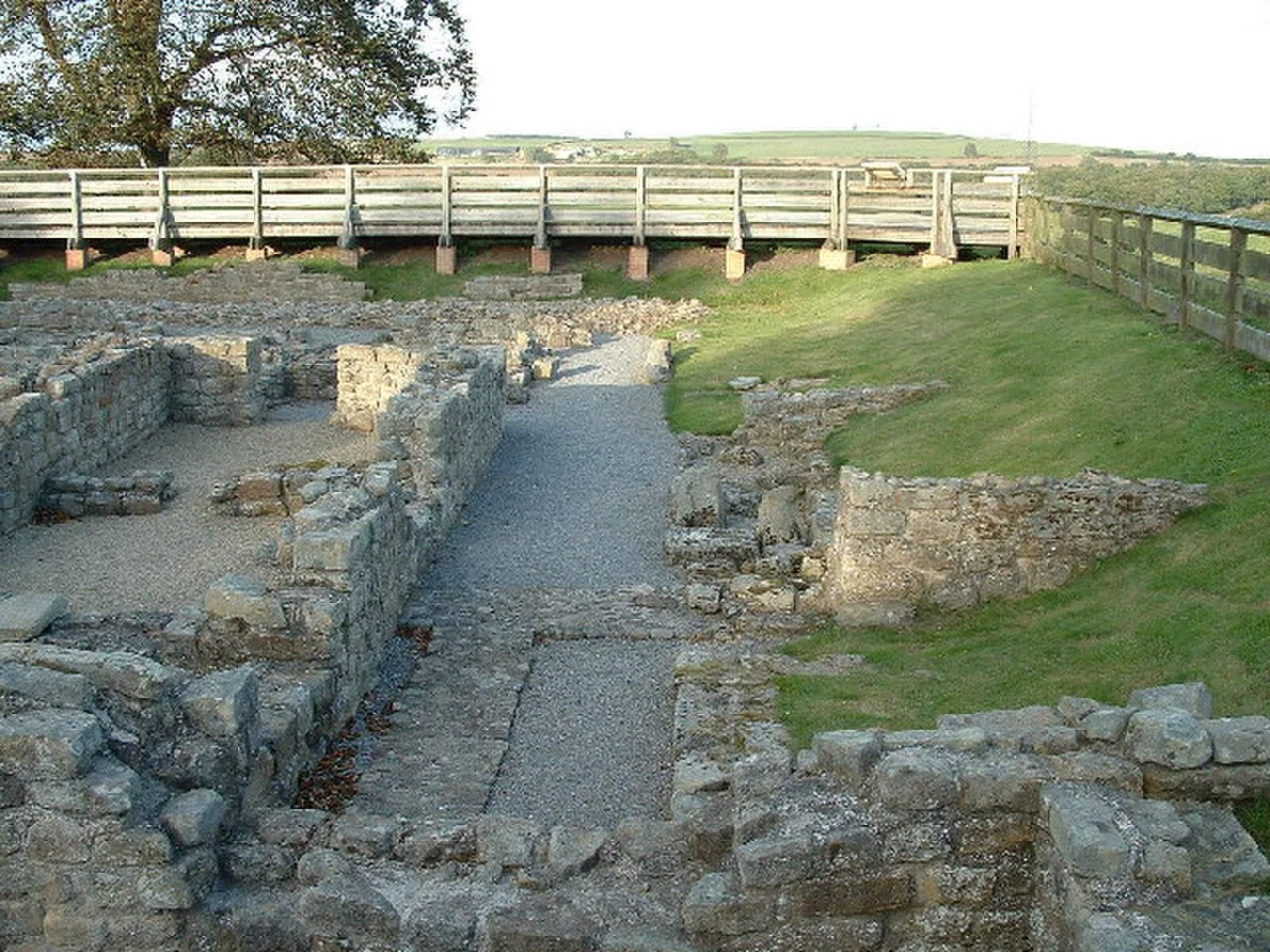
Also known as: Binchester Roman Fort, Binchester Roman fort (Vinovia), Binchesterská římská pevnost, Vinovium
| Type | Fortress/citadel |
|---|---|
| Period | 1 - 500 AD |
| Country | England |
| Coordinates | 54.6760° N, 1.6770° W |