
 England
The Anglo-Saxon Chronicle portrays Aylesbury as being captured from the Britons by one Cuthwulf following the Battle of Bedcanford; the historicity of this event is doubtful, but the portrayal at least indicates that in the early Middle Ages the settlement was thought to be of some strategic importance [1]. During the early medieval period, Aylesbury became a major market town and the burial place of Saint Osgyth, whose shrine attracted pilgrims [1]. The town was a royal manor, with eight attached hundreds in 1086, and some historians have supposed that it was already a royal manor before the Norman conquest [1]. Traditionally, the town was a commercial centre with a market dating back to the Saxon period [1]. This is because it was established on the main Akeman Street which became an established trade route linking London to South West England [1]. Aylesbury lies immediately south-east of the upper River Thame [1].
Text: Wikipedia – 'Aylesbury' (revision of 2026-09-06), CC BY-SA 4.0 · sentences selected and shortened by an AI system · source →Aylesbury
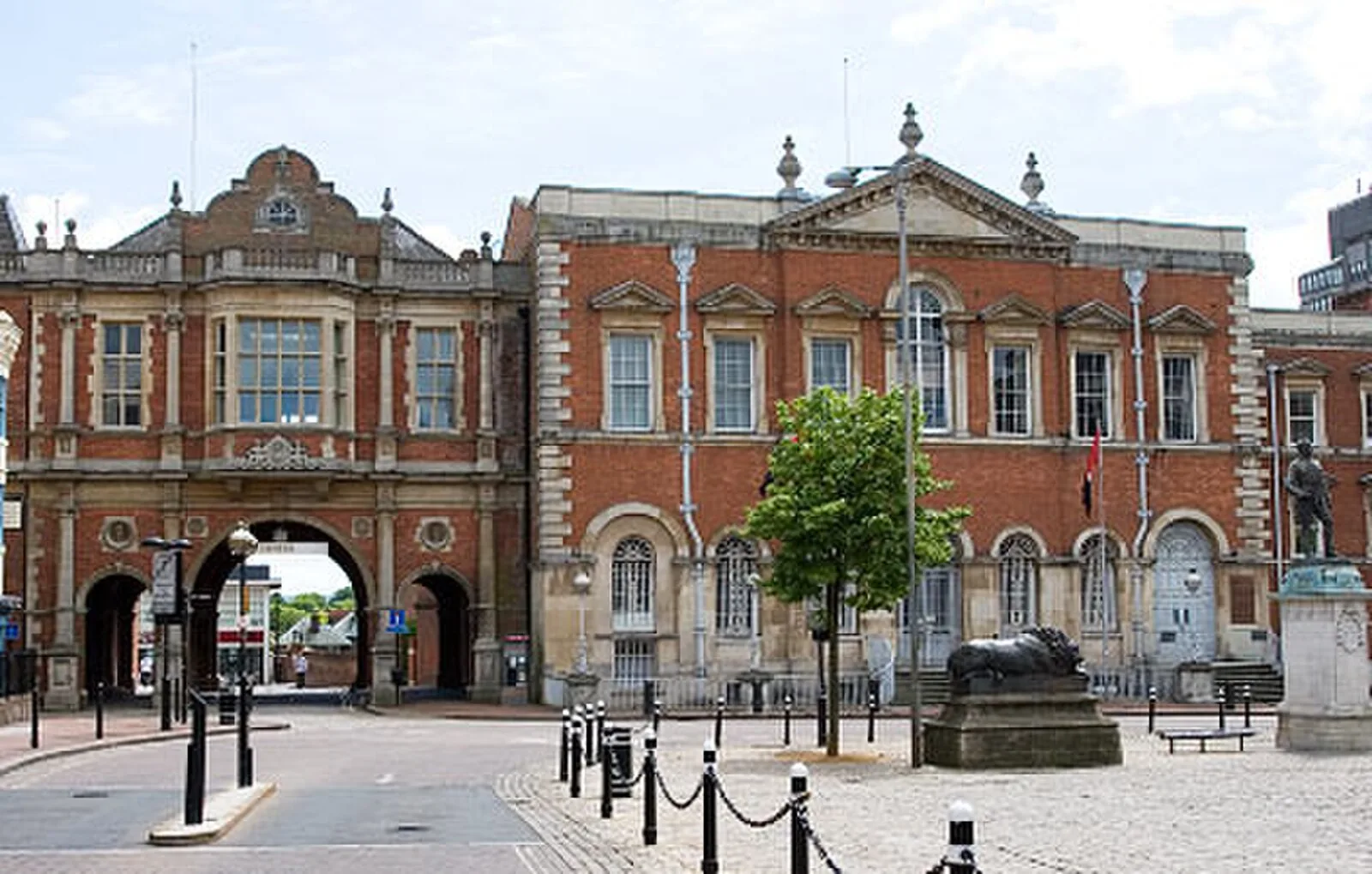
Also known as: 에일즈버리, 에일즈베리, Ægelesburg, Aelesburia, Aylesbury, Buckinghamshire, Aylesbury (kapital sa kondado), Aylesbury (Royaume-Uni), Eilsberi, Eilsberis, Έιλσμπερι, Ейлзбері, Ейлсбері
| Type | City/town/settlement |
|---|---|
| Period | 500 BC - 1 AD |
| Country | England |
| Coordinates | 51.8168° N, 0.8125° W |