
 Bolivia
Pumapunku or Puma Punku is a 6th-century T-shaped and strategically aligned man-made terraced platform mound with a sunken court and monumental structure on top, near Tiwanaku, La Paz [1]. It is part of the Pumapunku complex, at the Tiwanaku Site, an ancient archeological complex in the Andes of western Bolivia that has been designated a UNESCO World Heritage Site [1]. The Pumapunku complex is a collection of plazas and ramps centered on the Pumapunku platform mound [1]. Construction of Puma Punku is believed to have begun after AD 536 [1]. The fragments of five andesite gateways with similar characteristics to the Gateway of the Sun were found [1]. The largest of Pumapunku's stone blocks is 7.81 metres long, 5.17 metres wide, averages 1.07 metres thick, and is estimated to weigh about 131 tonnes [1]. Notable features at Pumapunku are I-shaped architectural cramps, composed of a unique copper-arsenic-nickel bronze alloy [1].
Text: Wikipedia – 'Pumapunku' (revision of 2026-09-07), CC BY-SA 4.0 · sentences selected and shortened by an AI system · source →Archaeological site Puma Punku
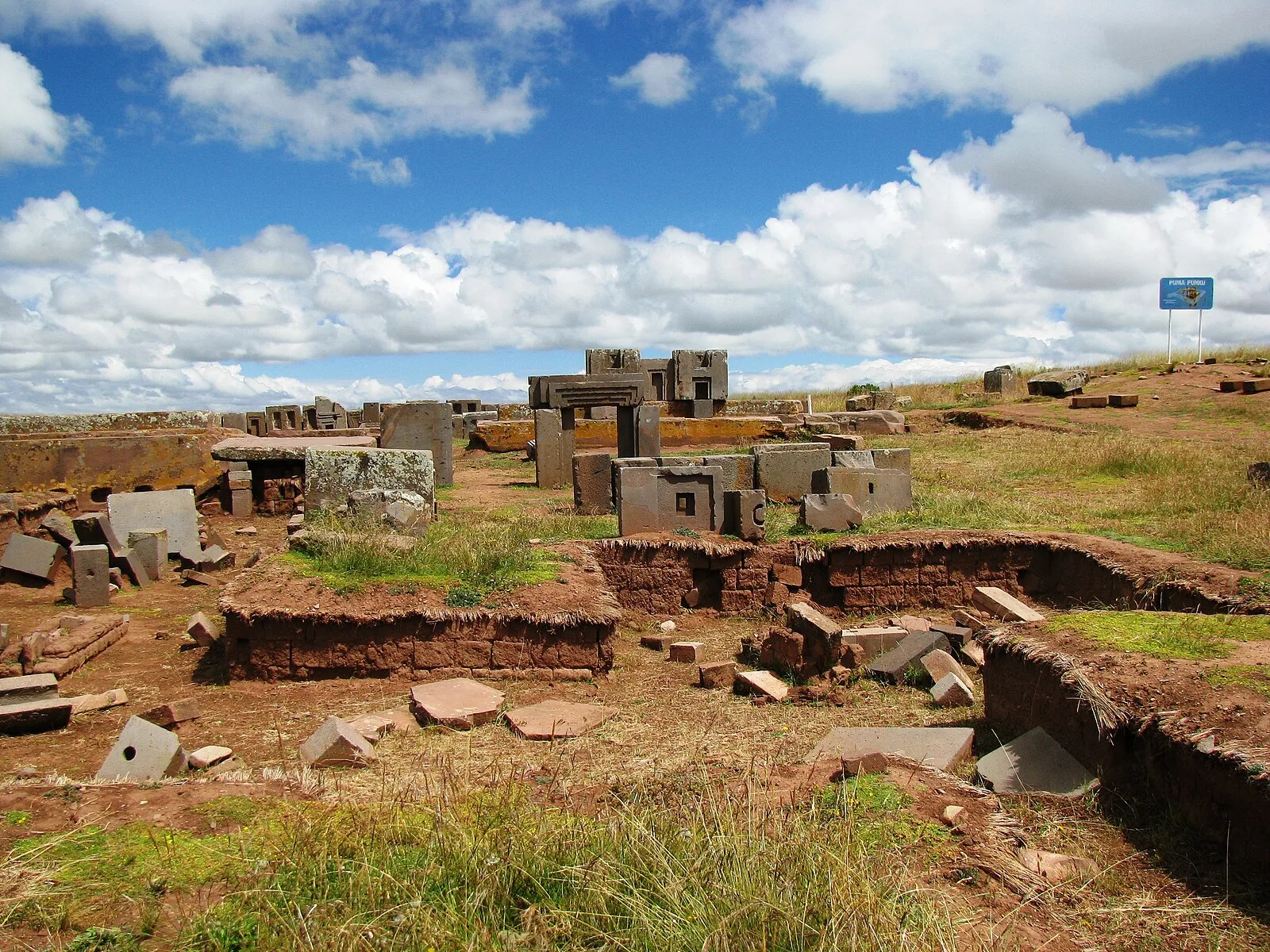
Also known as: 푸마 푼쿠, Pumapunku, Puma Punku, Пумапунку, Пума Пунку, Пума-Пунку, פומה פונקו, بوما بونكو, پوما پونکو, پوماپونکو, プマプンク, 普瑪彭古
| Type | Temple |
|---|---|
| Period | 500 - 1000 AD |
| Country | Bolivia |
| Coordinates | 16.5615° S, 68.6797° W |