
 Bolivia
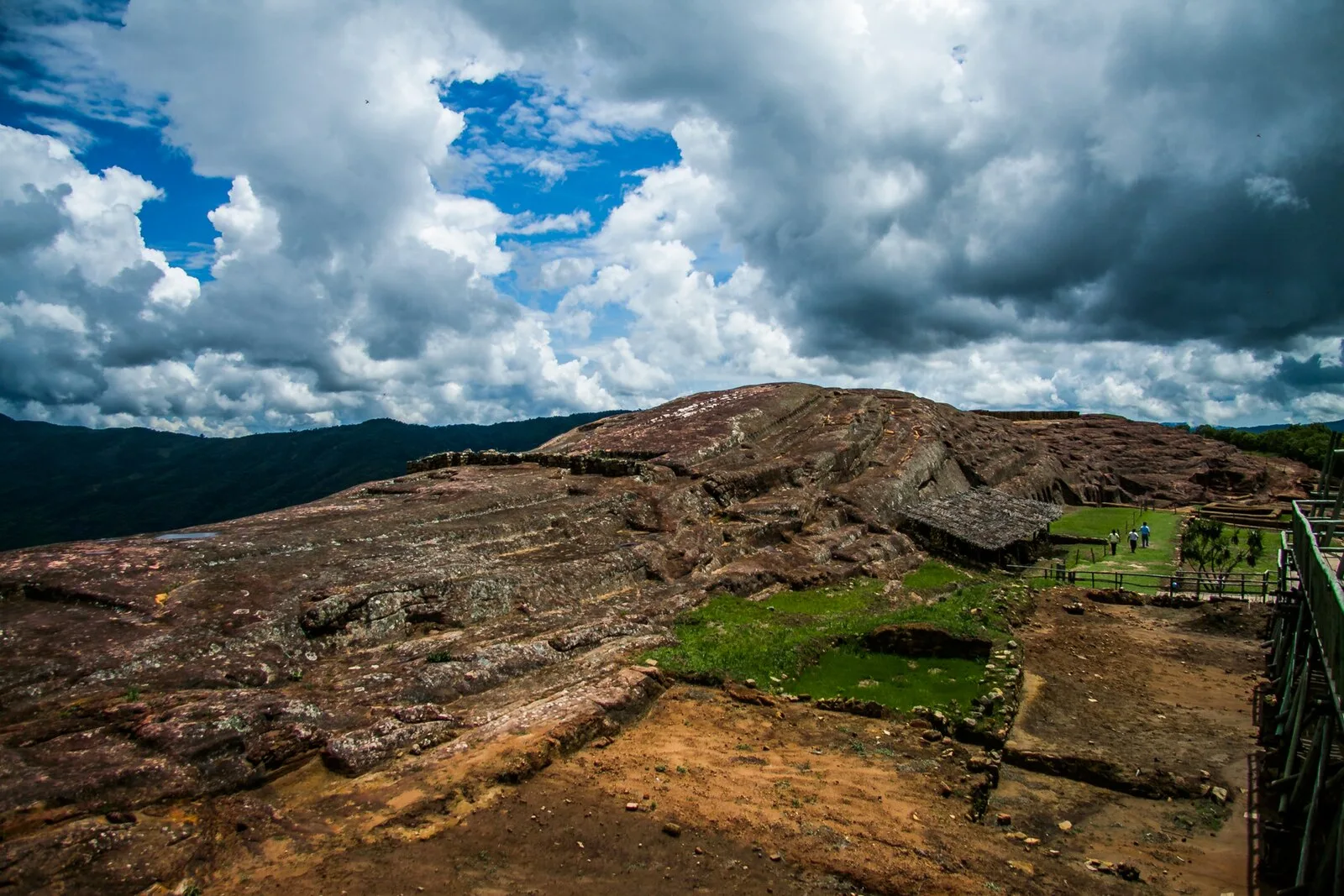
El Fuerte de Samaipata or Fort Samaipata, also known simply as "El Fuerte", is a Pre-Columbian archaeological site and UNESCO World Heritage Site located in Florida Province, Santa Cruz Department, Bolivia [1]. The archaeological site at El Fuerte is unique as it encompasses buildings of three different cultures: Chanè, Inca, and Spanish [1]. The site of Samaipata was occupied as a ritual and residential area about 300 CE by the Chané of the Mojocoyas period [1]. They began shaping the great rock that is the ceremonial center of the Samaipata ruin [1]. The Samaipata archaeological site of about 20 hectares is divided into two parts: a ceremonial sector and an administrative/residential sector [1]. The ceremonial sector is in the northern part of the site [1]. It is about 220 metres by 60 metres and consists mostly of a large rock saddle almost completely covered with carvings of both Inca and pre-Inca origin [1]. The carvings include a variety of geometric and animal figures, walls, niches, and long canal-like carvings called "the spine of the serpent" or "el cascabel" [1].
Text: Wikipedia – 'El Fuerte de Samaipata' (revision of 2026-07-22), CC BY-SA 4.0 · sentences selected and shortened by an AI system · source →El Fuerte de Samaipata
Also known as: 사마이파타 암벽화, El Fuerte, Festung von Samaipata, Fort de Samaipata, Forte de Samaipata, Forte di Samaipata, Fort Samaipata, Fuerte de Samaipata, Fuerte de Samaipata (fornlämning i Bolivia), Samaipata, Samaipatos fortas, Samaipatos tvirtovė
| Type | Rock relief/carving |
|---|---|
| Period | 1 - 500 AD |
| Country | Bolivia |
| Coordinates | 18.1783° S, 63.8195° W |