

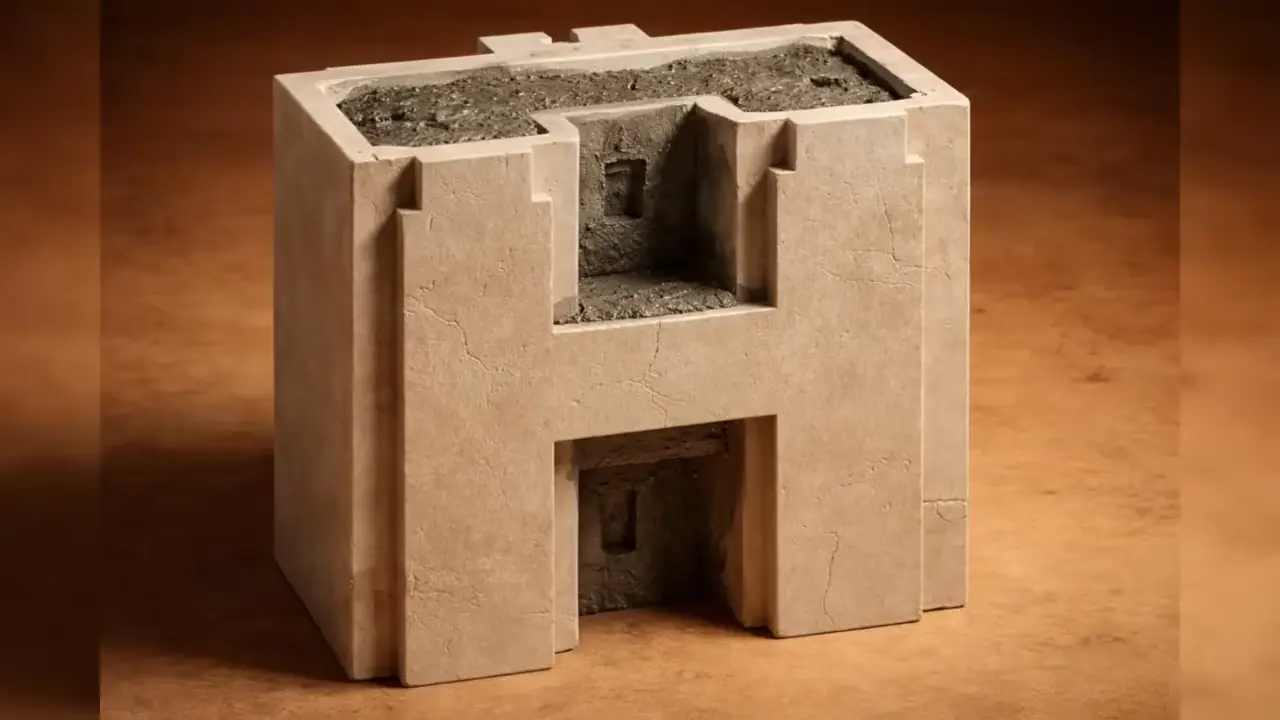
Official narrative claims Pumapunku built around 536 CE by Tiwanaku civilization using stone hammers, ropes, and primitive tools. Official narrative claims Pumapunku built around 536 CE by Tiwanaku civilization using stone hammers, ropes, and primitive tools Sandstone blocks at Pumapunku weigh 130-180 tons each; no timber available at site elevation above tree line for rollers or sledges 1960s Bolivian Army experiment: using ropes and manpower, barely moved 2-ton stone (less than 2% weight of largest blocks) a few inches after hours of effort
Researchers have noted precisely-fitted stone insertions between massive blocks at several megalithic sites, including Cusco, Ahu Vinapu (Easter Island), and Egypt's Osirion at Abydos. Pumapunku, part of the Tiwanaku archaeological complex in Bolivia, presents significant construction puzzles. The site features sandstone and andesite blocks of considerable size. Questions remain about the specific construction methods, including how such massive stones were transported and fitted without modern machinery.
Key facts claimed:
- Pumapunku is dated by the mainstream archaeological consensus to the period around 536-600 CE, built by the Tiwanaku civilization using stone hammers, ropes, and primitive tools
- Sandstone blocks at Pumapunku weigh up to 130-180 tons each; the site lies above the tree line where no timber is available for rollers or sledges
- Some researchers argue advanced cutting methods may have been used, though this remains debated in archaeological literature
Key Facts
- Official narrative claims Pumapunku built around 536 CE by Tiwanaku civilization using stone hammers, ropes, and primitive tools
- Sandstone blocks at Pumapunku weigh 130-180 tons each; no timber available at site elevation above tree line for rollers or sledges
- 1960s Bolivian Army experiment: using ropes and manpower, barely moved 2-ton stone (less than 2% weight of largest blocks) a few inches after hours of effort
- Copper chisels and stone hammers cannot carve perfect right angles and mirror-smooth surfaces in volcanic rock—violates physical laws of tool hardness interaction
- Advanced cutting methods required (diamond, corundum, high heat, vibration, or abrasion) beyond Bronze Age technological capacity
- Arthur Posnansky spent 50+ years measuring and documenting Tiwanaku and Pumapunku ruins, published four-volume 'Tihuanacu: The Cradle of American Man'
- Posnansky proposed civilization predated known Tiwanaku culture by thousands of years, possibly tens of thousands during last ice age
- Kalasasaya Temple analyzed as ancient solar observatory; astronomical alignments calculated to be accurate around 15,000 BCE using axial precession rates
- Conclusion would make Tiwanaku oldest city on Earth, predating Mesopotamia and Egypt by over 10 millennia
- Posnansky theorized Lake Titicaca once extended far beyond current boundaries, with glacial weathering evidence and possible flood-related erosion patterns
Related site: Archaeological site Puma Punku — view location, images, and history on the Ancient Nerds map.
Source: Pre-Inca Geopolymer Explains the Massive Megaliths by Universe Inside You