
 Spain
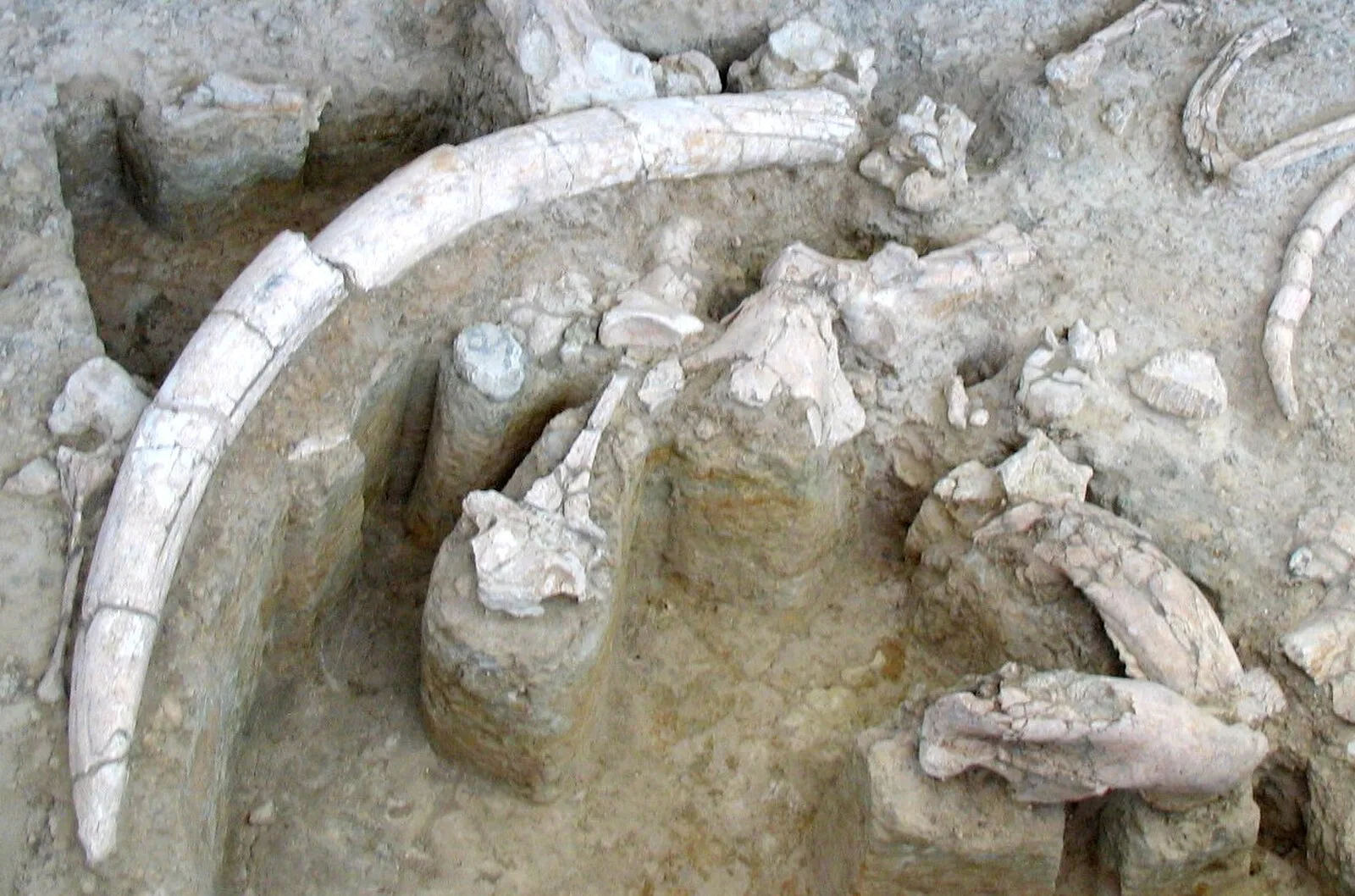
SpainTorralba and Ambrona are two paleontological and archaeological sites that correspond to various fossiliferous levels with Acheulean lithic industry associated, at least about 350,000 years old [1]. The sites, traditionally studied together, are about 3 km distant [1]. From these sites have been obtained fossils of large mammals, mainly elephants, with remains of nearly fifty individuals from each site, in addition to large bovines and horses [1]. The sites show evidence of successive occupations by human beings, who had a hunting station or, more likely, scavanged carrion and carried out quartering [1]. The American anthropologist Francis Clark Howell conducted six excavation campaigns in Torralba and Ambrona, between 1961 and 1963 and in 1980, 1981 and 1983 [1]. The abundant accumulations of elephant remains in Ambrona are similar to the modern sites popularly known as "Elephants' graveyards" [1].
Text: Wikipedia – 'Torralba and Ambrona' (revision of 2026-05-25), CC BY-SA 4.0 · sentences selected and shortened by an AI system · source →Torralba and Ambrona - Archaeological Site
Also known as: Torralba and Ambrona, Torralba und Ambrona, Yacimientos de Ambrona y Torralba, yacimientos de Torralba y Ambrona, אמברונה, アンブロナ, トラルバ
| Type | Museum |
|---|---|
| Period | 500 BC - 1 AD |
| Country | Spain |
| Coordinates | 41.1601° N, 2.4984° W |