
 Peru
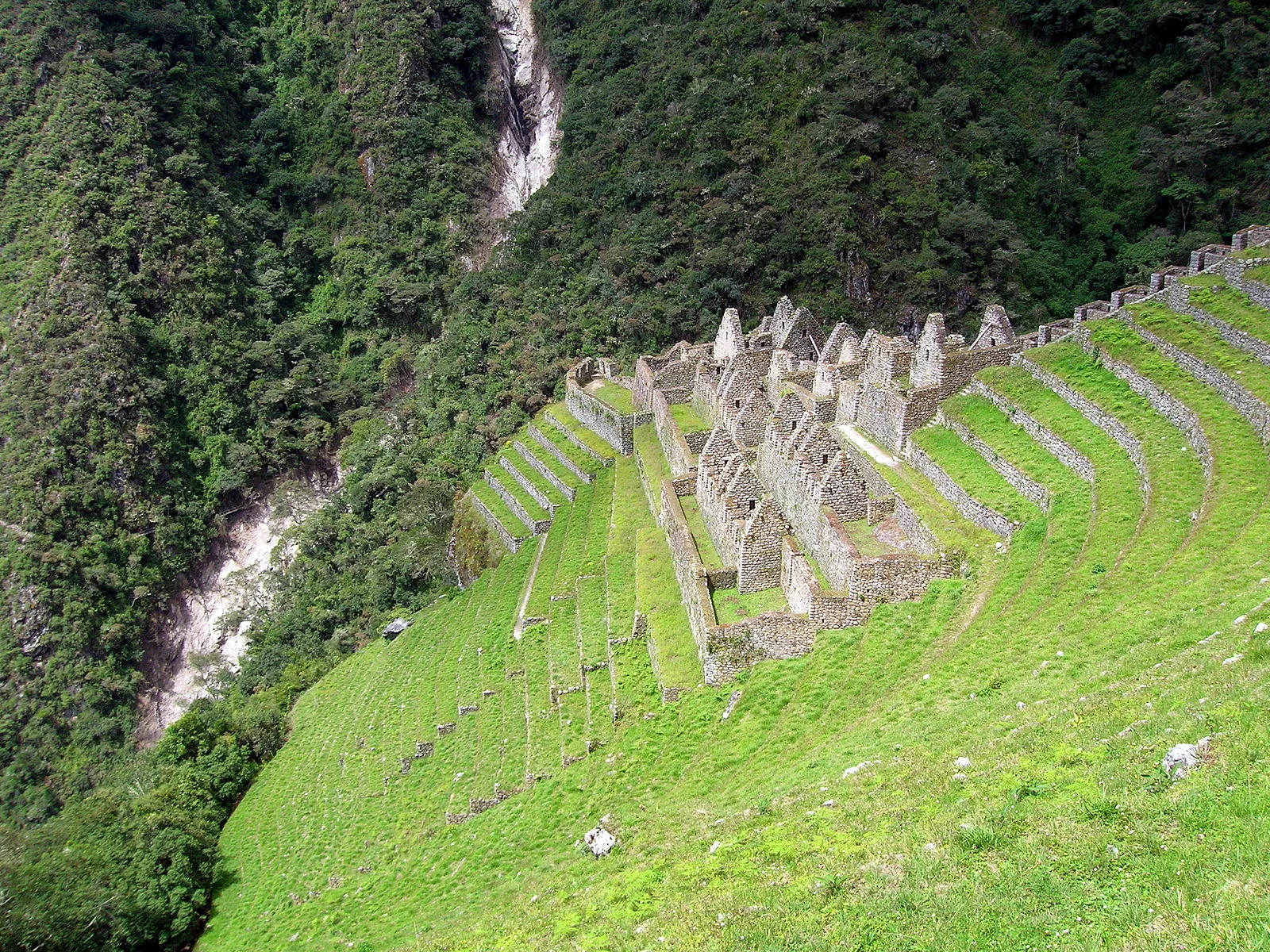
PeruWiñay Wayna is an Inca ruin along the Inca Trail to Machu Picchu [1]. It is built into a steep hillside overlooking the Urubamba River [1]. The site consists of upper and lower house complexes connected by a staircase and fountain structures [1]. Above and below the houses the people built areas of agricultural terraces or andenes [1].
Text: Wikipedia – 'Wiñay Wayna' (revision of 2026-07-18), CC BY-SA 4.0 · sentences selected and shortened by an AI system · source →Wiñay Wayna
Also known as: Huinayhuayna, Huinay Huayna, Winaywayna, Вињај Вајна, Віньяй-Вайна, Віняй-Вайна, Уинай Уайна, Уиньяй-Уайна, Уиняй Уайна, Уїньяй-Уайна, უინიაი-უაინა, Ուինյայ Ուայնա
| Type | City/town/settlement |
|---|---|
| Period | 1000 - 1500 AD |
| Country | Peru |
| Coordinates | 13.1926° S, 72.5364° W |