
 Peru
PeruMachu Picchu is a 15th-century Inca citadel located in the Eastern Cordillera of southern Peru on a mountain ridge at 2,430 meters [1]. Studies of skeletal remains found at Machu Picchu show that most people who lived there were immigrants from diverse backgrounds [1]. Excavations documented approximately 104 caves and rock shelters used as burial chambers around Machu Picchu, containing the remains of about 174 individuals, interpreted as largely belonging to yanaconas of diverse ethnic origins rather than the Inca elite [1]. Radiocarbon dating analyses have refined the site's chronology, indicating that Machu Picchu’s main construction and use fall in the early to mid 15th century, slightly earlier than some traditional documentary chronologies suggest [1]. The central buildings of Machu Picchu are built in classical Inca dry masonry, with large blocks precisely shaped through quarrying, stone-cutting, and stone-dressing, then fitted together without mortar [1]. Machu Picchu was connected to the Inca road system and long-distance trade, as shown by obsidian nodules found near the site’s entrance [1].
Text: Wikipedia – 'Machu Picchu' (revision of 2026-09-20), CC BY-SA 4.0 · sentences selected and shortened by an AI system · source →Machu Picchu
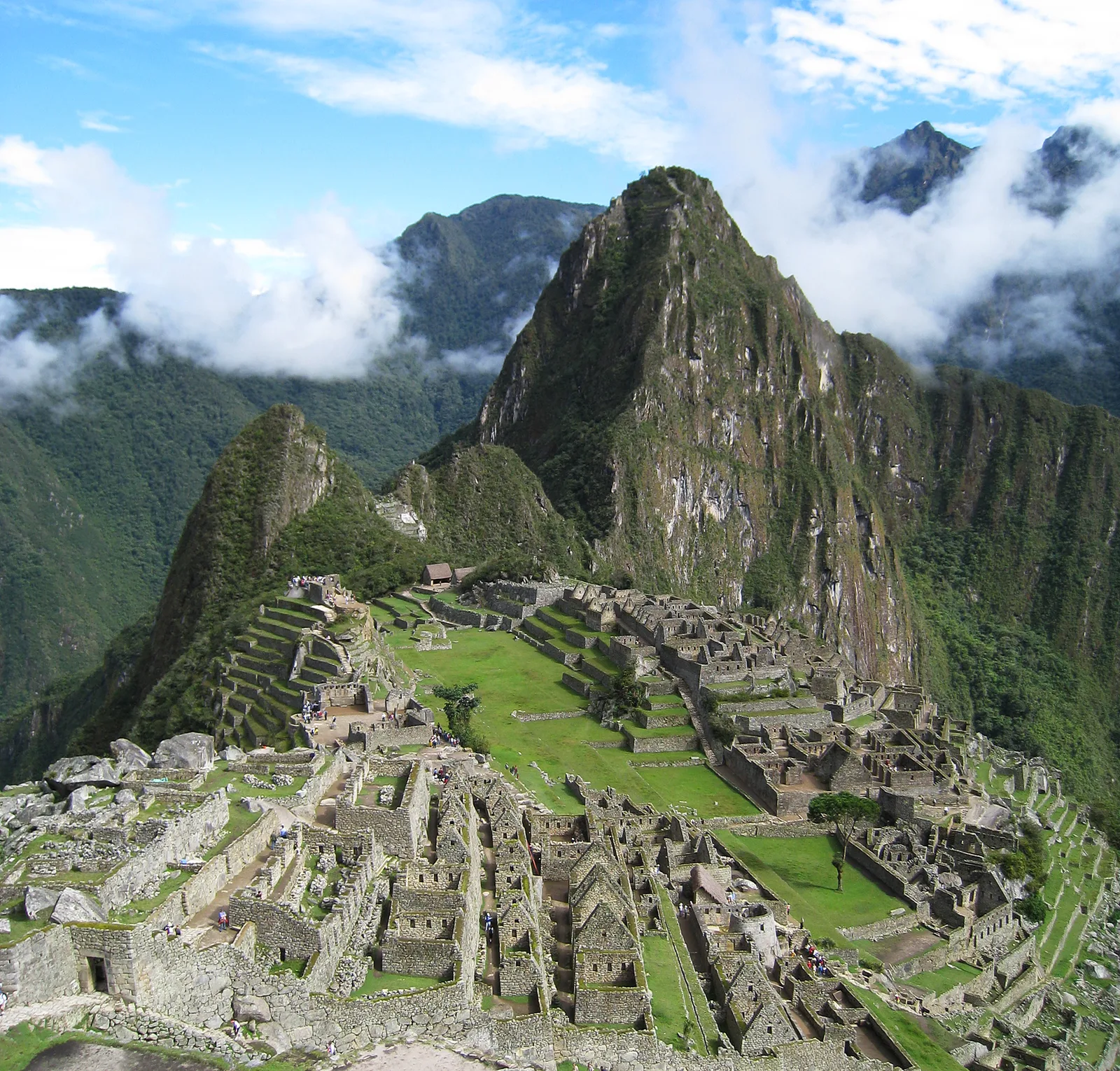
Also known as: 마추 픽추, Cagar Alam Machu Picchu, Huayna Picchu, Macchu Picchu, Macchu Piccu, machu pichu, Machu Pikchu, Machu-Pikchu, Ma-ciw-pi-ciw, Maçu Piçu, Maču Pikču, Maçu-Pikçu
| Type | City/town/settlement |
|---|---|
| Period | 1000 - 1500 AD |
| Country | Peru |
| Coordinates | 13.1630° S, 72.5449° W |