
 Peru
PeruOllantaytambo (Quechua: Ullantaytampu) is a town and an Inca archaeological site in southern Peru some 72 km by road northwest of the city of Cusco [1]. During the Inca Empire, Ollantaytambo in the Sacred Valley of the Incas was the royal estate of Emperor Pachacuti, after the mid-15th century [1]. He built a town and a ceremonial center there [1]. At the time of the Spanish conquest of Peru, it served as a stronghold for Manco Inca Yupanqui, leader of the Inca resistance [1]. All blocks on the southern half of the town were built to the same design; each comprised two kanchas, walled compounds with four one-room buildings around a central courtyard [1]. The valleys of the Urubamba and Patakancha Rivers along Ollantaytambo are covered by an extensive set of agricultural terraces or andenes which start at the bottom of the valleys and climb up the surrounding hills [1]. The main quarries of Ollantaytambo were located at Kachiqhata, in a ravine across the Urubamba River some 5 km from the town [1].
Text: Wikipedia – 'Ollantaytambo' (revision of 2026-09-27), CC BY-SA 4.0 · sentences selected and shortened by an AI system · source →Ollantaytambo
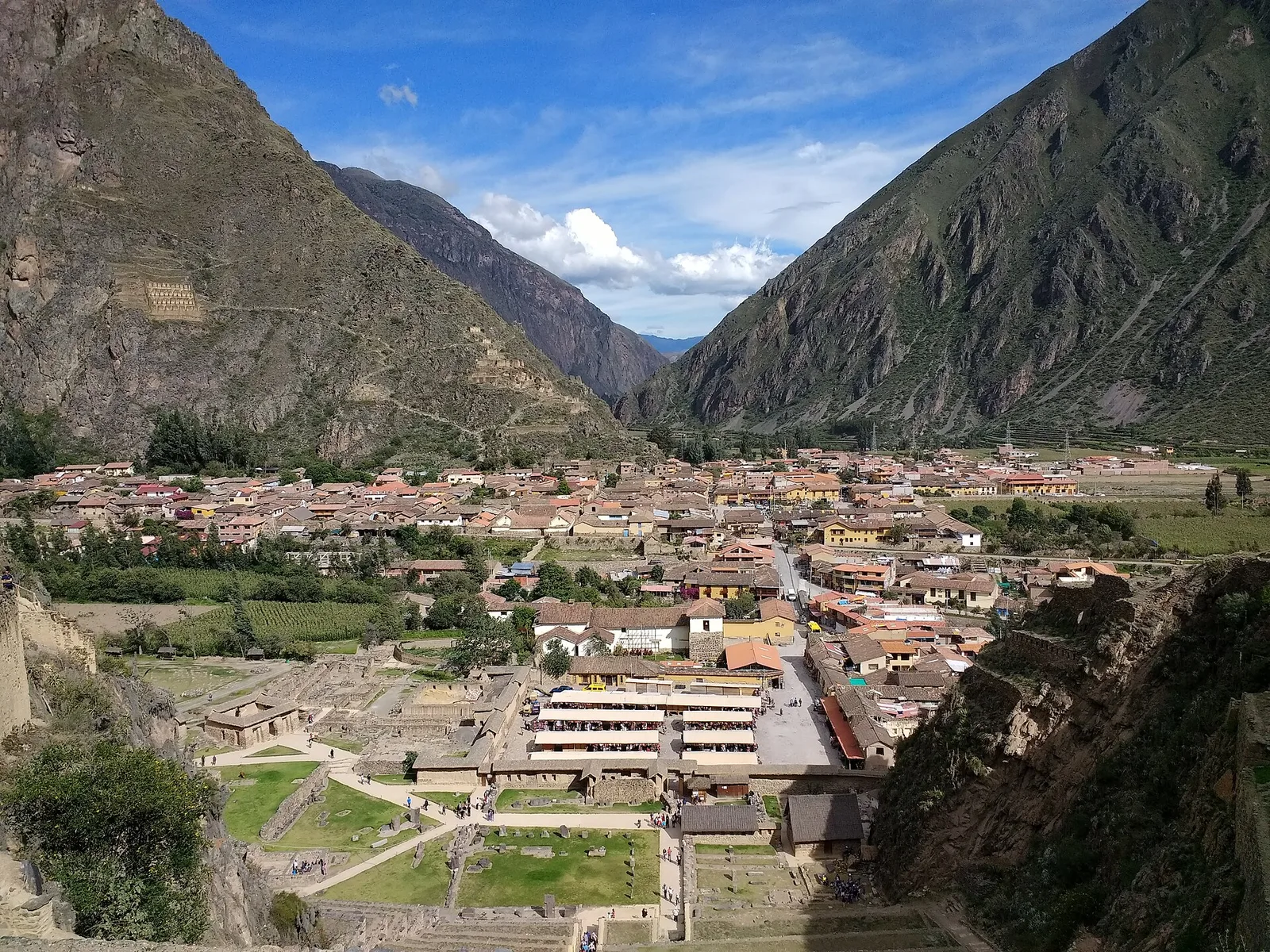
Also known as: Oljantaintambas, Oljantaitambas, Ollantaytambo (kapital sa distrito), Ullantaytambo, Ullantaytampu, Ullantaytampusa, Ullantaytanpu, Олантајтамбо, Ольянтайтамбо, ოლიანტაიტამბო, אויאנטאיטמבו, أولانتايتامبو
| Type | City/town/settlement |
|---|---|
| Period | 1000 - 1500 AD |
| Country | Peru |
| Coordinates | 13.2578° S, 72.2633° W |