
 Peru
PeruThe Intihuatana at Machu Picchu in Urubamba Province is a ritual stone carved from granite, serving as an astronomical clock of the Inca Empire. The name means "hitching post of the sun" in Quechua. The stone stands approximately 1.2 m high and 0.9 m wide, carved directly into the bedrock at the citadel's highest point. Its upright pillar tilts 13 degrees northward and aligns with the cardinal points. During equinoxes, the sun casts almost no shadow on the pillar, and it was used to track solstices and regulate the agricultural calendar. Built c. 1450 under Pachacuti, it survived Spanish destruction due to Machu Picchu's remote location.
Intihuatana, Urubamba
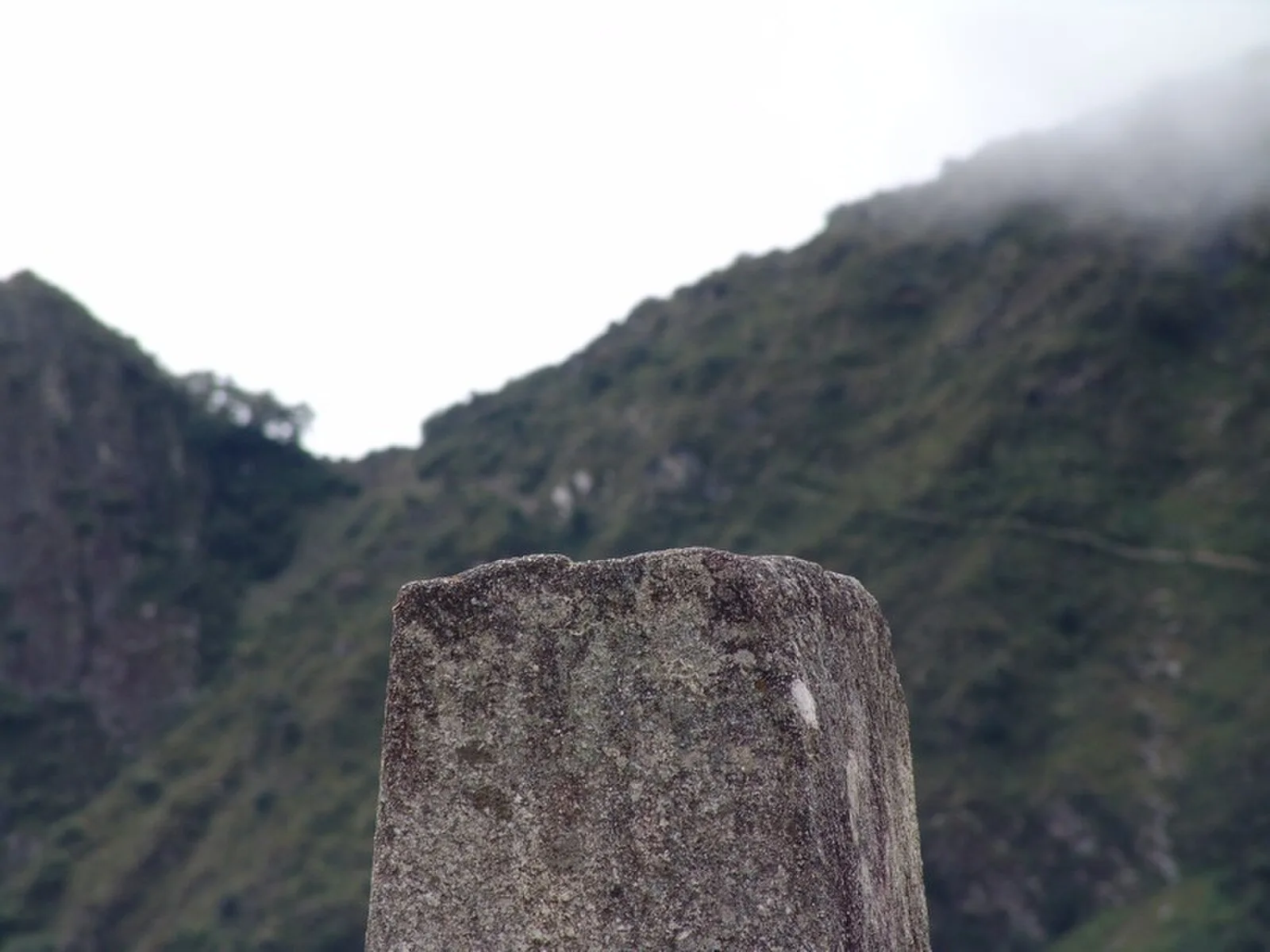
Also known as: Intihuatana, Intiwatana, اینتیهوآتانا
| Type | Sculptured stone |
|---|---|
| Period | 1000 - 1500 AD |
| Country | Peru |
| Coordinates | 13.1631° S, 72.5457° W |