
 North Macedonia
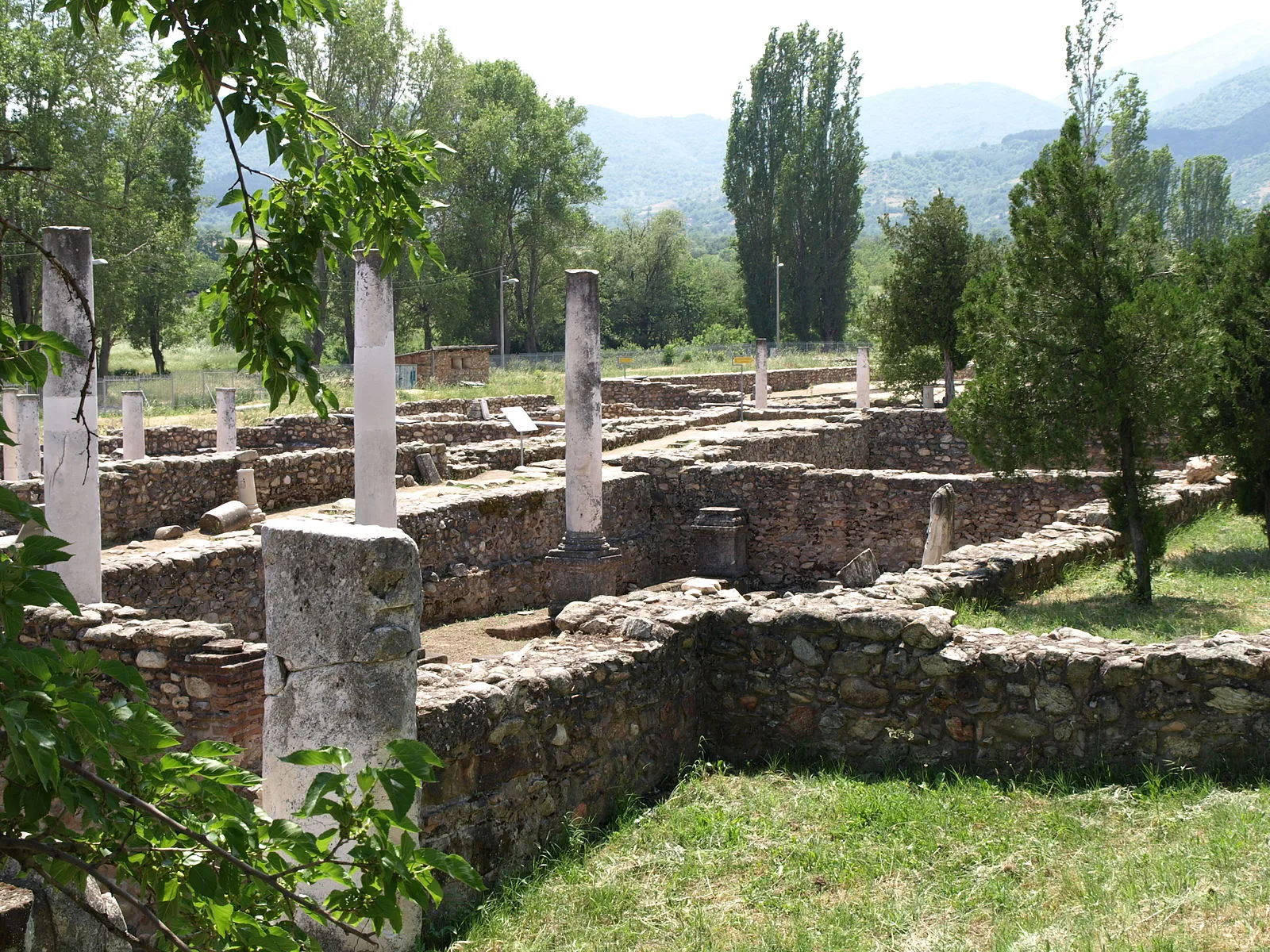
Heraclea Lyncestis, also transliterated Herakleia Lynkestis, was an ancient Greek city in Macedon, ruled later by the Romans [1]. Its ruins are situated 2 km south of the present-day town of Bitola, North Macedonia [1]. The city was gradually abandoned in the 6th century AD following an earthquake and Slavic invasions [1]. Objects discovered from the time of Roman rule in Heraclea are votive monuments, a portico, thermae (baths), a theatre and town walls [1]. The Roman emperor Hadrian built a theatre in the center of the town, on a hill [1]. In the early Byzantine period (4th to 6th centuries AD) Heraclea was an important episcopal centre [1]. A small and a great basilica, the bishop's residence, and a funerary basilica and the necropolis are some of the remains of this period [1]. Three naves in the Great Basilica are covered with mosaics of very rich floral and figurative iconography; these well preserved mosaics are often regarded as fine examples of the early Christian art period [1].
Text: Wikipedia – 'Heraclea Lyncestis' (revision of 2026-07-18), CC BY-SA 4.0 · sentences selected and shortened by an AI system · source →Heraclea Lyncestis
Also known as: Eraclea Lincestide, Heraclea de Lincèstida, Heraclea Lincestis, Heraclea-Lyncestis, Heracleia Lyncestis, Heraklea Lynkestis, Herakleia, Herakleia Lakkou, Herakleia Lincestis, Hérakleia Lünkésztisz, Herakleia Lyncestis, Herakleia Lynkestis
| Type | City/town/settlement |
|---|---|
| Period | 500 BC - 1 AD |
| Country | North Macedonia |
| Coordinates | 41.0110° N, 21.3425° E |