
 Mexico
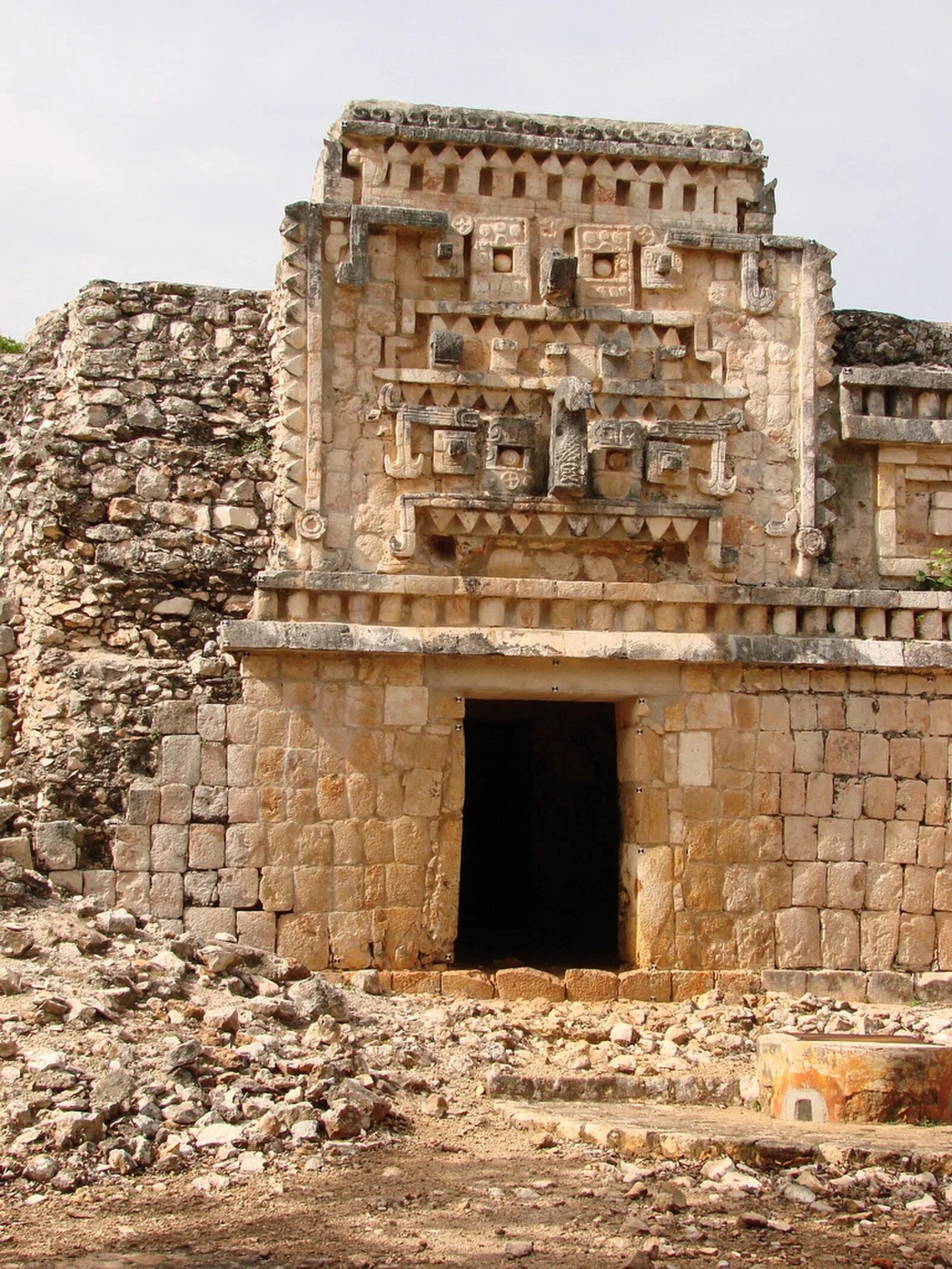
Xlapak (or Xlapac) is a small Maya archaeological site in the Yucatan Peninsula of southeastern Mexico [1]. It is located in the heart of the Puuc region, about 4 kilometres from the archaeological site of Labná and a similar distance from Sayil, lying directly between the two sites [1]. It consists of three main groups in a valley of the Puuc Hills in Yucatán State, a region of karst limestone forming the only major topographical feature of the peninsula [1]. The site dates from the Late to Terminal Classic periods and was sited in an area suitable for agriculture [1]. The site core is located in the flat valley bottom, while in the surrounding hills the remains of perishable structures have been found [1]. The main feature of Group 1 is the Palace, which consists of nine rooms with decorated facades [1]. The architecture is an example of the ostentatious style of the Classic or Fluorescent Puuc, in common with the nearby sites of Sayil, Labna, Kabah, and Uxmal [1]. The decorations at Xlapak are well preserved and include masks of the Yucatec Maya rain god Chaac [1].
Text: Wikipedia – 'Xlapak' (revision of 2025-12-02), CC BY-SA 4.0 · sentences selected and shortened by an AI system · source →Xlapak
Also known as: Xlabpak, X lapac, X-lapac, Xlapac, Шлапак
| Type | City/town/settlement |
|---|---|
| Period | 500 - 1000 AD |
| Country | Mexico |
| Coordinates | 20.1745° N, 89.6063° W |