
 Mexico
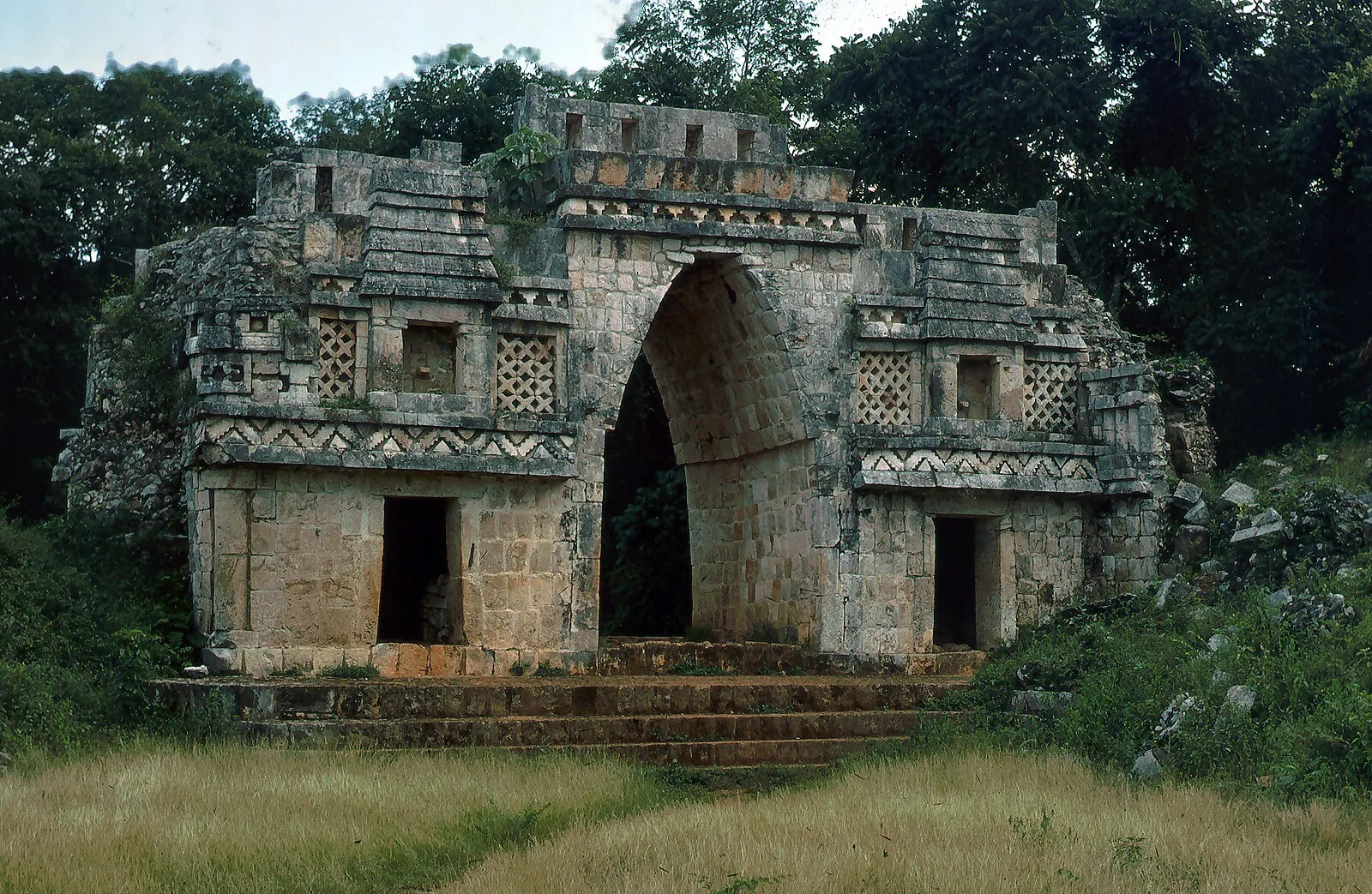
Labna is a Mesoamerican archaeological site and ceremonial center of the pre-Columbian Maya civilization, located in the Puuc Hills region of the Yucatán Peninsula [1]. It is situated to the south of the large Maya site of Uxmal, in the southwest of the present-day state of Yucatán, Mexico [1]. The city existed from 200 to 1000 AD [1]. It reached its peak in the period from 800 to 1000 AD [1]. The first written report of Labna was by John Lloyd Stephens who visited it with artist Frederick Catherwood in 1842 [1]. Among its notable structures is a large two-storey 'palace', which is one of the longest contiguous structures in the Puuc region at approximately 120 m in length [1]. From the palace, a ceremonial road extends to an elaborately decorated gateway arch [1]. The arch is not an entrance to the city, but rather is a passageway between public areas [1].
Text: Wikipedia – 'Labna' (revision of 2026-07-24), CC BY-SA 4.0 · sentences selected and shortened by an AI system · source →Labna
Also known as: 라브나, Лабна, ლაბნა, לאבנה (מקסיקו), 拉博纳, 拉布纳
| Type | City/town/settlement |
|---|---|
| Period | 1 - 500 AD |
| Country | Mexico |
| Coordinates | 20.1719° N, 89.5781° W |