
 Italy
ItalyVilla Boscoreale is a name given to any of several Roman villas discovered in the district of Boscoreale, Italy [1]. They were all buried and preserved by the eruption of Mount Vesuvius in 79 AD, along with Pompeii and Herculaneum [1]. The only one visible in situ today is the Villa Regina, the others being reburied soon after their discovery [1]. Although these villas can be classified as "rustic" rather than of otium due to their agricultural sections and sometimes lack of the most luxurious amenities, they were often embellished with extremely luxurious decorations such as frescoes, testifying to the wealth of the owners [1]. Among the most important finds are the exquisite frescoes from the Villa of Publius Fannius Synistor and the sumptuous Boscoreale Treasure of the Villa della Pisanella, which is now displayed in several major museums [1]. In Roman times this area, like the whole of Campania, was agricultural despite its proximity to cities including Pompeii, and specialised in wine and olive oil [1].
Text: Wikipedia – 'Villa Boscoreale' (revision of 2026-07-18), CC BY-SA 4.0 · sentences selected and shortened by an AI system · source →Villa Boscoreale
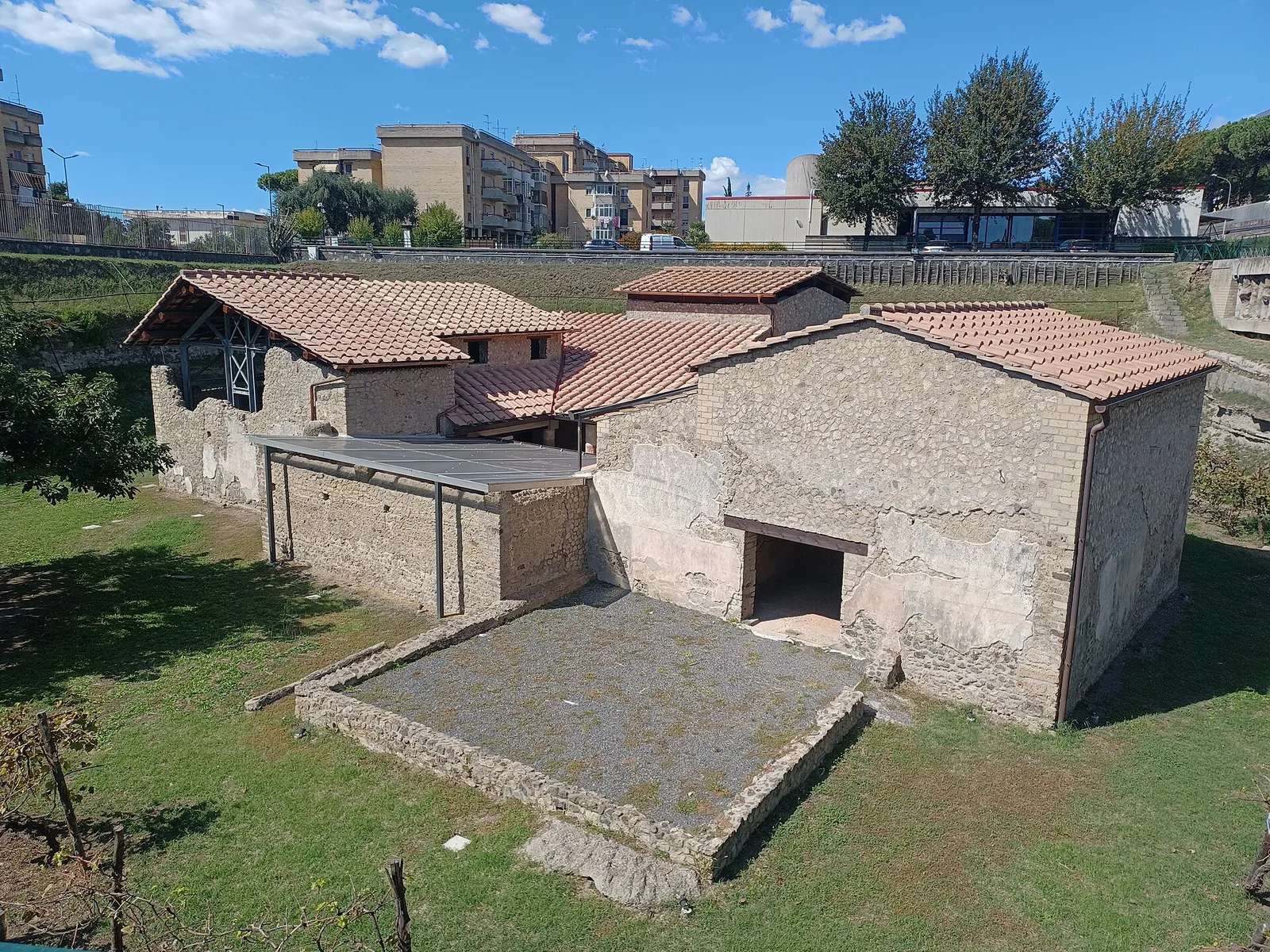
Also known as: Excavacions arqueològiques de Boscoreale, P.ファンニウス=シュニストル荘(en), Scavi archeologici dell'agro pompeiano, Villa Fanninus, Villa Publii Fannii Synistoris, Вилла в Боскореале, Вілла в Боскореале, ویلا بوسکورئاله, ボスコレアーレ荘, 伯斯科雷阿萊別墅
| Type | Residence/villa/farmhouse |
|---|---|
| Period | 500 BC - 1 AD |
| Country | Italy |
| Coordinates | 40.7615° N, 14.4714° E |