
 Italy
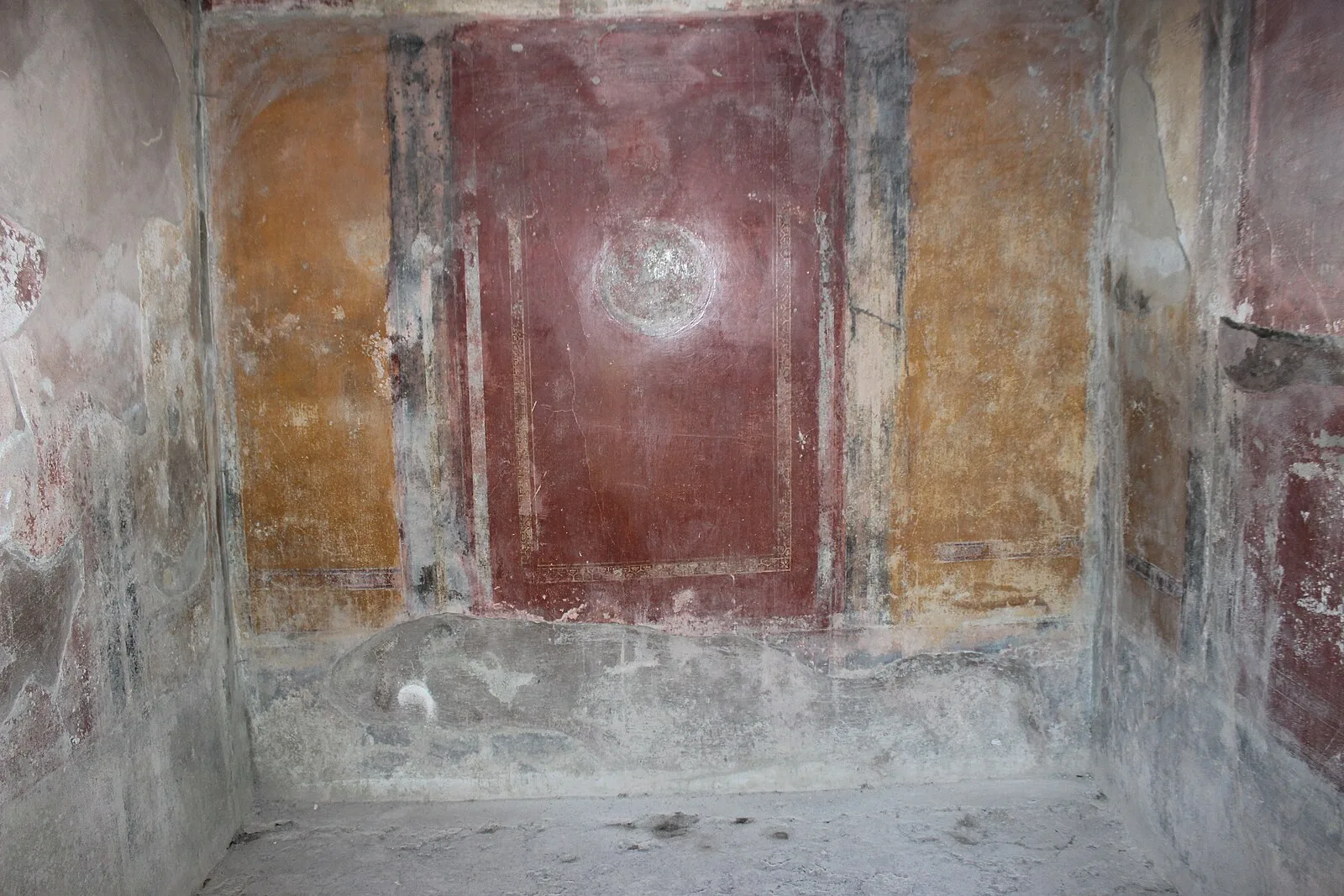
ItalyThe House of the Tragic Poet is a Roman house in Pompeii, Italy dating to the 2nd century BCE [1]. The house is famous for its elaborate mosaic floors and frescoes depicting scenes from Greek mythology [1]. Discovered in November 1824 by the archaeologist Antonio Bonucci, the House of the Tragic Poet has interested scholars and writers for generations [1]. Although the size of the house itself is modest, its interior decorations are not only numerous but of the highest quality among other frescoes and mosaics from ancient Pompeii, preserved by the eruption of Mount Vesuvius in 79 AD [1]. The House of the Tragic Poet sat in Regio VI, Insula 8, the far-western part of Pompeii [1]. The painted wall panels within the house are examples of the Fourth Pompeiian style [1]. The vestibule floor was decorated with a mosaic picture of a domesticated dog leashed and chained to an arbitrary point [1]. Below the figure were the words "CAVE CANEM", meaning Beware of the dog [1].
Text: Wikipedia – 'House of the Tragic Poet' (revision of 2026-04-18), CC BY-SA 4.0 · sentences selected and shortened by an AI system · source →House of the Tragic Poet, Pompeii
Also known as: Casa del Poeta Tràgic, Casa del Poeta Tragico, casa del Poeta Tragico (VI.8.5), Casa do Poeta Trágico, Dom Dramaturga, Dom Tragického básnika, Dům Tragického básníka, Haus des tragischen Dichters, hiša tragičnega pesnika, House of the Tragic Poet, Kuća tragičnog pjesnika, Maison du poète tragique
| Type | Residence/villa/farmhouse |
|---|---|
| Period | 500 BC - 1 AD |
| Country | Italy |
| Coordinates | 40.7510° N, 14.4839° E |