
 Italy
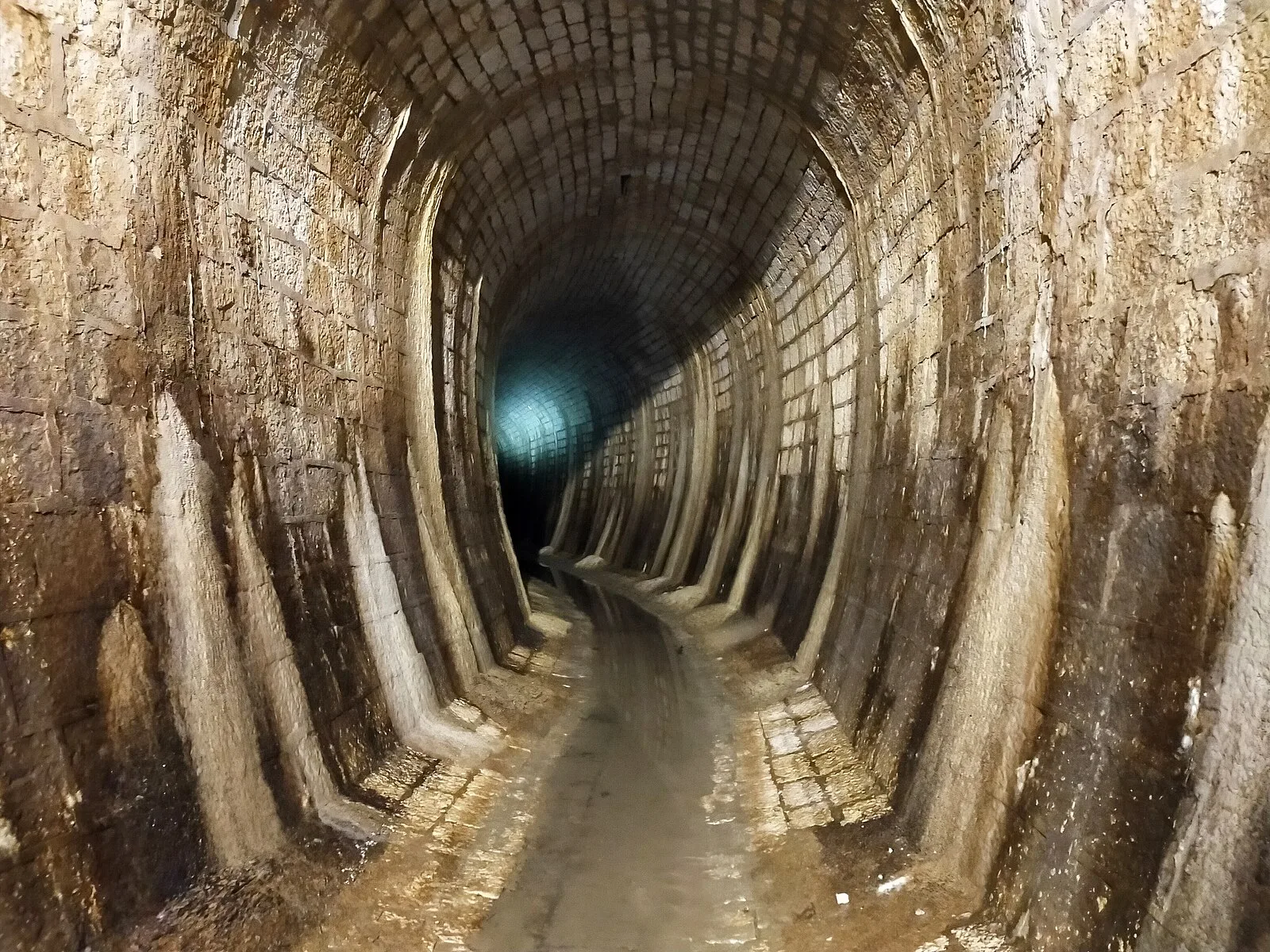
ItalyThe Tunnels of Claudius consist principally of a 6 km-long tunnel (or emissary) together with several monumental service tunnels which Roman Emperor Claudius had built by 52 AD to partially drain the Fucine Lake in Abruzzo, protecting riparian villages from floods and creating agricultural land [1]. It was a massive engineering project involving 30,000 workmen and slaves who completed it in just 11 years, and considered among the grandest in antiquity [1]. It was the longest tunnel ever built until the inauguration of the Fréjus Rail Tunnel in 1871 [1]. The lake water flowed under Mount Salviano and emptied into the Liri River beneath the present town of Capistrello [1]. Without regular maintenance the emissary often became clogged [1]. Original Roman features can be seen in opus reticulatum in the entrance and exit areas [1].
Text: Wikipedia – 'Tunnels of Claudius' (revision of 2026-07-30), CC BY-SA 4.0 · sentences selected and shortened by an AI system · source →Tunnels of Claudius
Also known as: Claudiustunnel, Cunicoli di Claudio, Cunicoli di Nerone, Cuniculi Claudii, Emissario di Claudio, Kanalen van Claudius, Túneles de Claudio, Tunnel des Claudius, Tunnels de Claude
| Type | Infrastructure |
|---|---|
| Period | 1 - 500 AD |
| Country | Italy |
| Coordinates | 41.9887° N, 13.4334° E |