
 Italy
ItalyPozzuoli, known in antiquity as Puteoli, was established in 531 BC as the Greek colony of Dicaearchia by refugees fleeing the tyranny of Polycrates on Samos [1]. During the Second Punic War, the city's fortified harbor withstood the advances of the Carthaginian general Hannibal [1]. At its peak during the late Republic and early Empire, Puteoli was the primary commercial port of Rome, despite being located 150 mi from the capital [1]. The city played a role in the import of wheat from Egypt to Rome and became home to a mixed population that included Greeks, Jews, Nabataeans, Phoenician merchants, and early Christians [1]. The city began to decline in the mid-1st century AD as the emperors Claudius and Trajan expanded the port of Ostia in Latium to provide a direct gateway to the Tiber [1]. The Samnites occupied Dicaearchia in 421 BC after conquering Cumae and may have changed its name to Fistelia [1]. It enjoyed considerable political and commercial autonomy favoured by the excellent position of its port with the Campanian hinterland [1].
Text: Wikipedia – 'Pozzuoli' (revision of 2026-09-14), CC BY-SA 4.0 · sentences selected and shortened by an AI system · source →Pozzuoli
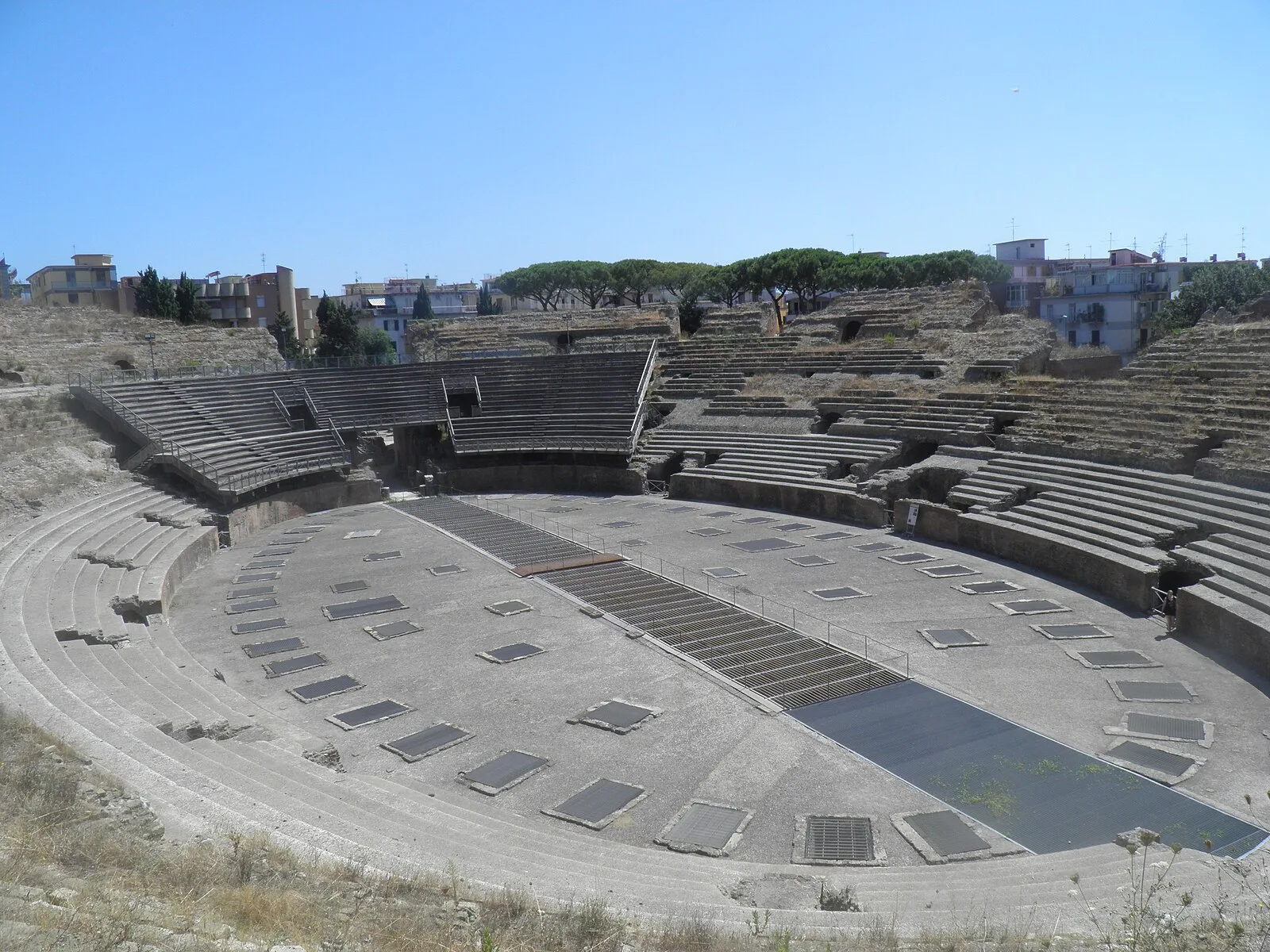
Also known as: 포추올리, Pezzulo, Pocuoli, Pocuolis, Pottsuoli, Pouzzoles, Pozzuoli (munisipyo), Pusōl, Puteolanum, Putéoles, Puteoli, Puzzuoli
| Type | Settlement |
|---|---|
| Period | 1500 - 500 BC |
| Country | Italy |
| Coordinates | 40.8446° N, 14.0934° E |