
 Italy
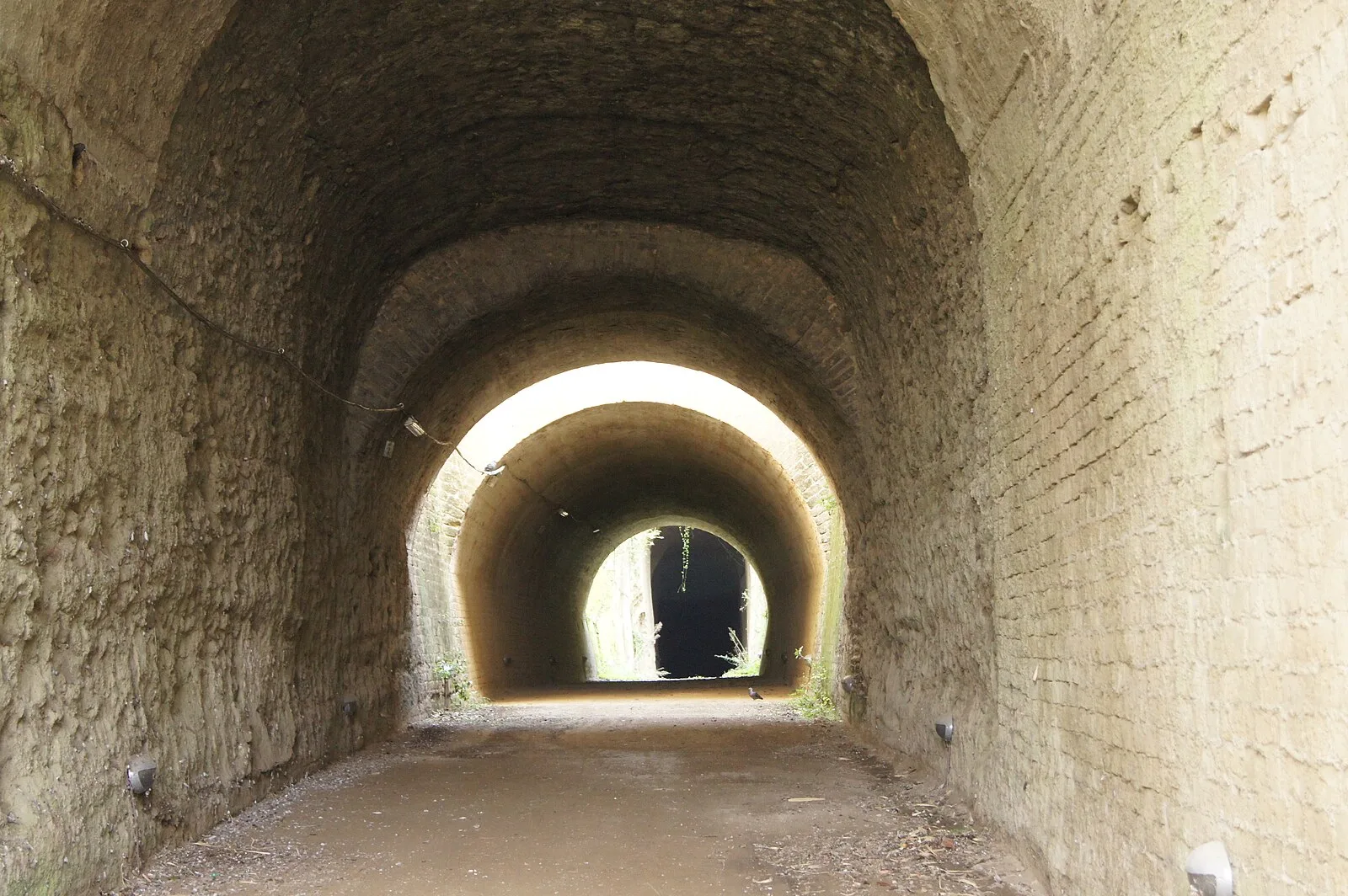
ItalyThe Grotta di Cocceio is an ancient Roman tunnel nearly a kilometre in length connecting Lake Avernus with Cumae and dating from 38-36 BC [1]. It was burrowed through the tuff stone of Monte Grillo by the architect Lucius Cocceius Auctus at the command of Agrippa who was in the process of converting the Lake into a military port, the Portus Julius [1]. The tunnel was wide enough to allow the passage of two wagons [1]. The Avernus side of the passage was decorated with a colonnade and had many statues in niches hewn into the tuff walls of the entrance [1]. The tunnel is also known as the Grotta della Pace, in reference to a Spanish captain, Pietro de Pace, who made use of the tunnel in 1508–1509 to plunder the ruins of Cumae, which, at the time, still bore many rich items [1].
Text: Wikipedia – 'Grotta di Cocceio' (revision of 2026-02-07), CC BY-SA 4.0 · sentences selected and shortened by an AI system · source →Grotta di Cocceio
Also known as: Grot van Cocceius, Gruta de Cocceio, Gruta de Coceyo, Rotta 'e Cocceio, Гротта-ді-Кокцей
| Type | Road |
|---|---|
| Period | 500 BC - 1 AD |
| Country | Italy |
| Coordinates | 40.8402° N, 14.0706° E |