
 Italy
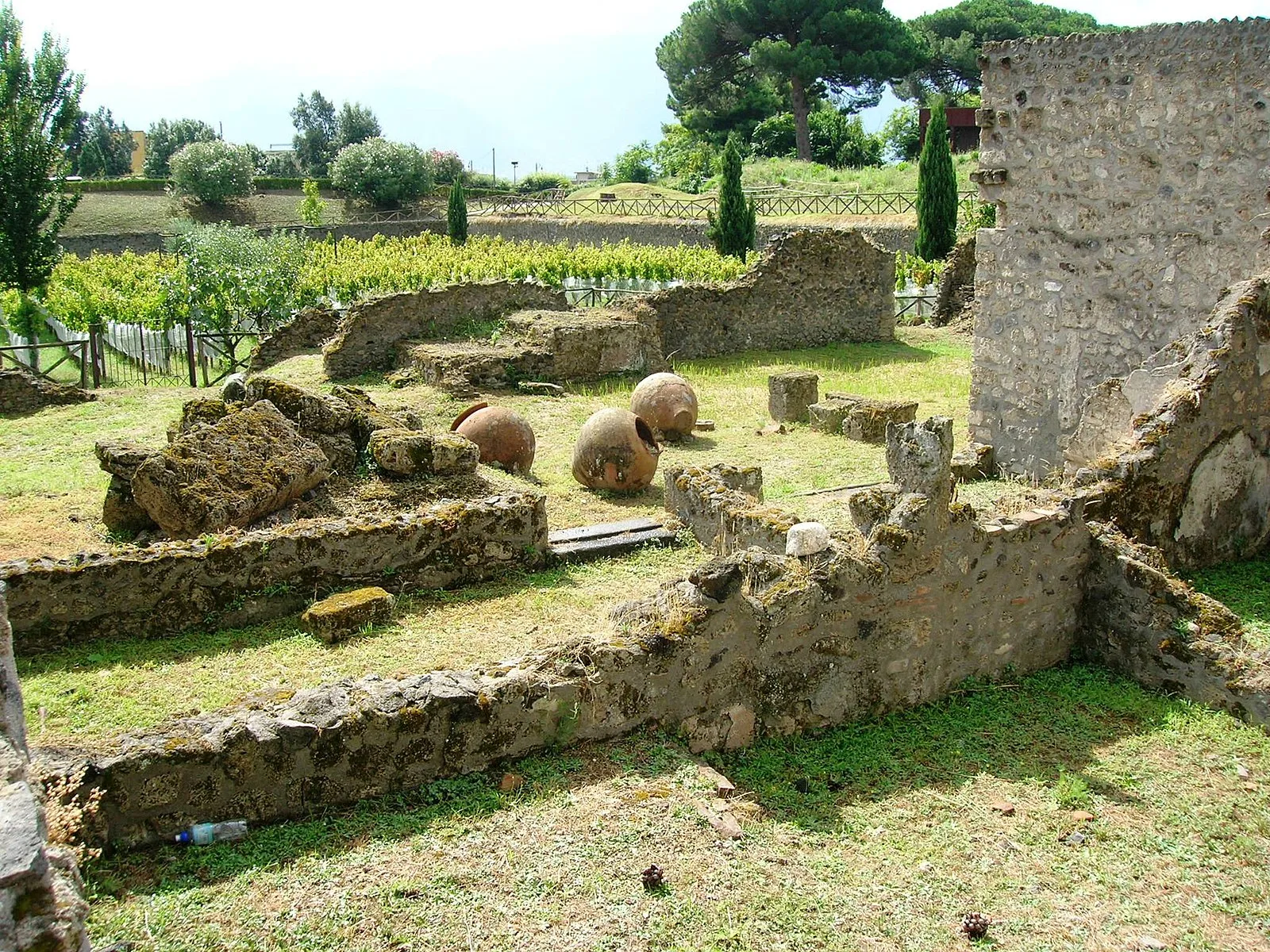
ItalyThe Garden of the Fugitives is an archaeological site located in the ancient destroyed city of Pompeii, in Regio 1 Insula 21 [1]. It contains the casts of 13 victims of the eruption of Mount Vesuvius in 79 AD [1]. The insula once contained more town houses than the two which stand at the northwestern end of the insula but the rest of the area had been largely converted into a vegetable garden and vineyard before the eruption, with a triclinium covered by a pergola for outdoor banquets [1]. The garden is situated near the Large Palaestra and just inside the Nocera gate [1]. The victims were adults and children, several found close together and others scattered over the area [1]. They died apparently while trying to find a way out of the Nocera Gate, as they were above the layer of pumice that had already reached a height of 3.5 metres, and were caught by the pyroclastic flow which was fatal [1]. The Fugitives were uncovered by Amedeo Maiuri [1]. They were uncovered in 1961 as hollow cavities where the flesh had rotted away [1].
Text: Wikipedia – 'Garden of the Fugitives' (revision of 2026-06-13), CC BY-SA 4.0 · sentences selected and shortened by an AI system · source →Garden of the Fugitives, Pompeii
Also known as: Garden of the Fugitives, Jardín de los fugitivos, The Garden of the Fugitives, Vrt bjegunaca
| Type | Archaeological site |
|---|---|
| Period | 1500 - 500 BC |
| Country | Italy |
| Coordinates | 40.7498° N, 14.4925° E |