
 Greece
Amphipolis was an important ancient Greek polis, and later a Roman city, whose large remains can still be seen [1]. Amphipolis was originally a colony of ancient Athens and was the site of the battle between the Spartans and Athenians in 422 BC [1]. It was later the place where Alexander the Great prepared for campaigns leading to his invasion of Asia in 335 BC [1]. Excavations in and around the city have revealed important buildings, ancient walls and tombs [1]. The Athenians founded a first colony at Ennea Hodoi in 465 BC, but the first ten thousand colonists were massacred by the Thracians [1]. A second attempt took place in 437 BC on the same site under general Hagnon which was successful [1]. The city and its first impressive and elaborately built walls of 7.5 km length date from this time [1]. After the final victory of Rome over Macedonia in the Battle of Pydna in 168 BC, Amphipolis became the capital of one of the four mini-republics, or merides [1].
Text: Wikipedia – 'Amphipolis' (revision of 2026-09-07), CC BY-SA 4.0 · sentences selected and shortened by an AI system · source →Amphipolis
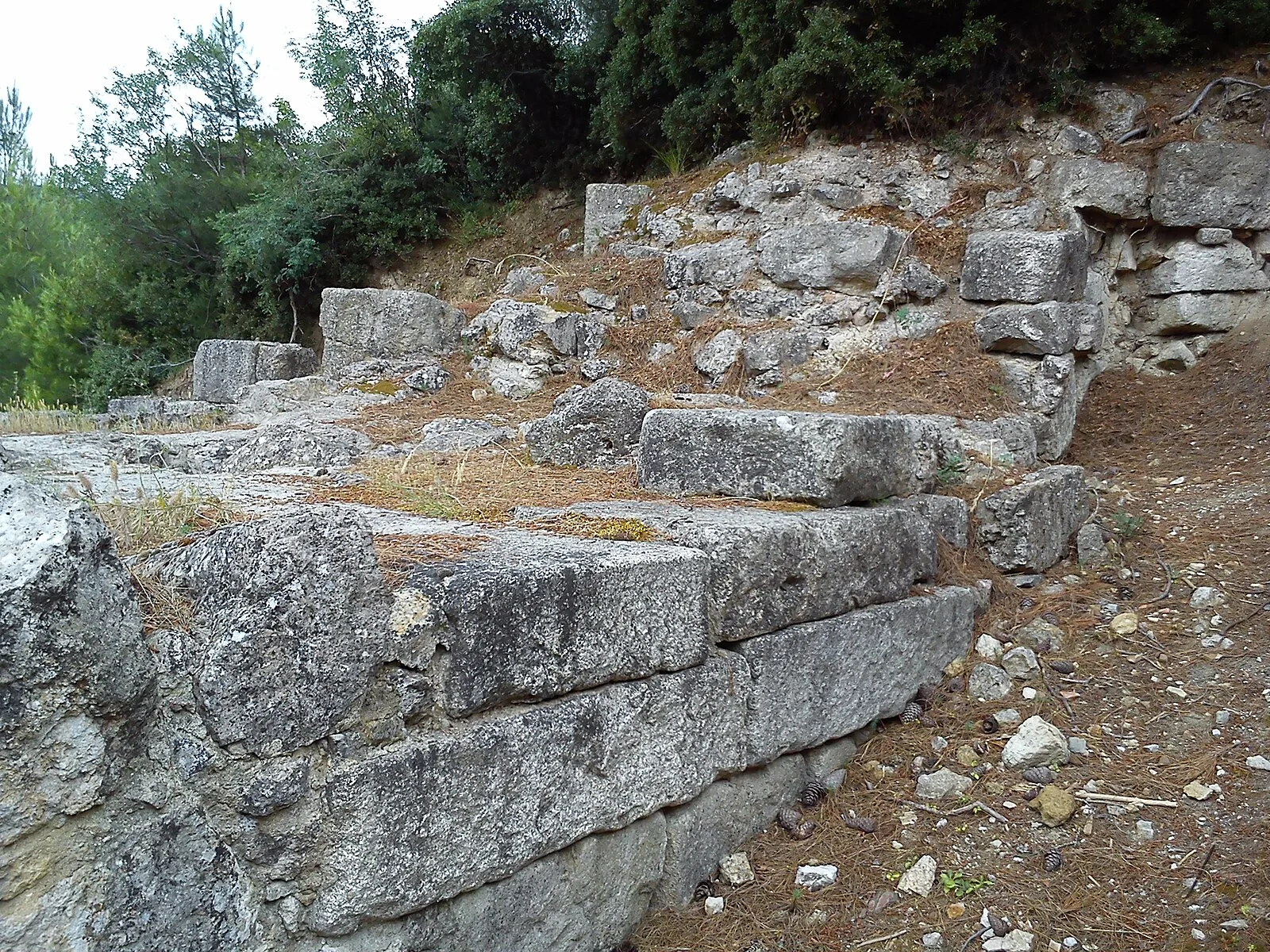
Also known as: 암피폴리스, Amfipol, Amfipole, Amfipoli, Amfipolis, Amphipolisz, Amphypolis, Anfipoli, Anfipolis, Anphipolis, Ennea Hodoi, Mint of Amphipolis
| Type | City/town/settlement |
|---|---|
| Period | 500 BC - 1 AD |
| Country | Greece |
| Coordinates | 40.8185° N, 23.8399° E |