
 Germany
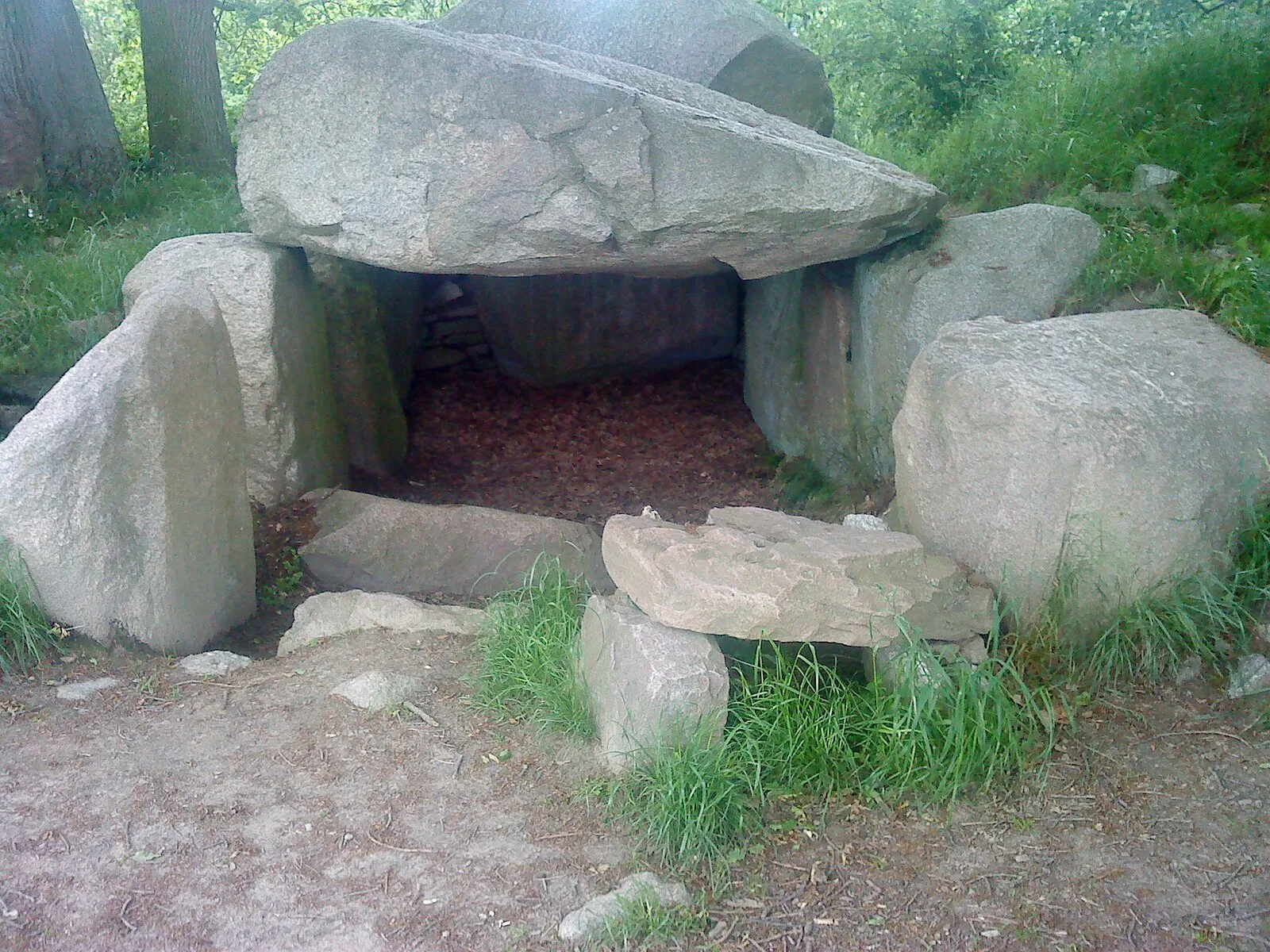
The megaliths in Mecklenburg-Vorpommern were erected as burial sites in the Neolithic, by the bearers of the Funnelbeaker (TRB) culture, between 3,500 and 3,200 BC [1]. 144 megaliths have been excavated since 1945 [1]. 106 of these were excavated and afterwards restored by archaeologist Ewald Schuldt and his team between 1964 and 1972 [1]. Disarticulated bones from up to twenty individuals have been discovered in excavated dolmens [1]. Few dolmens contain only TRB finds, as most were also used by the contemporary and subsequent Globular Amphora and Single Grave cultures, and some remained in use until the Bronze Age [1]. The bearers of the Globular Amphora culture removed and demolished skeletons and items from previous burials before reusing the tombs for their own dead [1]. Many megaliths were used as quarries in the past, e.g. for the construction of 13th- and 14th-century churches, medieval and early modern stone walls, 18th-century manor houses, as well as for 19th-century dikes, roads, bridges and milestones [1].
Text: Wikipedia – 'Megaliths in Mecklenburg-Vorpommern' (revision of 2026-04-12), CC BY-SA 4.0 · sentences selected and shortened by an AI system · source →Megaliths in Mecklenburg-Vorpommern
| Type | Megalithic structures |
|---|---|
| Period | 4500 - 3000 BC |
| Country | Germany |
| Coordinates | 53.7500° N, 12.5001° E |