
 France
La Graufesenque is an archaeological site 2 km from Millau, Aveyron, France, at the confluence of the rivers Tarn and Dourbie [1]. As Condatomagus (market of the confluent), it was famous in the Gallo-Roman period for the production of high quality dark red terra sigillata Roman pottery, which was made in vast quantities and exported over much of the western part of the Roman Empire [1]. Production of pottery at La Graufesenque started under the reign of Augustus [1]. Production reached a peak in the third quarter of the first century, and declined as a major exporter thereafter [1]. Reduced activity servicing local needs continued until the third century [1]. The pottery was made from local clay with a red slip and fired in wood burning kilns which could hold up to 40 thousand items [1]. More than six hundred pottery workshops are known to have been in operation, although a few dozen were prominent [1].
Text: Wikipedia – 'La Graufesenque' (revision of 2024-05-20), CC BY-SA 4.0 · sentences selected and shortened by an AI system · source →La Graufesenque
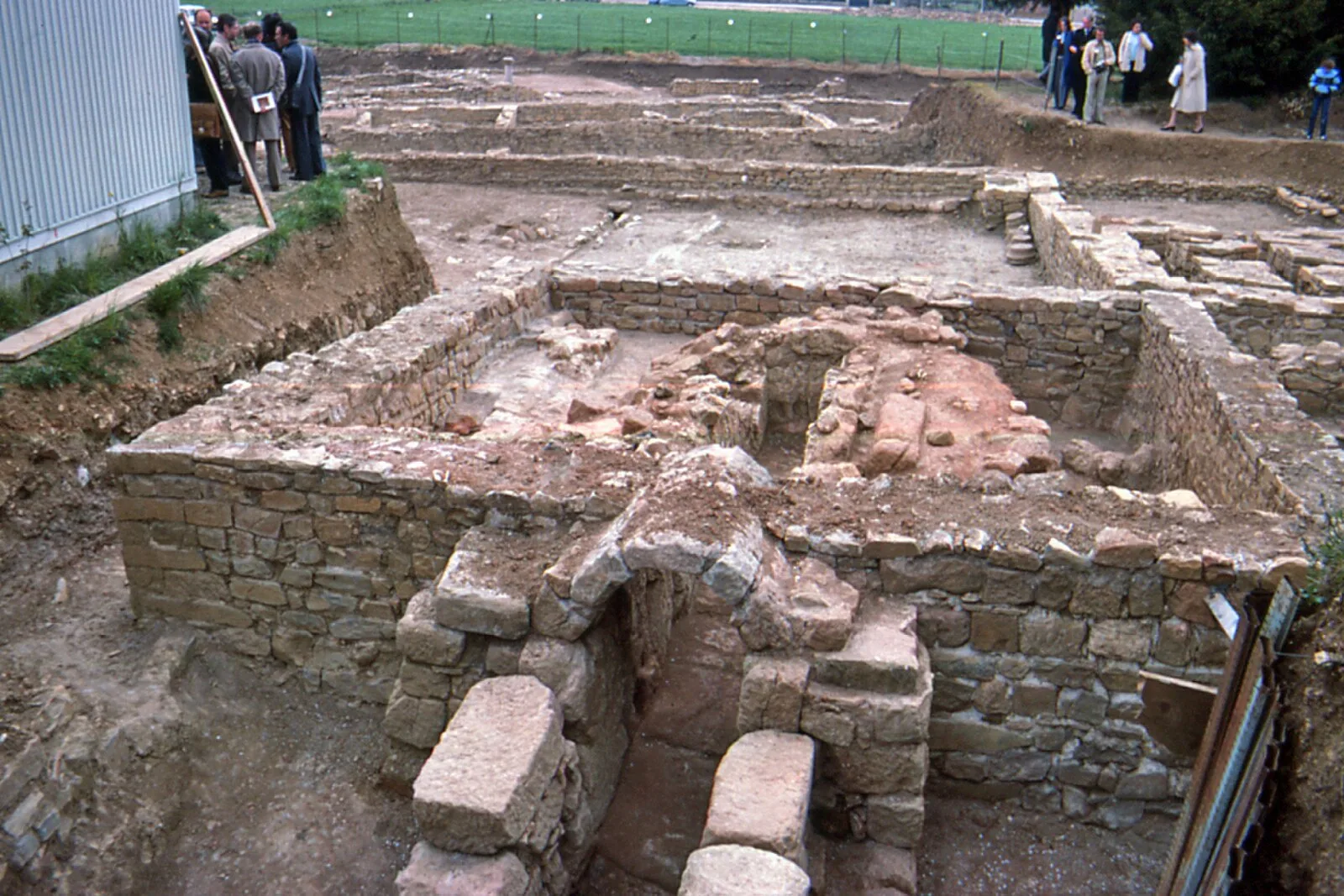
Also known as: atelier de la Graufesenque, ateliers de la Graufesenque, Condatomago, Condatomagus, Graufesenque, La Graufesenque (Samian Ware Discovery Site), Töpferrechnungen von La Graufesenque, Zona arqueològica de la Graufesenque, Zona arqueològica de la Graufesenque (Millau), ラ・グロフザンク遺跡, 拉格罗弗桑克, 拉格罗费桑克
| Type | Village |
|---|---|
| Period | 1 - 500 AD |
| Country | France |
| Coordinates | 44.0974° N, 3.0922° E |