

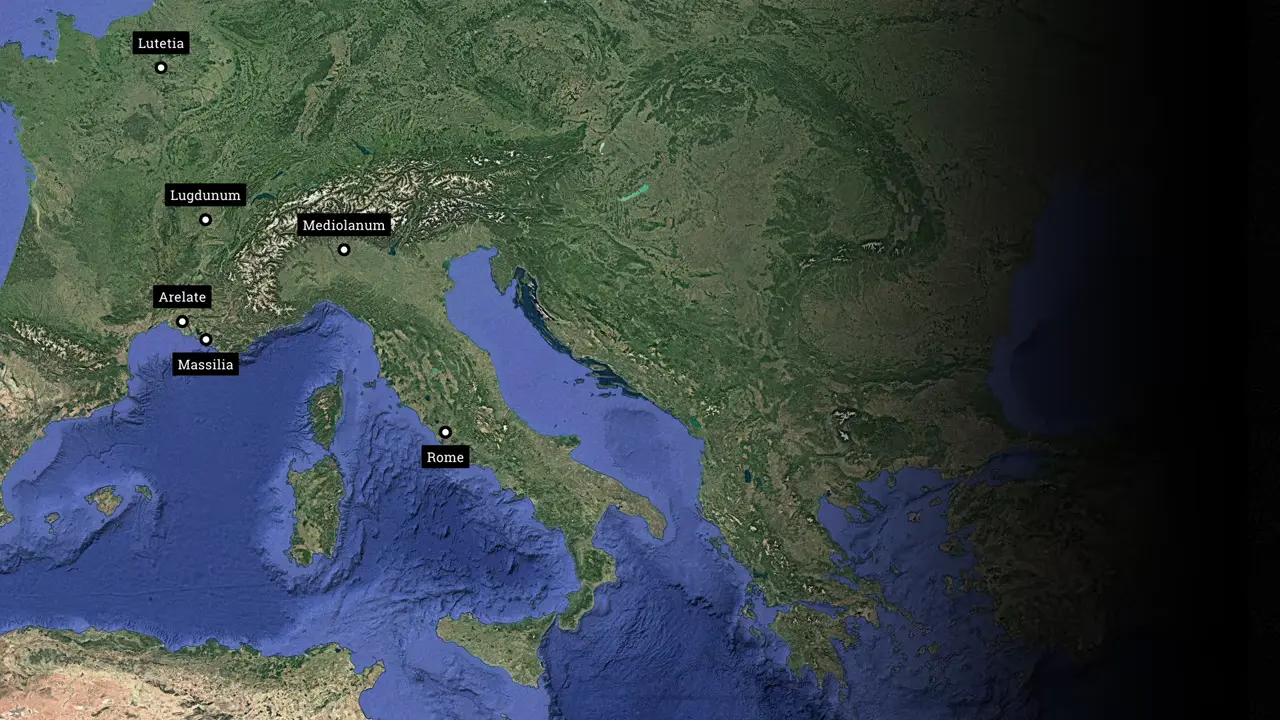
Terra sigillata was Rome's glossy red fine tableware. Arezzo was a major production center under Augustus, and examples have been found across the empire, from Britain to India. The video argues that Arezzo producers also influenced workshops in Gaul, where La Graufesenque became a major first-century center. Excavation there uncovered a large kiln complex, but the estimated 35,000 vessels represent annual output across the site—not pots fired in a single batch.
La Graufesenque's Roman kilns produced up to 35,000 vessels a year
 FranceGeneral
Key facts
- Terra sigillata is glossy red Roman fine tableware; Arezzo was a major production center during Augustus's reign.
- Terra sigillata was widely distributed, with examples found from Britain to India.
- Maker's stamps distinguish products or manufacturers, but do not establish workshop size or whether workers were enslaved.
- The video argues that Arezzo producers influenced or established workshops in Gaul; La Graufesenque became a major first-century AD production center.
- La Graufesenque excavations uncovered numerous kilns. The estimated 35,000 vessels refers to annual output across the complex, not vessels fired simultaneously.
- The claim that this annual output was not equaled until the 19th century is not established by the search evidence.
Sources
Terra sigillatareferenceworks.brill.com
Terra Sigillata from Minturnaejstor.org
Terra sigillataen.wikipedia.org
Was this story useful?
Keep exploring
Every site on this page sits on the globe, and the people who research them are on the Discord.
3D Globe · Sites by country · Story Archive · Research Library · Weekly Journal · Search
AI-generated text · images from the original sources · always verify with the sources.