
 England
The Roman Baths are well-preserved thermae in the city of Bath, Somerset, England [1]. A temple was constructed on the site between 60 and 70 AD in the first few decades of Roman Britain [1]. Its presence led to the development of the small Roman urban settlement known as Aquae Sulis around the site [1]. The Roman baths were designed for public bathing and were used until the end of Roman rule in Britain in the 5th century AD [1]. The Roman Baths are preserved in four main features: the Sacred Spring, the Roman Temple, the Roman Bath House, and a museum which holds artefacts from Aquae Sulis [1]. Archaeological evidence indicates that the site of the baths may have been a centre of worship used by Celts; the springs were dedicated to the goddess Sulis [1]. The temple was constructed in 60–70 AD and the bathing complex was gradually built up over the next 300 years [1].
Text: Wikipedia – 'Roman Baths (Bath)' (revision of 2026-09-09), CC BY-SA 4.0 · sentences selected and shortened by an AI system · source →Roman Baths, Bath
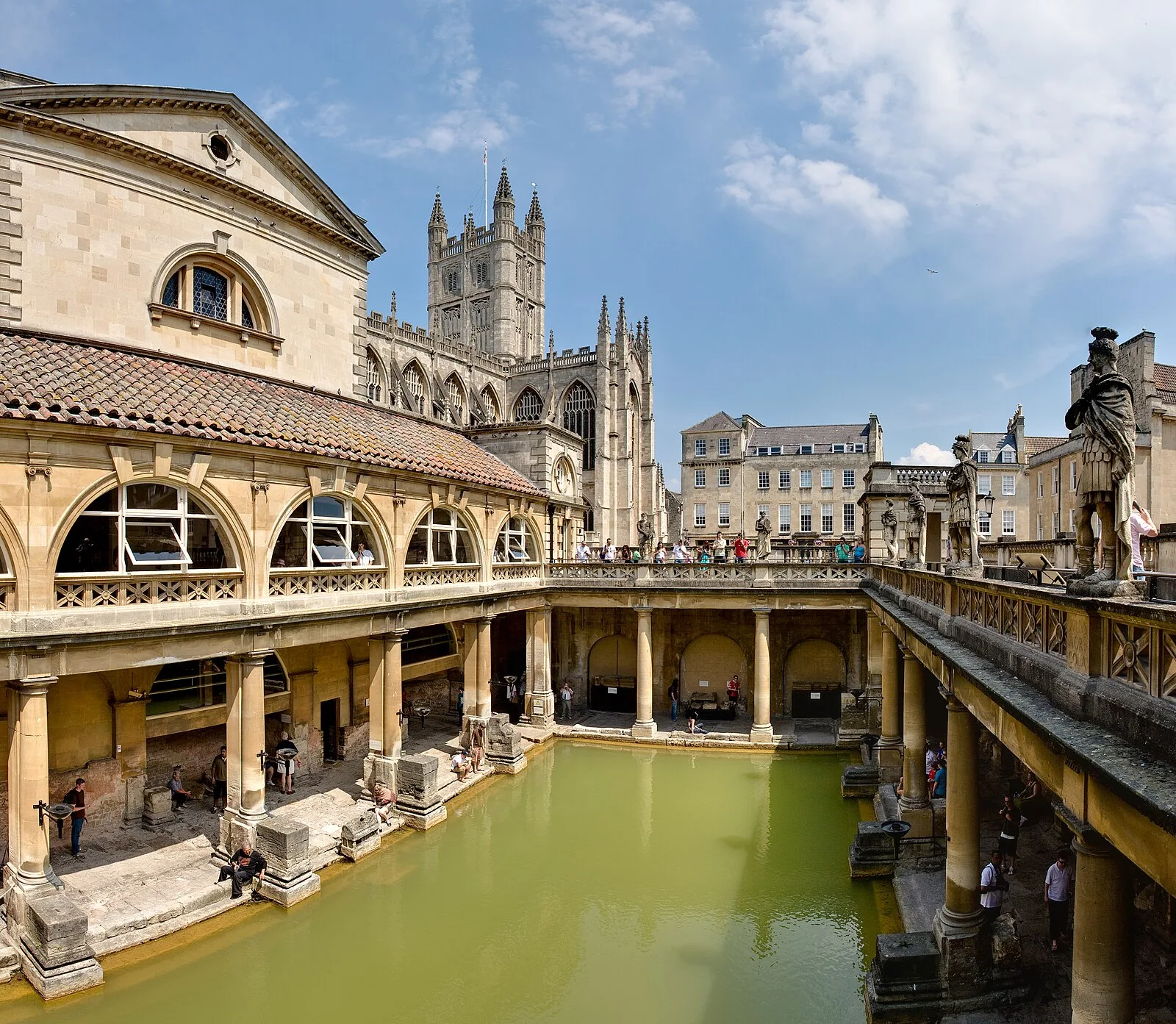
Also known as: 로만 바스, Banos Romanos, Banys Romans, Banys Romans de Bath, Batheko erromatar termak, Folcadáin Rómhánach, Folcadáin Rómhánacha Bath, Pump Room de Bath, Rimske terme, Bath, rimske terme v Bathu, Roma Hamamları (Bath), roman bath
| Type | Bath |
|---|---|
| Period | 1 - 500 AD |
| Country | England |
| Coordinates | 51.3810° N, 2.3595° W |