
 England
Halliggye Fogou is one of many fogous in Cornwall, England [1]. The Halliggye Fogou consists of a long narrow tunnel leading to three sectioned chambers [1]. The complex of passages has a roof and walls of stone, and is the largest and best-preserved of several mysterious tunnels associated with Cornish Iron Age settlements [1]. Pottery found during excavations has included local Iron Age cordoned wares and some sherds of Roman Samian ware from southern Gaul [1].
Text: Wikipedia – 'Halliggye Fogou' (revision of 2026-07-18), CC BY-SA 4.0 · sentences selected and shortened by an AI system · source →Halliggye Fogou
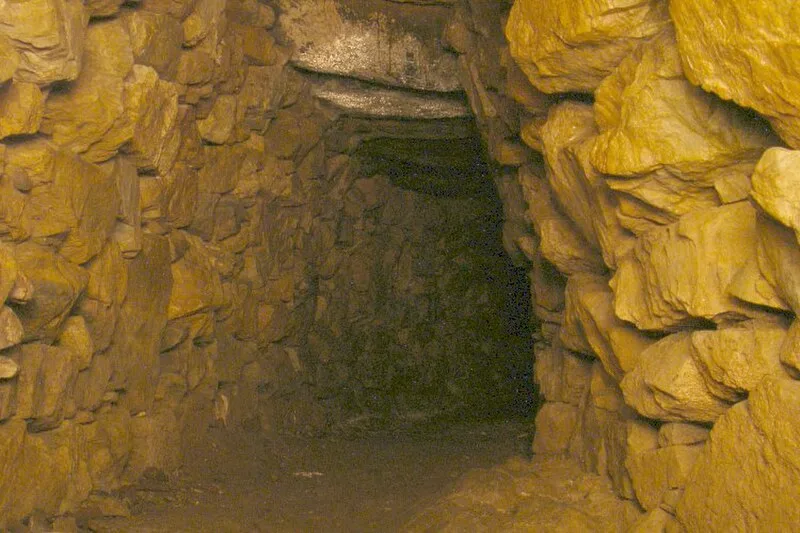
Also known as: Fogou von Halligye, 哈理幾地下石道
| Type | Cave Structures |
|---|---|
| Period | 500 BC - 1 AD |
| Country | England |
| Coordinates | 50.0710° N, 5.1961° W |