
 Bulgaria
Unlike most European capitals, Sofia does not straddle any large river, but is surrounded by comparatively high mountains on all sides [1]. The Neolithic village in Slatina dating to the 5th–6th millennium BC is documented [1]. Another neolithic settlement was founded in the 3rd–4th millennium BC near the site of the modern National Art Gallery, which has been the traditional centre of the city ever since [1]. The earliest tribes who settled were the Thracian Tilataei [1]. In 339 BC Philip II of Macedon destroyed and ravaged the town for the first time [1]. Serdica became part of the First Bulgarian Empire during the reign of Khan Krum in 809 [1]. The city centre contains many remains of ancient Serdica that have been excavated and are on public display, including Complex Ancient Serdica, eastern gate, western gate, city walls, thermal baths [1].
Text: Wikipedia – 'Sofia' (revision of 2026-09-25), CC BY-SA 4.0 · sentences selected and shortened by an AI system · source →Sofia
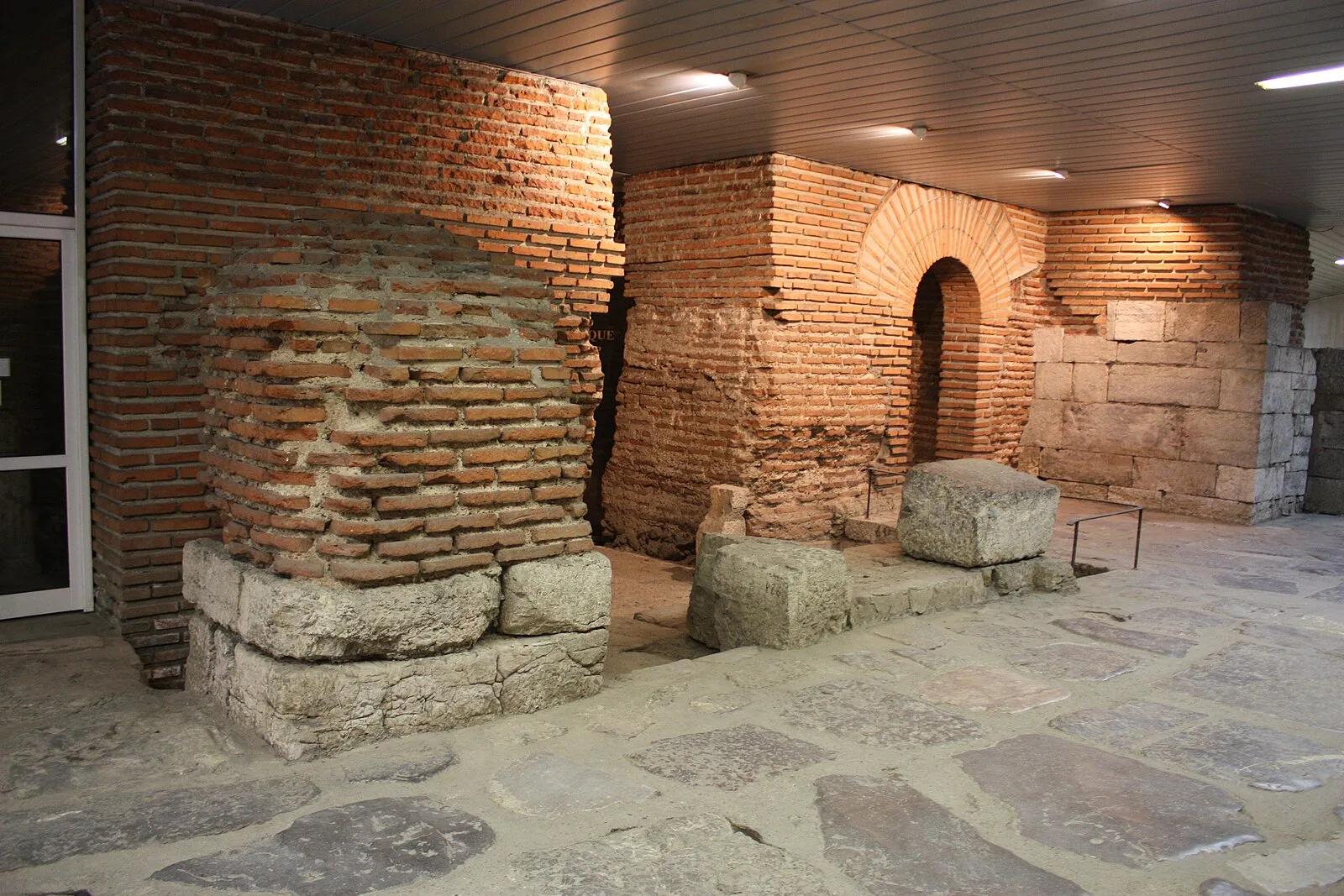
Also known as: 소피아, Serdica, Sofía, Bulgaria, Sòfia (Bulgaria), Sofia (stad), Sofia (tanàna), Sofia (ulohang dakbayan), Sofie, Sofii, Sofija, Sofijo, Sofio
| Type | City/town/settlement |
|---|---|
| Period | < 4500 BC |
| Country | Bulgaria |
| Coordinates | 42.7002° N, 23.3300° E |