
 Bulgaria
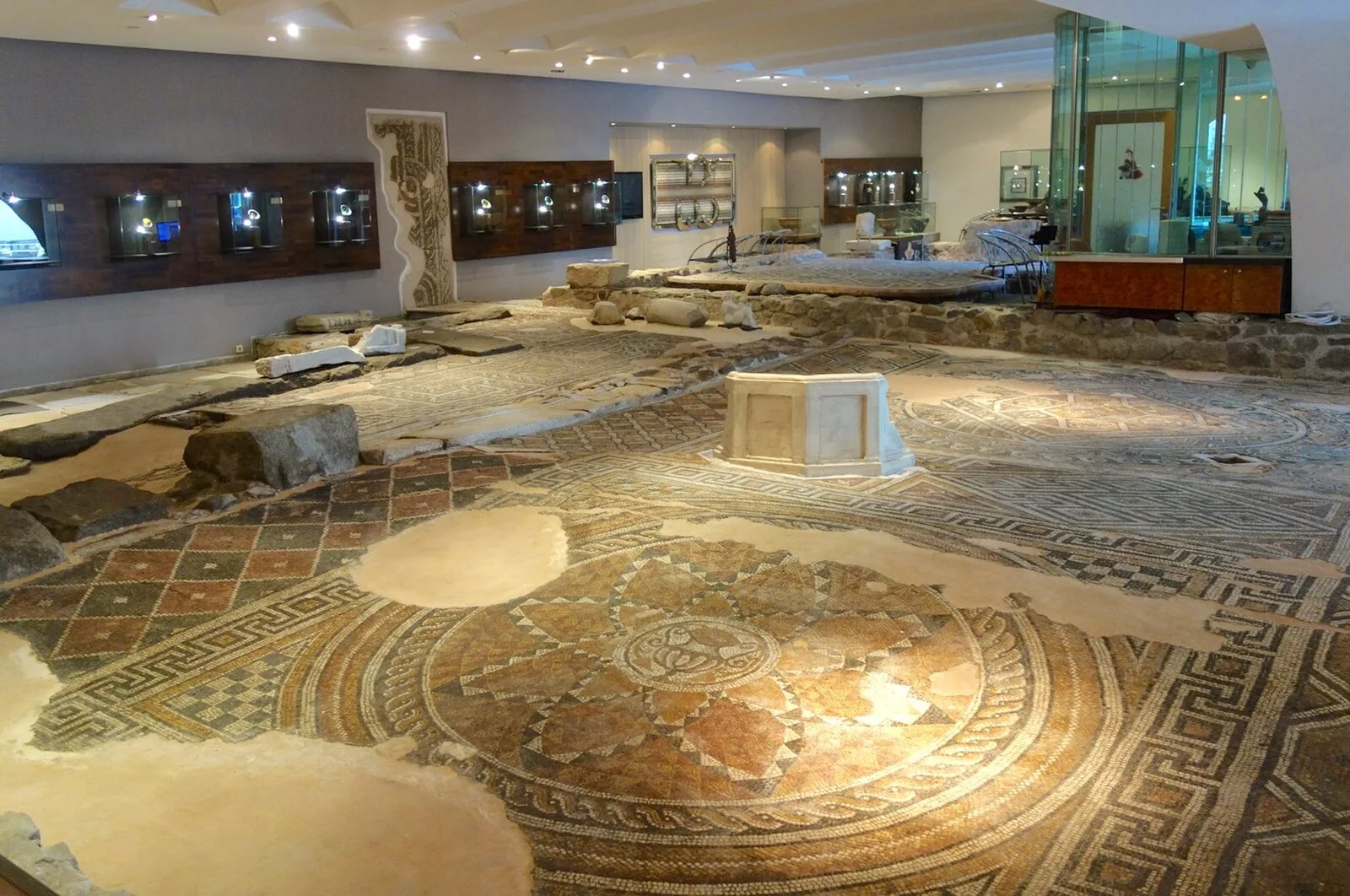
The House of Eirene (Latin: Domus Eirene; Bulgarian: Резиденция Ейрене) is an ancient Roman peristyle house with lavish mosaic floors in Philippopolis [1]. The excavated area of the residential complex is 668 m2, of which 160 m2 are colourful mosaics [1]. The house was severely damaged after the invasion of Attila's Huns in 441–442, but later it was repaired and expanded [1]. Between the 4th and the 5th century, the floors were decorated with colourful and lavish mosaics of geometrical figures, endless knot symbols, flowers and welcoming inscriptions to visitors [1]. The house was abandoned at the end of the 6th century, like other important buildings in the area, such as the episcopal basilica of Philippopolis [1]. The residential rooms were in the eastern part and surrounded the peristyle while the service rooms were located in the southern part [1]. The house and the ancient street next to it were discovered in 1983–1984 during the construction of the underpass of Tsar Boris III Boulevard in Plovdiv [1].
Text: Wikipedia – 'Domus Eirene' (revision of 2026-07-19), CC BY-SA 4.0 · sentences selected and shortened by an AI system · source →Domus Eirene
Also known as: demeure Eiréné, Eirene mansion, Eirene (Plovdiv), Eirene Residence, Антична жилищна сграда Ейрене (Пловдив), Ейрене (Пловдив)
| Type | Residence/villa/farmhouse |
|---|---|
| Period | 1 - 500 AD |
| Country | Bulgaria |
| Coordinates | 42.1453° N, 24.7517° E |