
 Bulgaria
Oescus, Palatiolon or Palatiolum was an important ancient city on the Danube river in Roman Moesia [1]. It later became known as Ulpia Oescus [1]. It lay northwest of the modern Bulgarian city of Pleven, near the village of Gigen [1]. Under Roman rule, Oescus began as an important military base and legionary fortress as part of the Danubian Limes [1]. The Roman Legio V Macedonica maintained its permanent military fortress intermittently at this site from 10 to 101 AD [1]. Archaeological excavations began at the site in 1904, carried out by Vaclav Dobruski [1]. The walled city has the shape of an irregular pentagon, with an initial area of 18 hectares; after 271 it was extended easterly with a 10 hectare addition [1]. In 1948, the mosaic known popularly as "The Achaeans" (3rd century AD) was discovered [1].
Text: Wikipedia – 'Oescus' (revision of 2026-08-21), CC BY-SA 4.0 · sentences selected and shortened by an AI system · source →Oescus
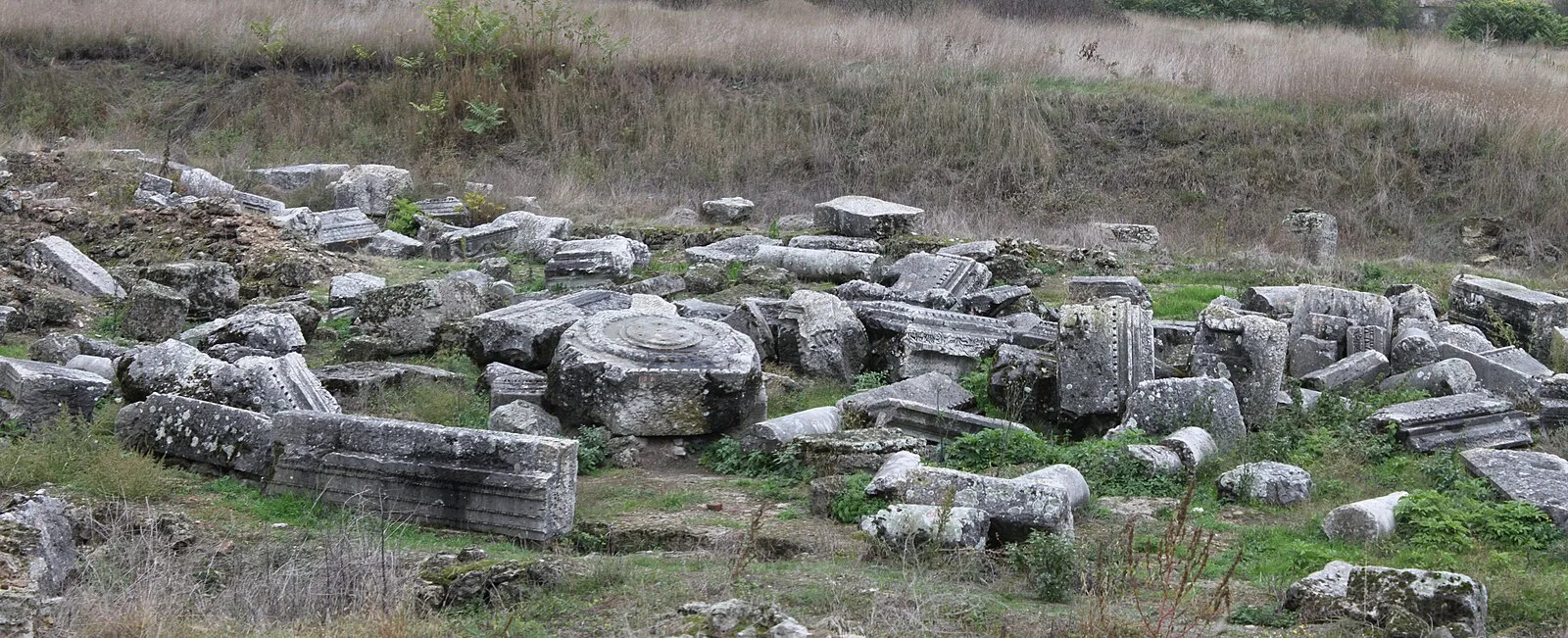
Also known as: 오에스쿠스, 오이스쿠스, Colonia Ulpia Oescus, Iskos, Oescus (ciudad), Oiskos, Roman town Colonia Ulpia Oescus, Ulpia Escus, Ulpia Oescus, Οίσκος, Ескус, Улпия Ескус
| Type | City/town/settlement |
|---|---|
| Period | 1 - 500 AD |
| Country | Bulgaria |
| Coordinates | 43.7002° N, 24.4834° E |