
 Azerbaijan
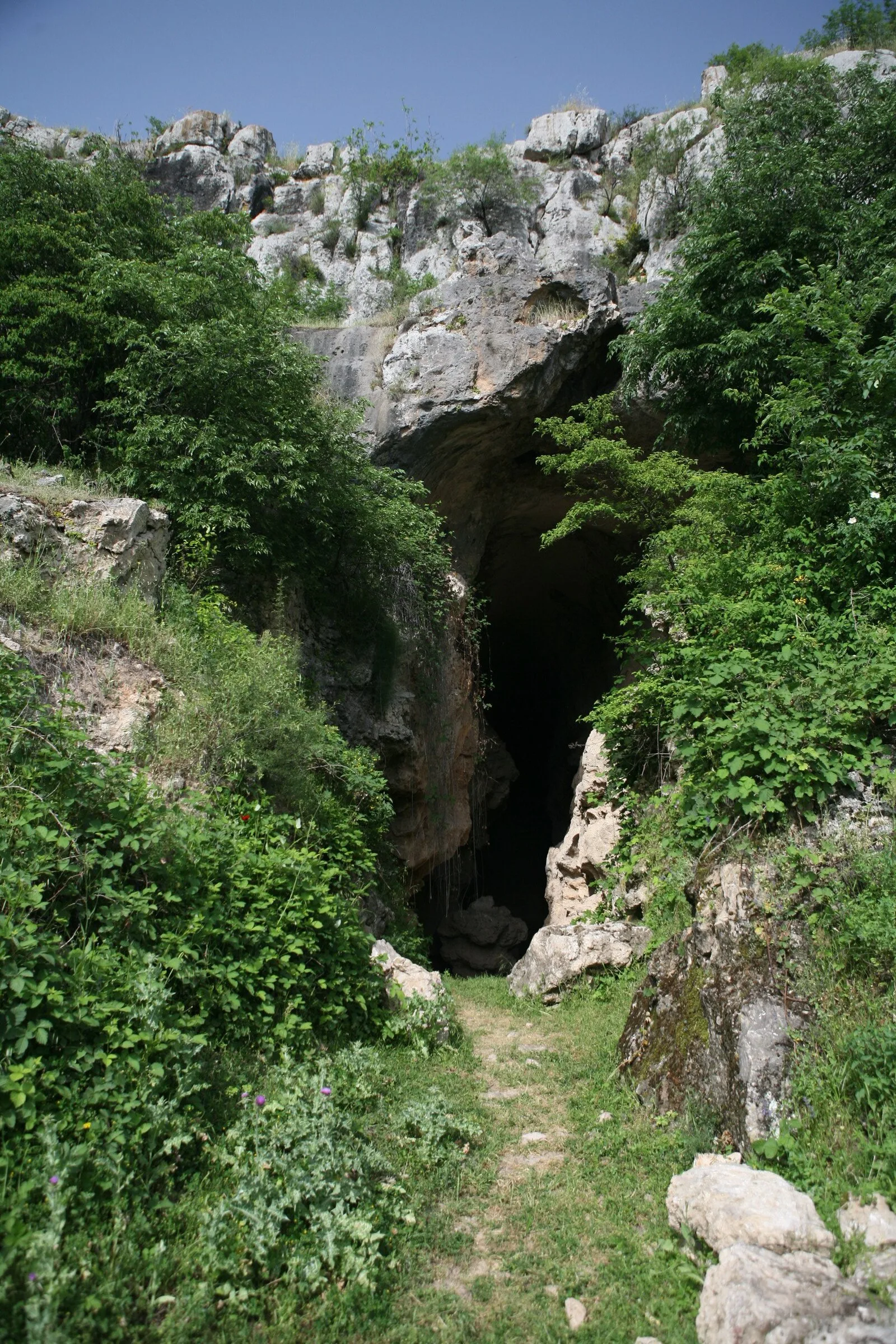
Azykh Cave, also referred to as Azokh Cave, is a six-cave complex in Azerbaijan, known as a habitation site of prehistoric humans [1]. It is situated near the village of Azykh in the Khojavend District [1]. The cave is an important prehistoric site which has been occupied by different human groups over time [1]. The cave was discovered in 1960 by the Azerbaijan National Academy of Sciences under the leadership of Mammadali Huseynov and is considered to be the site of one of the most ancient locations of proto-human presence in Eurasia [1]. The poor quality of the 1960s excavation, in which no taphonomic data was collected, led to uncertainties over the chronological sequence of the layers [1]. Excavations resumed in the mid-1990s [1].
Text: Wikipedia – 'Azykh Cave' (revision of 2026-07-21), CC BY-SA 4.0 · sentences selected and shortened by an AI system · source →Azykh Cave
Also known as: Asych-Höhle, Azihške jame, Azikh, Azix gʻori, Azıh Mağarası, Azıhontrop, Azıx, Azıx (jaskinia), Azıx mağarası, Azohas ala, Azohške jame, Cova d'Azykh
| Type | Cave Structures |
|---|---|
| Period | < 4500 BC |
| Country | Azerbaijan |
| Coordinates | 39.6194° N, 46.9883° E |