
 Austria
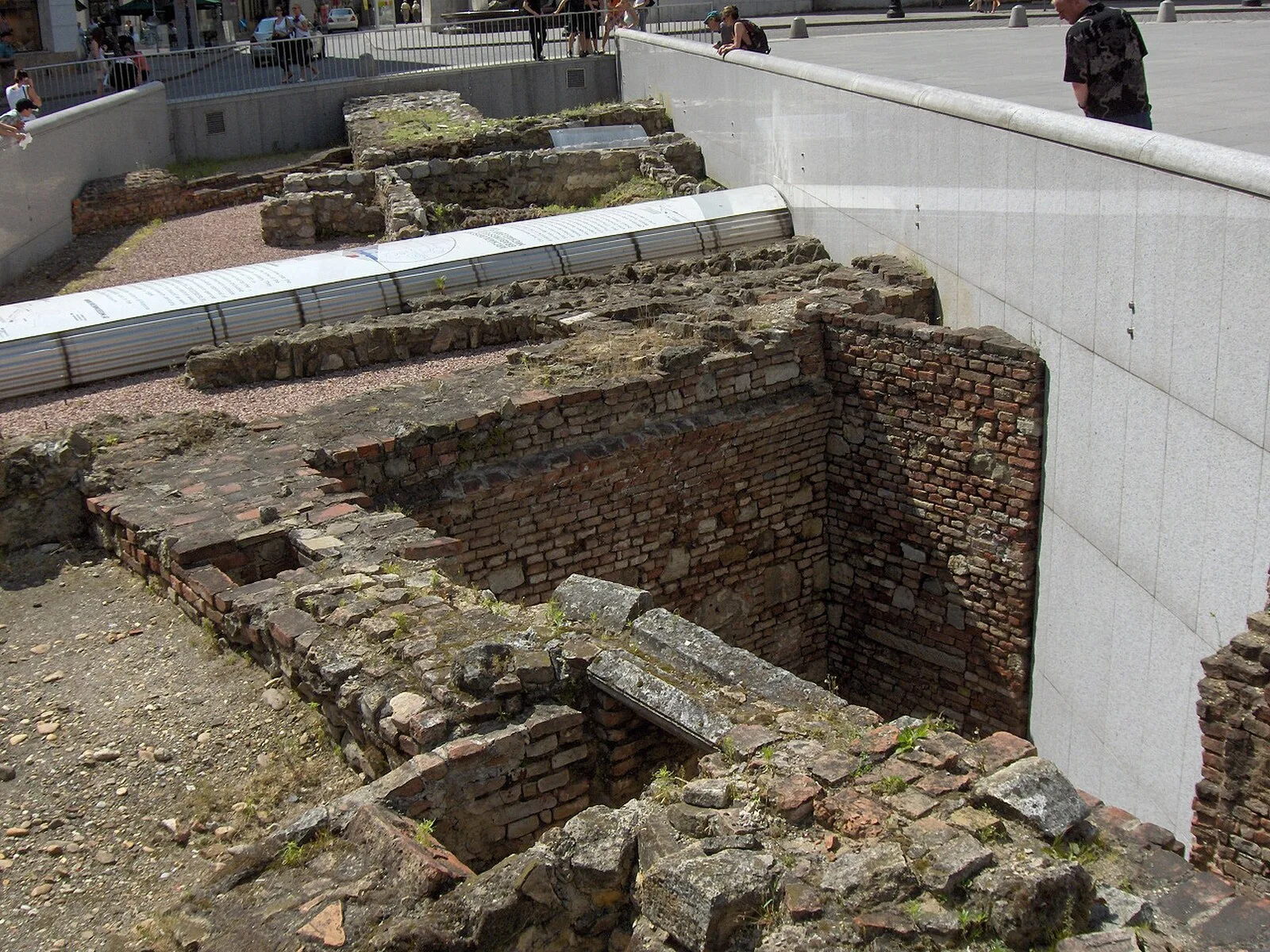
Vindobona was a Roman military camp (or castra) in the province of Pannonia, located on the site of the modern city of Vienna in Austria [1]. Early references to Vindobona are made by the geographer Ptolemy in his Geographica and the historian Aurelius Victor, who recounts that emperor Marcus Aurelius died in Vindobona on 17 March 180 from an unknown illness while on a military campaign against invading Germanic tribes [1]. Vindobona was a military camp contiguous to the civilian city of Canabae [1]. The Danube marked the border of the Roman Empire, and Vindobona was part of a defensive network including the camps of Carnuntum, Brigetio and Aquincum [1]. Over 3,000 stamped bricks, several stone monuments and written sources prove that several legions, cavalry units and marines were stationed in Vindobona [1]. Legio X Gemina from Aquincum arrived in 114 AD and remained in Vindobona until the 5th century [1]. Excavations have revealed that Vindobona received its supply through a 17 km long water pipeline [1].
Text: Wikipedia – 'Vindobona' (revision of 2026-09-15), CC BY-SA 4.0 · sentences selected and shortened by an AI system · source →Vindobona
Also known as: 빈도보나, Castrum Vindobona, Mint of Vindobona, Vindobona (město), Vindomana, Βινδοβόνα, Ουινδοβόνα, Виндобона, Віндобона, ვინდობონა, Վինդոբոնա, וינדובונה
| Type | Fortress |
|---|---|
| Period | 1 - 500 AD |
| Country | Austria |
| Coordinates | 48.2110° N, 16.3703° E |