
 Austria
Teurnia (later Tiburnia) was a Roman city (municipium) [1]. Today its ruins lie in the western Austrian state of Carinthia [1]. In late antiquity it was also a bishop's see, and towards the end of Roman times it was mentioned as the capital of the province of Noricum mediterraneum [1]. Ancient Teurnia was situated on a wooded hill at the village of St. Peter in Holz in the municipality of Lendorf in the Lurnfeld valley, four kilometres to the west of Spittal an der Drau in Upper Carinthia, Austria [1]. By the 4th century, Teurnia was already a Christian town and it was a bishop's see until the city's decline and its end in 610 [1]. Professional excavations began with the accidental discovery of the cemetery church in 1908 [1]. The mosaic of its donor, the praeses or governor Ursus, in the right side-chapel of the three-naved basilica is in near-perfect preservation [1].
Text: Wikipedia – 'Teurnia' (revision of 2025-11-27), CC BY-SA 4.0 · sentences selected and shortened by an AI system · source →Teurnia
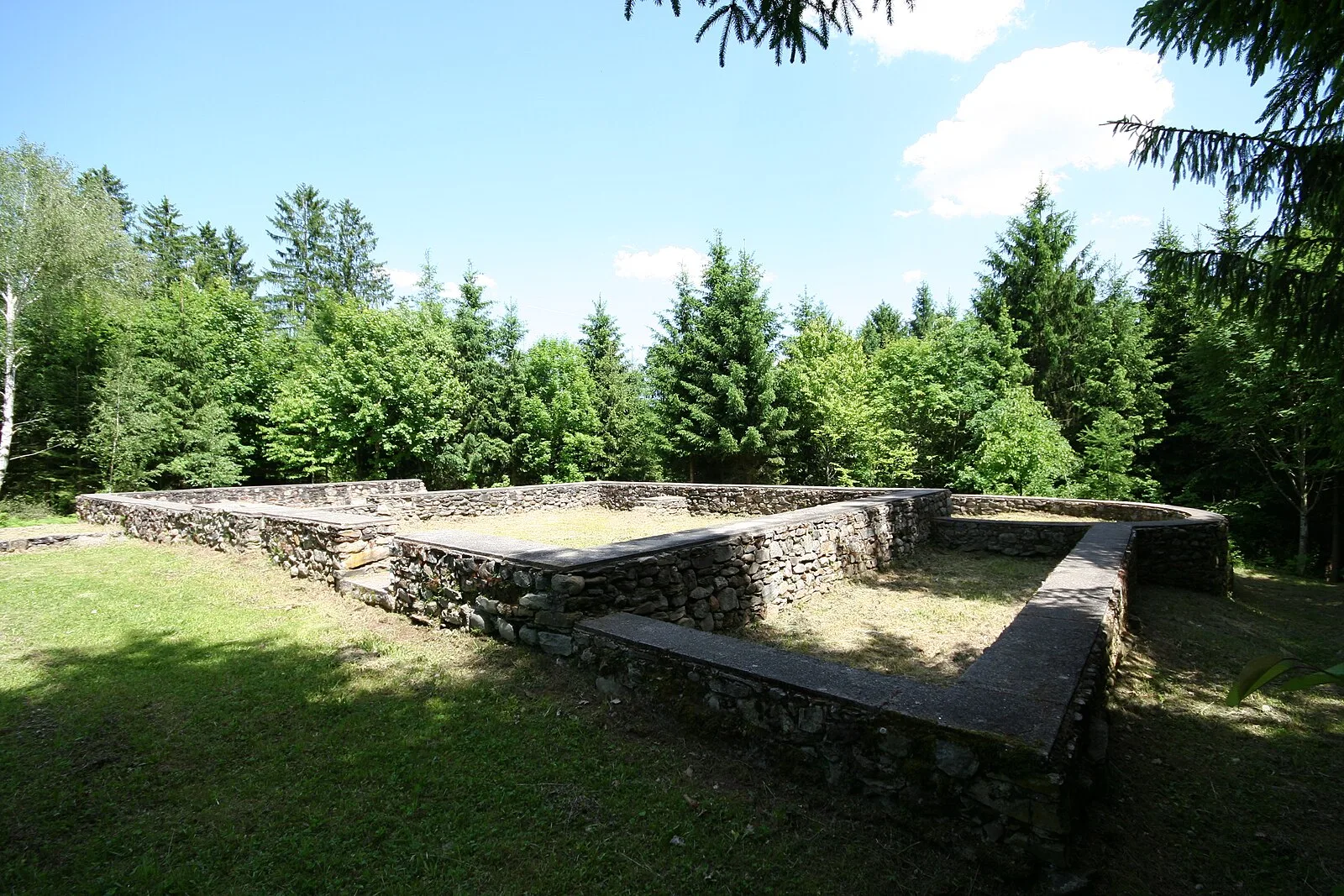
Also known as: Römisches Municipium Claudium Teurnia, Teurnija, Tiburnia, Теурния
| Type | City/town/settlement |
|---|---|
| Period | 1500 - 500 BC |
| Country | Austria |
| Coordinates | 46.8235° N, 13.4438° E |