
 Austria
The Gudenus Cave is an archaeological site near the city of Krems in north-eastern Austria [1]. It is noted for its fossils and remains of Palaeolithic human settlers [1]. The Gudenus Cavern is situated 20 km northwest of the city of Krems, in the valley of the Little Krems, not far from Willendorf [1]. The cave is 22 m long with a width of 2 to 3 m and is situated 7.5 m above the level of the stream [1]. The archaeological deposit has yielded bones of numerous animals, including Woolly mammoth, Woolly rhinoceros, Aurochs, Chamois, Reindeer, and Red deer [1]. Human artifacts include numerous flint implements beginning with the Mousterian of the Middle Paleolithic, although there is no certainty as to the dating [1]. There is also an Upper Palaeolithic, Magdalenian, assemblage including an engraved reindeer bone, and a fragment of a bone flute dated to about 16,000–10,000 BCE [1].
Text: Wikipedia – 'Gudenus Cave' (revision of 2026-07-20), CC BY-SA 4.0 · sentences selected and shortened by an AI system · source →Gudenus Cave
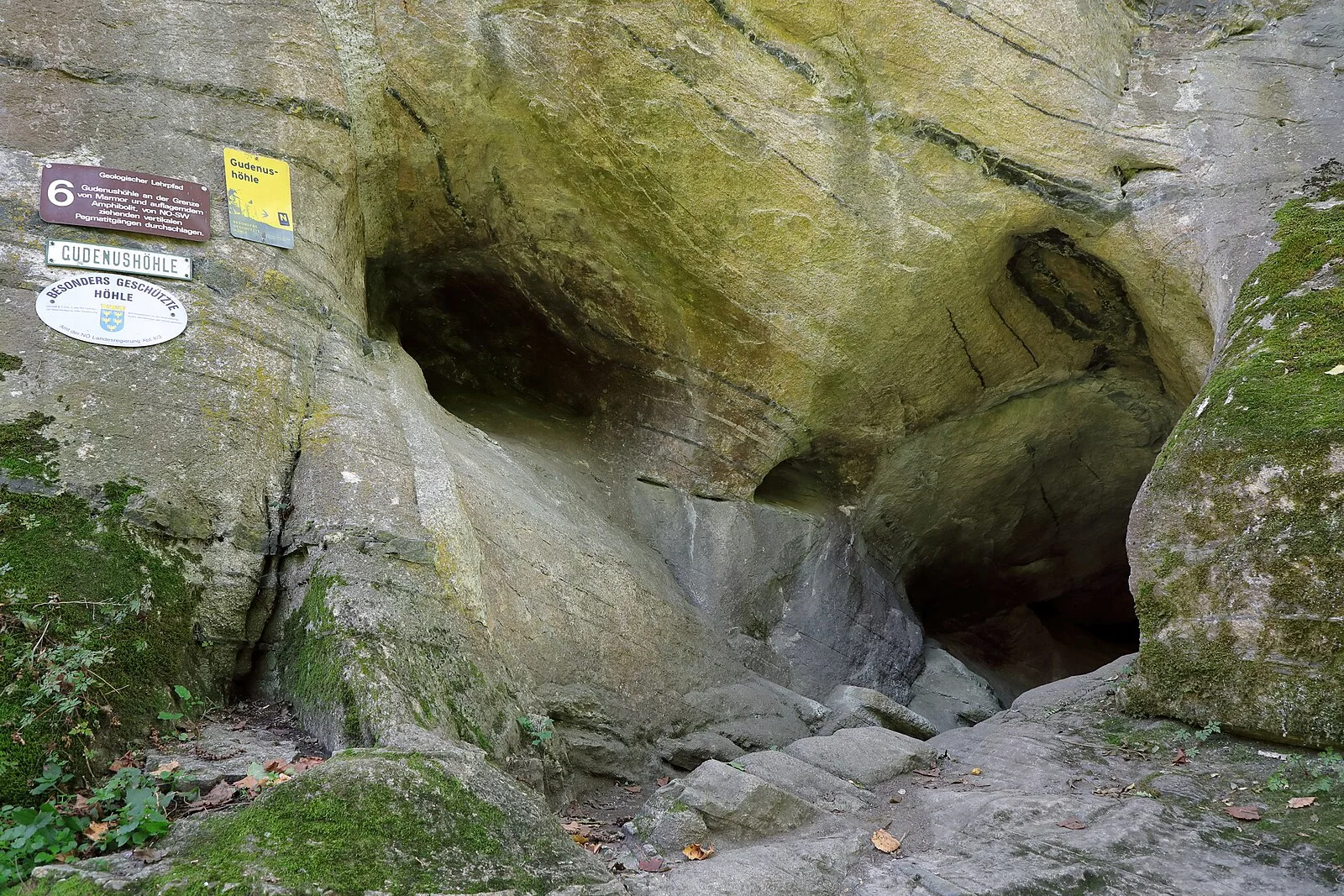
Also known as: grotte Gudenus, Gua Gudenus, Gudenusgrottan, Gudenushöhle, Gudenus Mağarası, Knochenpfeife aus der Gudenushöhle, გუდენუსის მღვიმე, מערת גודנוס, كهف جودنوس
| Type | Cave Structures |
|---|---|
| Period | 500 BC - 1 AD |
| Country | Austria |
| Coordinates | 48.4469° N, 15.3956° E |