
 Peru
PeruHuaca Pucllana, or Huaca Juliana, is a great adobe and clay pyramid located in the Miraflores district of central Lima, Peru, built from seven staggered platforms [1]. It served as an important ceremonial and administrative center for the advancement of the Lima Culture, a society which developed in the Peruvian Central Coast between the years of 200 AD and 700 AD [1]. As a whole, the structure is surrounded by a plaza, or central square, that borders the outer limits, and by a large structured wall dividing it into two separate sections [1]. In one section there were benches and evidence of deep pits where offerings of fish and other marine life took place in order to attain the favor of the gods [1]. The other section is an administrative area [1]. Of particular note are the remains of the "Señor de los Unkus", which belonged to the first tomb within the ceremonial center to have been discovered completely intact [1]. This tomb holds three separate burial shrouds containing the remains of three adults, two of which have masks, and those of a sacrificed child [1].
Text: Wikipedia – 'Huaca Pucllana' (revision of 2026-07-18), CC BY-SA 4.0 · sentences selected and shortened by an AI system · source →Huaca Pucllana
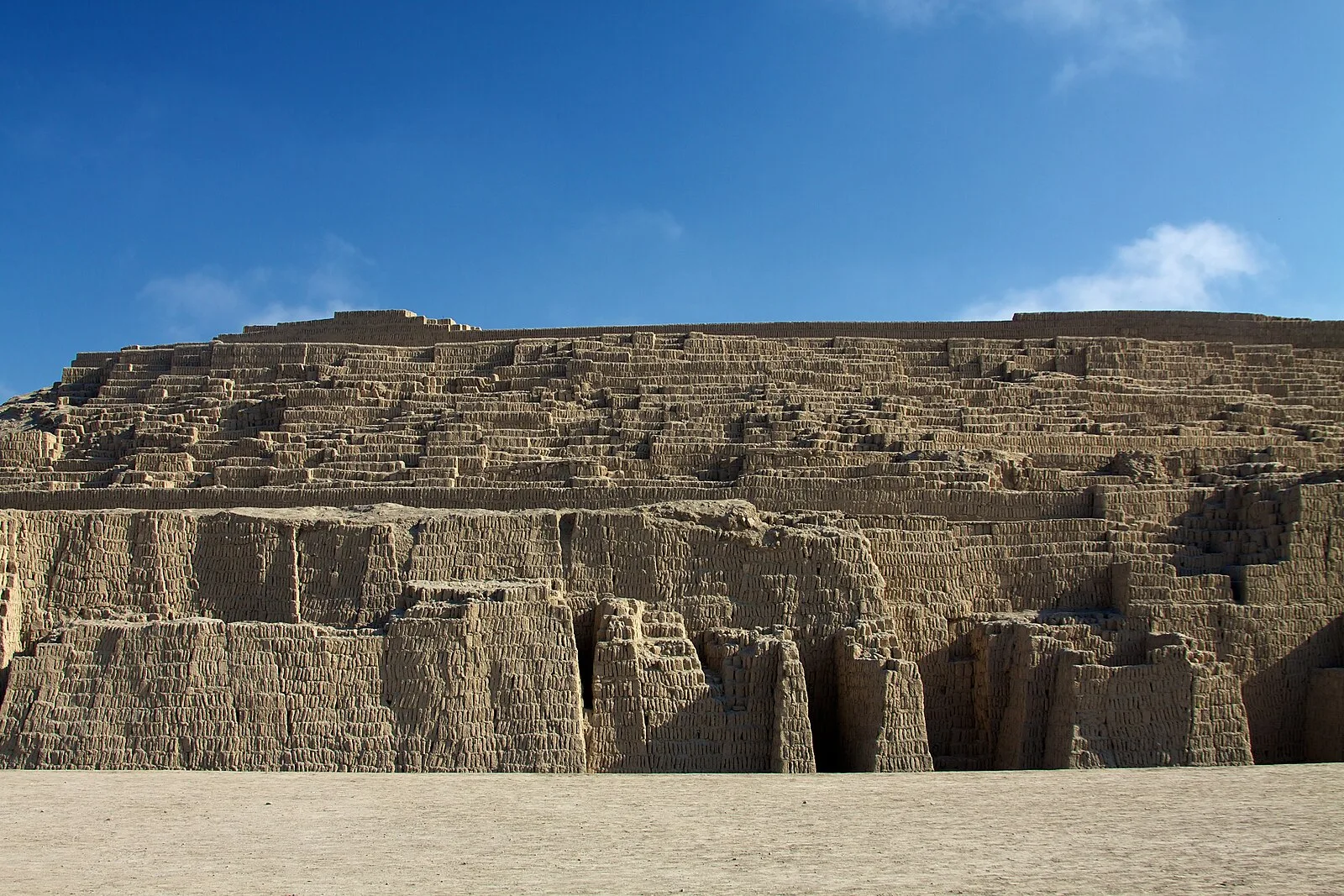
Also known as: Huaca Juliana, Wak'a Pukllana, Вака Пуклана, უაკა-პუკლიანა, הואקה פוקלנה
| Type | Pyramid complex |
|---|---|
| Period | 1 - 500 AD |
| Country | Peru |
| Coordinates | 12.1109° S, 77.0339° W |