
 Peru
PeruHuaca Huallamarca (possibly from Quechua wak'a, Spanishified as "huaca" and meaning "sacred" or "local god of protection"; Walla, the name of the Huallas tribe; and marka, "village", "town" or "region"), also formerly known as Huaca Pan de Azúcar, is an archaeological site located in the district of San Isidro, in the city of Lima [1]. It has the form of a truncated stepped pyramid [1]. The first archaeological excavations were carried out in 1942 and were directed by Julio C. Tello, who stated that Huaca Huallamarca's boundaries were marked by the Huatica and Surco canals [1]. Tello also identified three main moments of occupation: from the beginning of the Lima culture period (2nd century BCE to 7th century AD), through the Yshma (11th century AD), to the Inca period (15th–16th centuries AD) [1]. The construction of the Huallamarca pyramid began with the Huallas from 200 BC to AD 200 [1]. Archaeologist Julio C. Tello described Huallamarca as a structure built exclusively with small handmade adobes in the shape of molars or irregular cones [1].
Text: Wikipedia – 'Huaca Huallamarca' (revision of 2026-07-21), CC BY-SA 4.0 · sentences selected and shortened by an AI system · source →Huaca Huallamarca
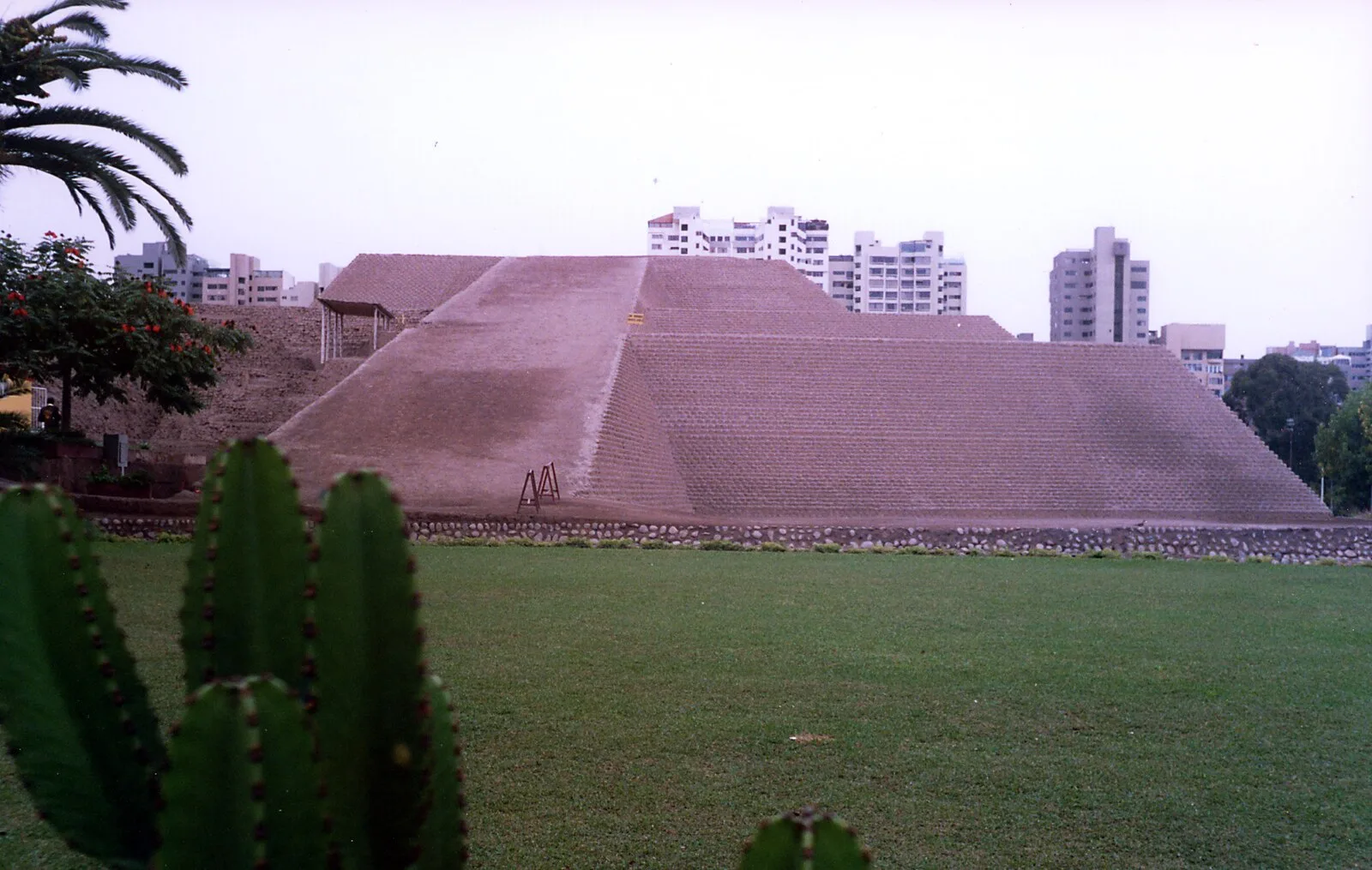
Also known as: Huallamarca, Wallamarka, Wallamarka Wak'a
| Type | Temple complex |
|---|---|
| Period | 500 BC - 1 AD |
| Country | Peru |
| Coordinates | 12.0990° S, 77.0347° W |