
 Mexico
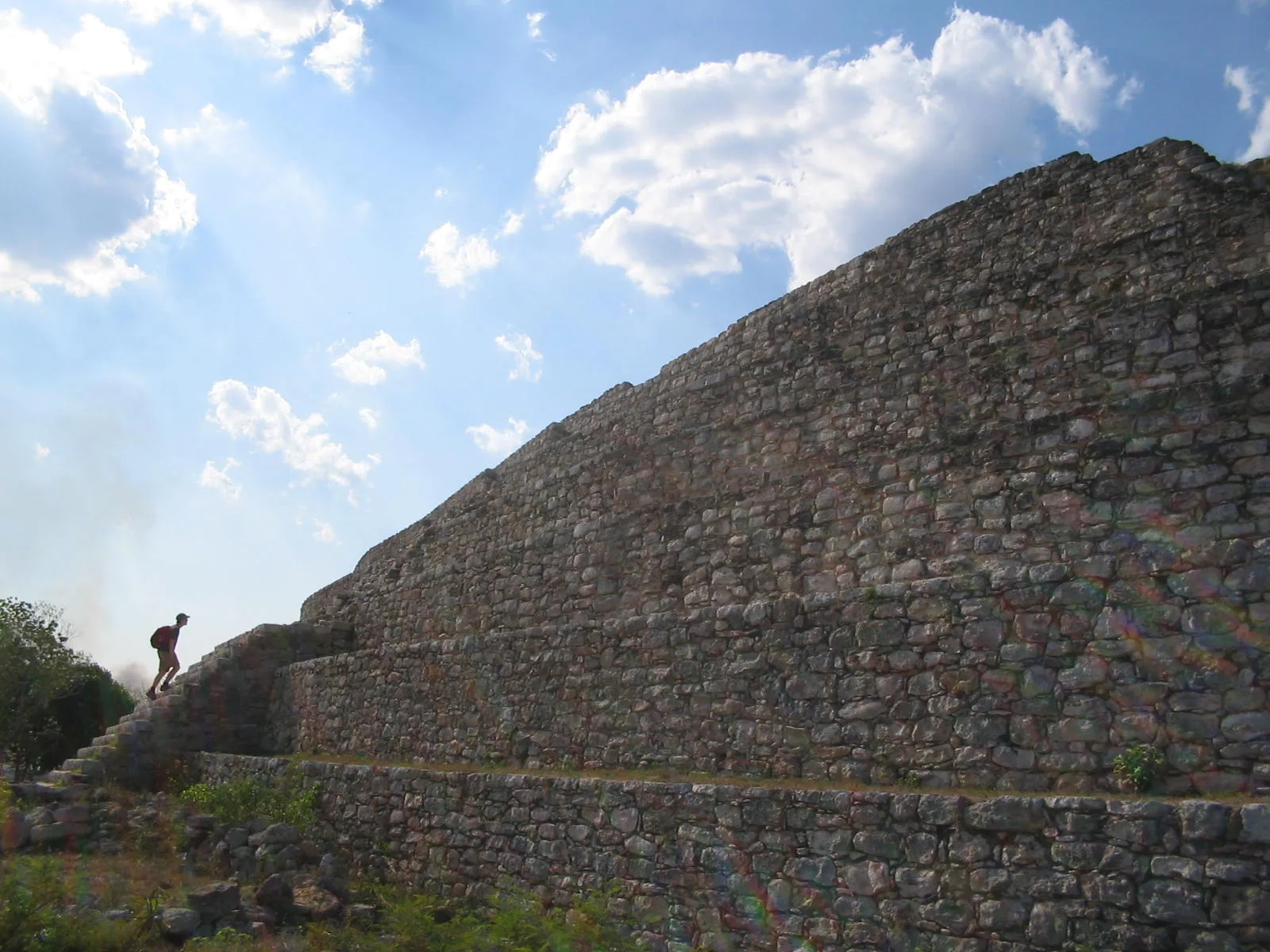
Izamal is an important archaeological site of the Pre-Columbian Maya civilization [1]. It is probably the biggest city of the Northern Yucatec Plains, covering a minimal urban extension of 53 square kilometres [1]. Izamal developed a particular constructive technique involving use of megalithic carved blocks, with defined architectonical characteristics like rounded corners, projected mouldings and thatched roofs at superstructures, which also appeared in other important urban centers within its hinterland, such as Ake, Uci and Dzilam [1]. The city was founded during the Late Formative Period (750–200 BC) and was continuously occupied until the Spanish Conquest [1]. The most important constructive activity stage spans between Protoclassic (200 BC – 200 AD) and Late Classic (600–800 AD) [1]. It was partially abandoned with the rise of Chichen Itza in the Terminal Classic (800–1000 A.D.) until the end of the Precolumbian era, when Izamal was considered a site of pilgrimages in the region, rivaled only by Chichen Itza [1].
Text: Wikipedia – 'Izamal' (revision of 2026-09-18), CC BY-SA 4.0 · sentences selected and shortened by an AI system · source →Izamal
Also known as: 이사말, Izamala, Izamal (lungsod), Izamal (plaats), Izamal, Yucatán, Ίζαμαλ, Изамал, Изамал (Изамал, Јукатан), Изамал (Изамал, Юкатан), Исамаль, Ісамаль, إسامال
| Type | City/town/settlement |
|---|---|
| Period | 1500 - 500 BC |
| Country | Mexico |
| Coordinates | 20.9376° N, 89.0165° W |