
 Italy
ItalyMegara Hyblaea – perhaps identical with Hybla Major – is an ancient Greek colony of Magna Graecia in Sicily, situated near Augusta on the east coast, 20 kilometres north-northwest of Syracuse, Italy, on the deep bay formed by the Xiphonian promontory [1]. Excavations carried on in 1891 led to the discovery of the northern portion of the western town wall, which in one section served at the same time as an embankment against floods—it was apparently more conspicuous in the time of Philipp Cluver [1]. The harbour lay to the north of the town [1]. In the mid-seventh century, the city was organised according to a regularised plan [1]. An agora emerged with stoas on its north and eastern sides [1]. This is one of the earliest known agoras [1].
Text: Wikipedia – 'Megara Hyblaea' (revision of 2026-07-18), CC BY-SA 4.0 · sentences selected and shortened by an AI system · source →Megara Hyblaea
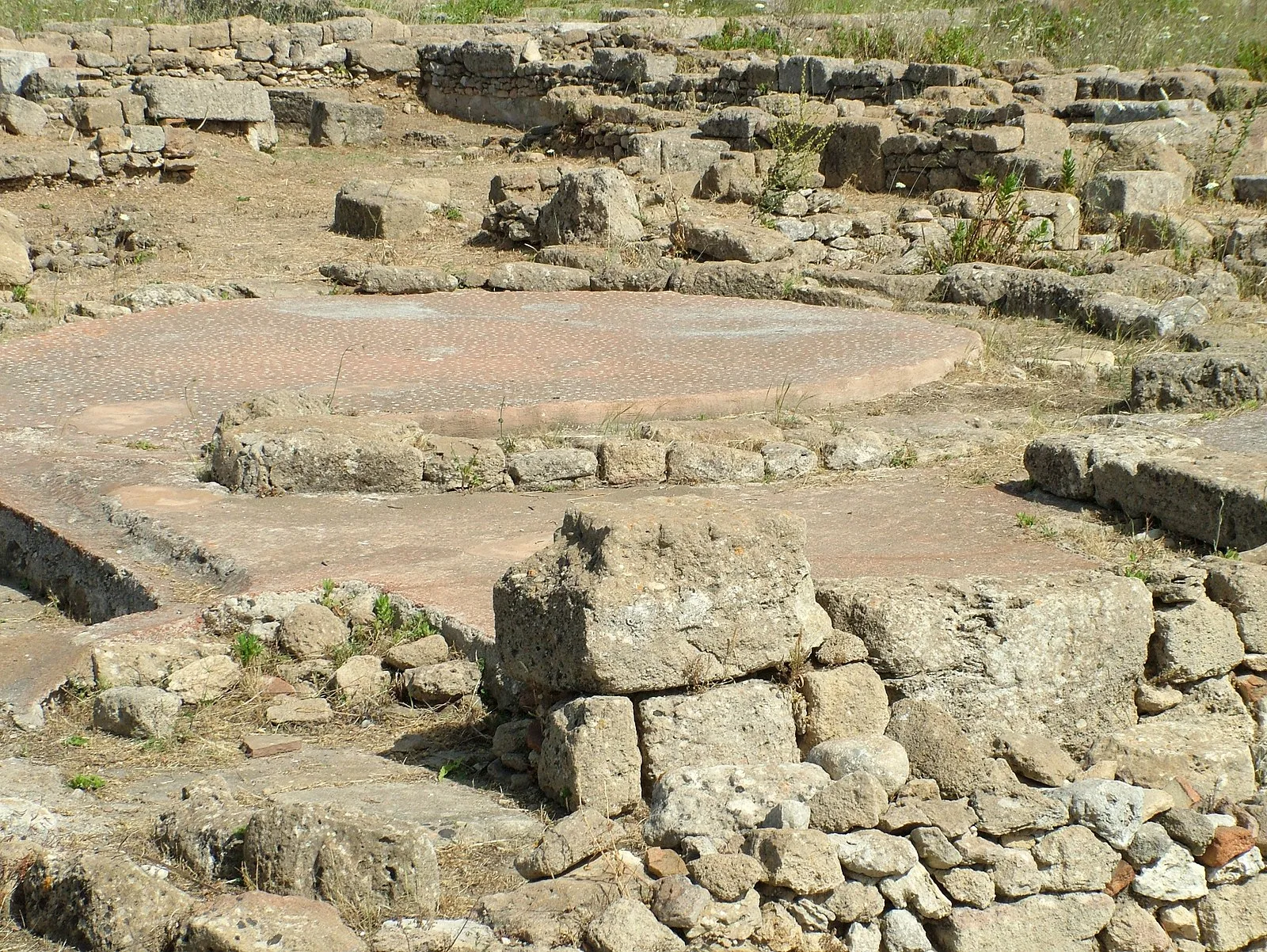
Also known as: Megara, Megara Hiblea, Megara Hibleja, Megara Hyblaea mint, Megara Hyblaia, Megara Hyblaja, Megara Iblea, Megāras Hiblaja, Mint of Megara Hyblaea, Μέγαρα Υβλαία, Мегара Хіблея, Մեղարա Իվլէա
| Type | City/town/settlement |
|---|---|
| Period | 1500 - 500 BC |
| Country | Italy |
| Coordinates | 37.2041° N, 15.1819° E |