
 Italy
ItalyGnatia, Egnatia or Ignatia was an ancient city of the Messapii, and their frontier town towards the Salentini [1]. The first settlement known in the place dates from the Bronze Age (15th century BC) [1]. In the 11th century BC it was invaded by the Iapyges, while the Messapic era of the town began in the 8th century BC, to end in the 3rd century BC, with the Roman conquest [1]. Under the Romans, it was of importance for its trade, lying as it did on the sea, at the point where the Via Traiana joined the coast road, 50 kilometers southeast of Barium (Bari) [1]. It was famed for its solar and fire cult, which was described by Pliny and ridiculed by Horace [1]. The ancient city walls were almost entirely destroyed over a century ago to provide building material [1]. The walls have been described as being 8 yards (7.3 m) thick and 16 courses high [1]. The place is famous for the discoveries made in its tombs [1].
Text: Wikipedia – 'Gnatia' (revision of 2026-07-24), CC BY-SA 4.0 · sentences selected and shortened by an AI system · source →Gnatia
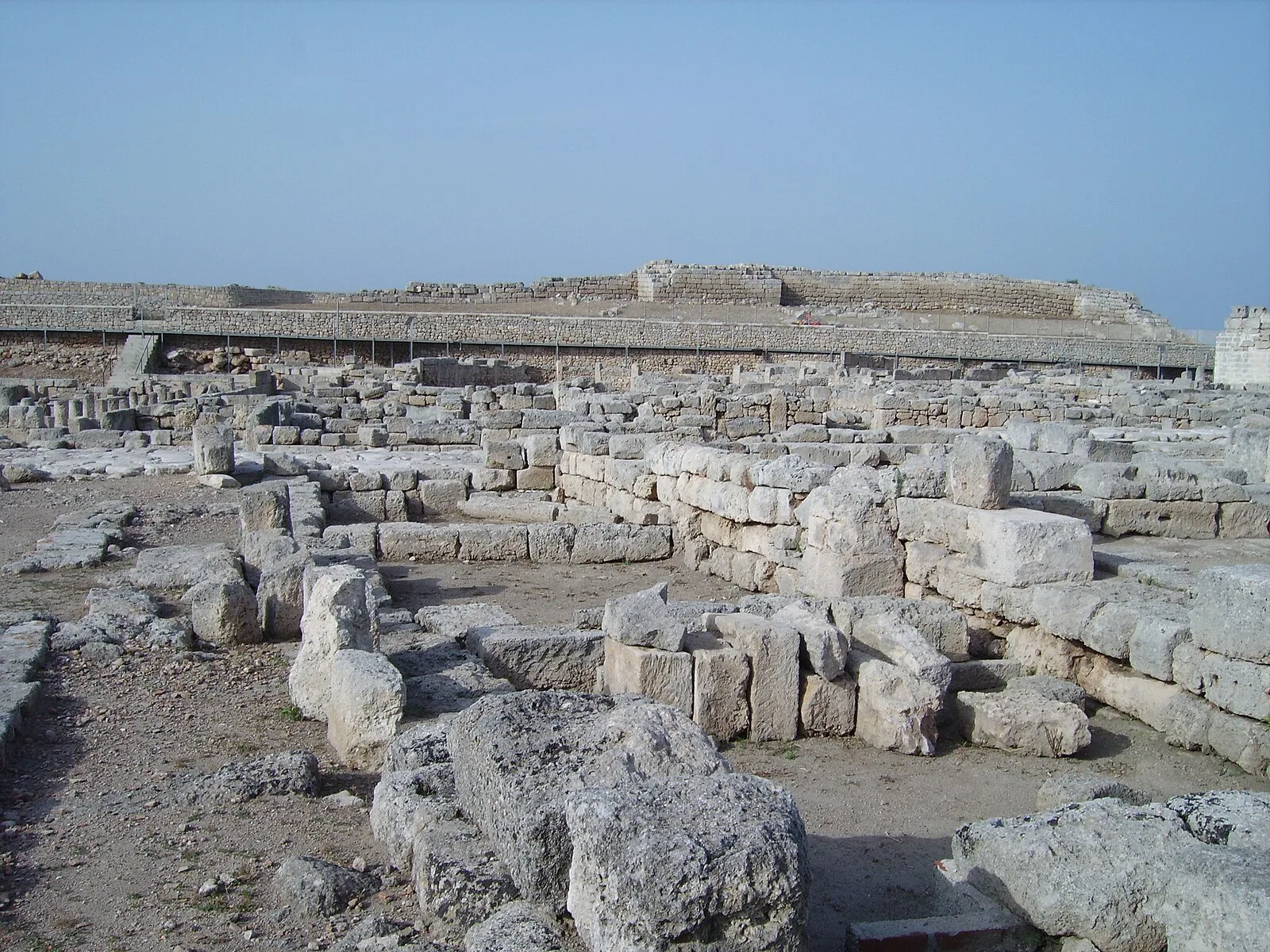
Also known as: Egnàcia, Egnathia, Egnatia, Egnatia (kaupunki), Egnazia, Egnazia, ciudad en el tiempo, Gnathia, Gnathia (Stadt), Gnazia, Ignathia, Ignatia, Эгнация
| Type | City/town/settlement |
|---|---|
| Period | 1500 - 500 BC |
| Country | Italy |
| Coordinates | 40.8879° N, 17.3910° E |