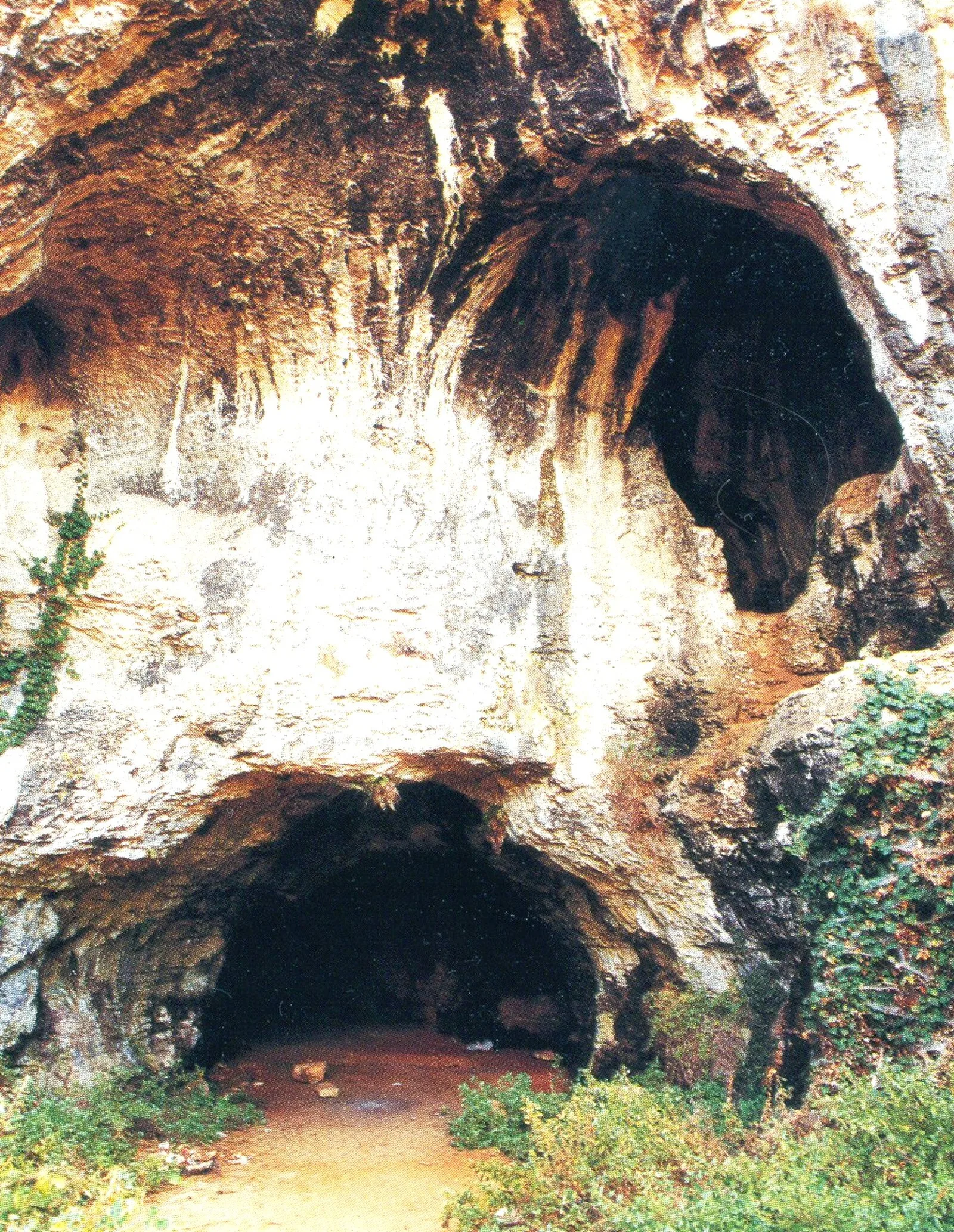
Grotta di Santa Croce is a 130m-long horizontal karst cave near Bisceglie in Apulia, Italy, sitting at 120m above sea level along the course of a former underground river. First highlighted for its archaeological significance in 1937, test excavations by L. Cardini in 1938 confirmed Mousterian and Neolithic remains. A major 1955 discovery yielded a Neanderthal femur dating to approximately 80,000 years ago. Excavations have recovered over 2,200 flint tools from Mousterian and Gravettian periods, a braided mat of natural fibres dated to 6,500 years ago (the oldest in Italy), and Neolithic paintings discovered in 1955. Artifacts are displayed at the Museo Civico Archeologico in Bisceglie.
Grotta di Santa Croce

| Type | Cave Structures |
|---|---|
| Period | 1 - 500 AD |
| Country | Italy |
| Coordinates | 41.2432° N, 16.5052° E |
Italy