
 Italy
ItalyCastro, in the province of Lecce, Apulia, is the ancient Castrum Minervae mentioned by Virgil in the Aeneid as the first Italian landfall of Aeneas after fleeing Troy [1] [2] [3]. The settlement dates to the Iron Age (8th century BC) and was occupied by Messapians and Greeks [4] [5]. University of Salento excavations directed by Francesco D'Andria from 2000 onward uncovered a sanctuary dedicated to Athena Iliaca, including a 12-cm bronze statue of the goddess wearing a Phrygian helmet (4th century BC), decorative stone slabs with winged Victories, and votive weapons [4] [6] [7]. Hellenistic-era Messapian walls from the 4th century BC were also discovered [4] [8]. The sanctuary functioned until the 3rd century BC, when it was violently destroyed, possibly during Hannibal's campaigns in 214 BC [4] [9]. Finds are displayed at the Antonio Lazzari Archaeological Museum in Castro Castle [2] [10].
Castro, Apulia
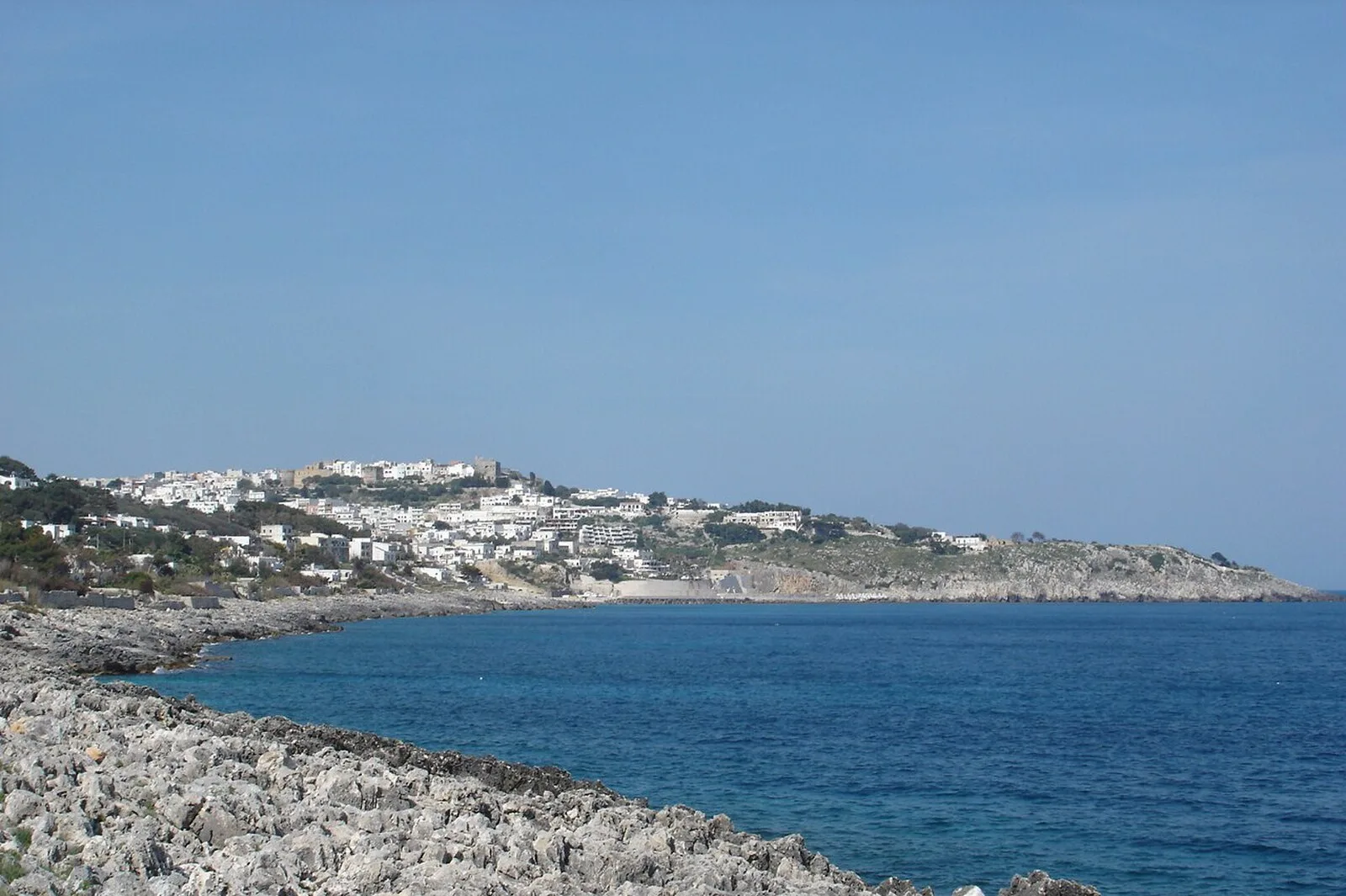
Also known as: Casciu, Castro, Castro (Apulien), Castro, Apulien, Castro (by), Castro (Italia), Castro (LE), Castro (Lecce), Castro, Lecce, Castro (munisipyo sa Italya, Puglia, Provincia di Lecce, lat 40,01, long 18,43), Castro (Olaszország), Castro (Puglia)
| Type | City/town/settlement |
|---|---|
| Period | 1500 - 500 BC |
| Country | Italy |
| Coordinates | 40.0070° N, 18.4257° E |