
 Israel
Shivta, originally Sobata or Subeita, is an ancient city in the Negev Desert of Israel located 43 kilometers southwest of Beersheba [1]. A few Roman-period ruins have been discovered, but most of the archaeological findings date to the Byzantine period [1]. Shivta's water supply was based on surface runoff collected in large reservoirs [1]. Roman ruins from the first century BCE have been unearthed in the southern part of the town [1]. Three Byzantine churches (a main church and two smaller ones), two wine-presses, residential areas and administrative buildings have been excavated [1]. Traces of a mural of Christ's transfiguration were discovered in the apse of the southern church, as well as remains of a colourful 6th-century mosaic and a beardless depiction of Jesus in the northern church [1]. According to the calculations of archaeologists, the Nabatean/Byzantine village of Shivta produced about two million liters of wine [1]. Shivta was finally abandoned in the 8th or 9th century CE [1].
Text: Wikipedia – 'Shivta' (revision of 2026-07-18), CC BY-SA 4.0 · sentences selected and shortened by an AI system · source →Shivta National Park
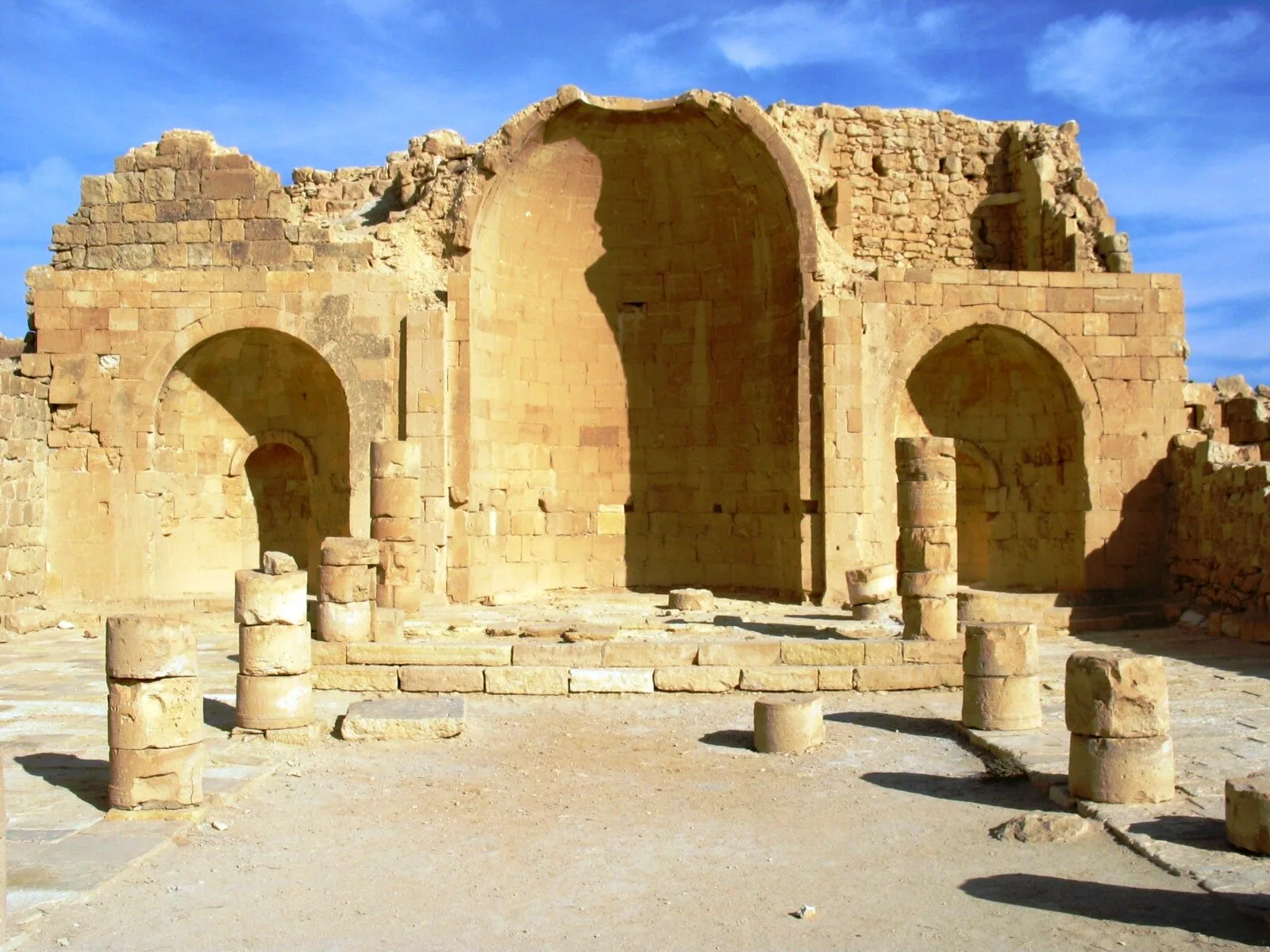
Also known as: H̱orvot Shivta, Isbayta, Schivta-Nationalpark, Shivta, Siveta, Šivta, Sobata, Sobota, Sobota (miasto), Subayta, Subeita, Sziwta
| Type | City/town/settlement |
|---|---|
| Period | 500 BC - 1 AD |
| Country | Israel |
| Coordinates | 30.8813° N, 34.6311° E |