
 Israel
The Damascus Gate is one of the main entrances to Jerusalem's Old City along the northern wall [1] [2]. The current Ottoman structure was built under Sultan Suleiman the Magnificent [1] [3]. Beneath it lies a Roman-era triumphal gate with three arched openings, dating to c. 135 AD when Emperor Hadrian rebuilt Jerusalem as Aelia Capitolina [1] [4]. A victory column topped with Hadrian's statue once stood in the plaza behind the gate, depicted on the 6th-century Madaba Map and preserved in the Arabic name Bab al-Amud ("Gate of the Column") [1]. Excavations by Hennessy and Bennett (1964-66) and Magen (1979-84) exposed the Roman gate facade, flanking towers, and paved plaza [1].
Damascus Gate
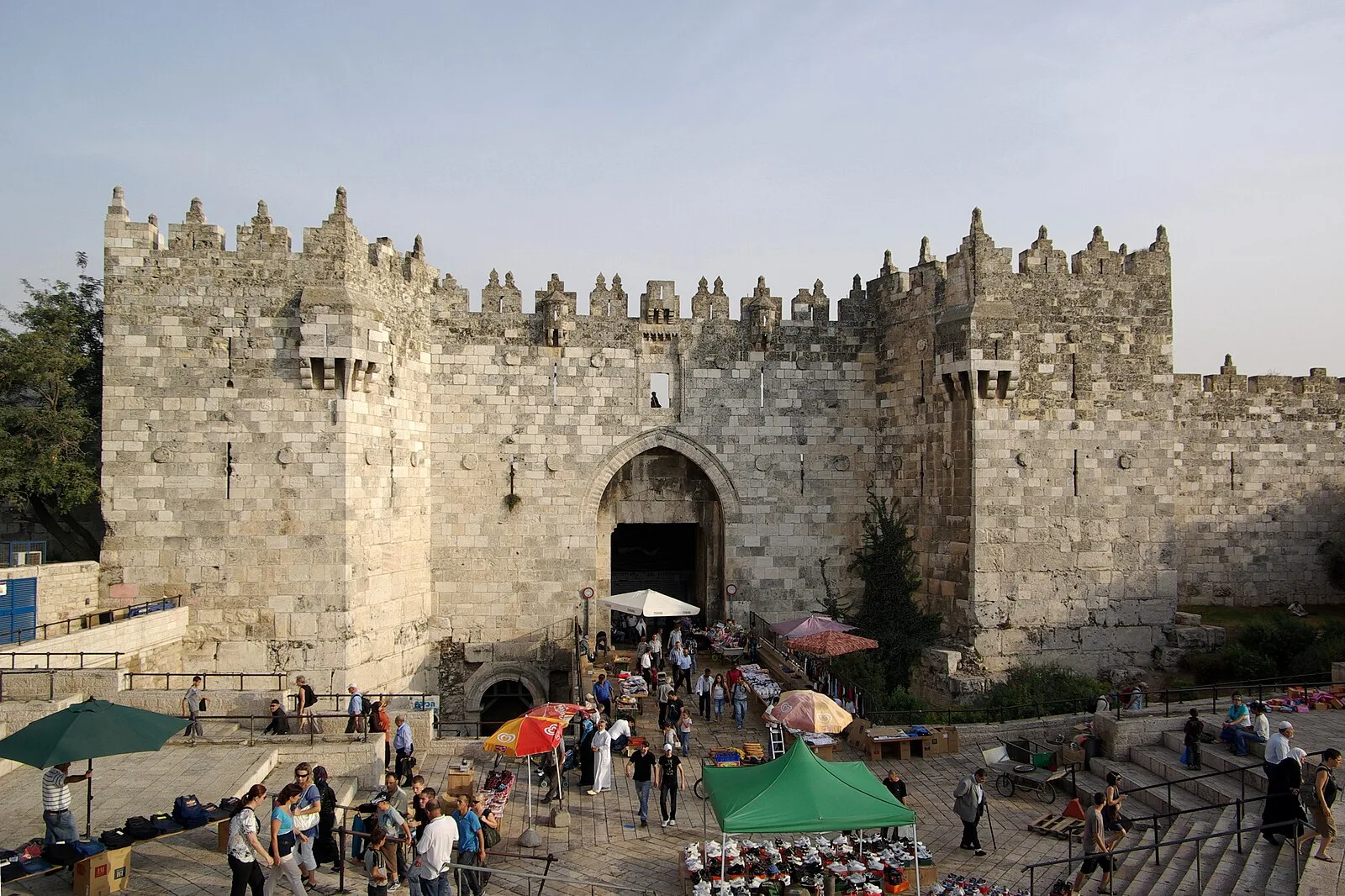
Also known as: Bab al-Amud, Brama Damasceńska, Damaščanska vrata, Damaska pordego, Damaskoko Atea, Damaskoksen portti, Damaskusporten, Damaskustor, Damašská brána, Dəməşq qapısı, Gerbang Damaskus, Poarta Damascului
| Type | Gate/archway/bridge |
|---|---|
| Period | 1 - 500 AD |
| Country | Israel |
| Coordinates | 31.7816° N, 35.2294° E |