
 Israel
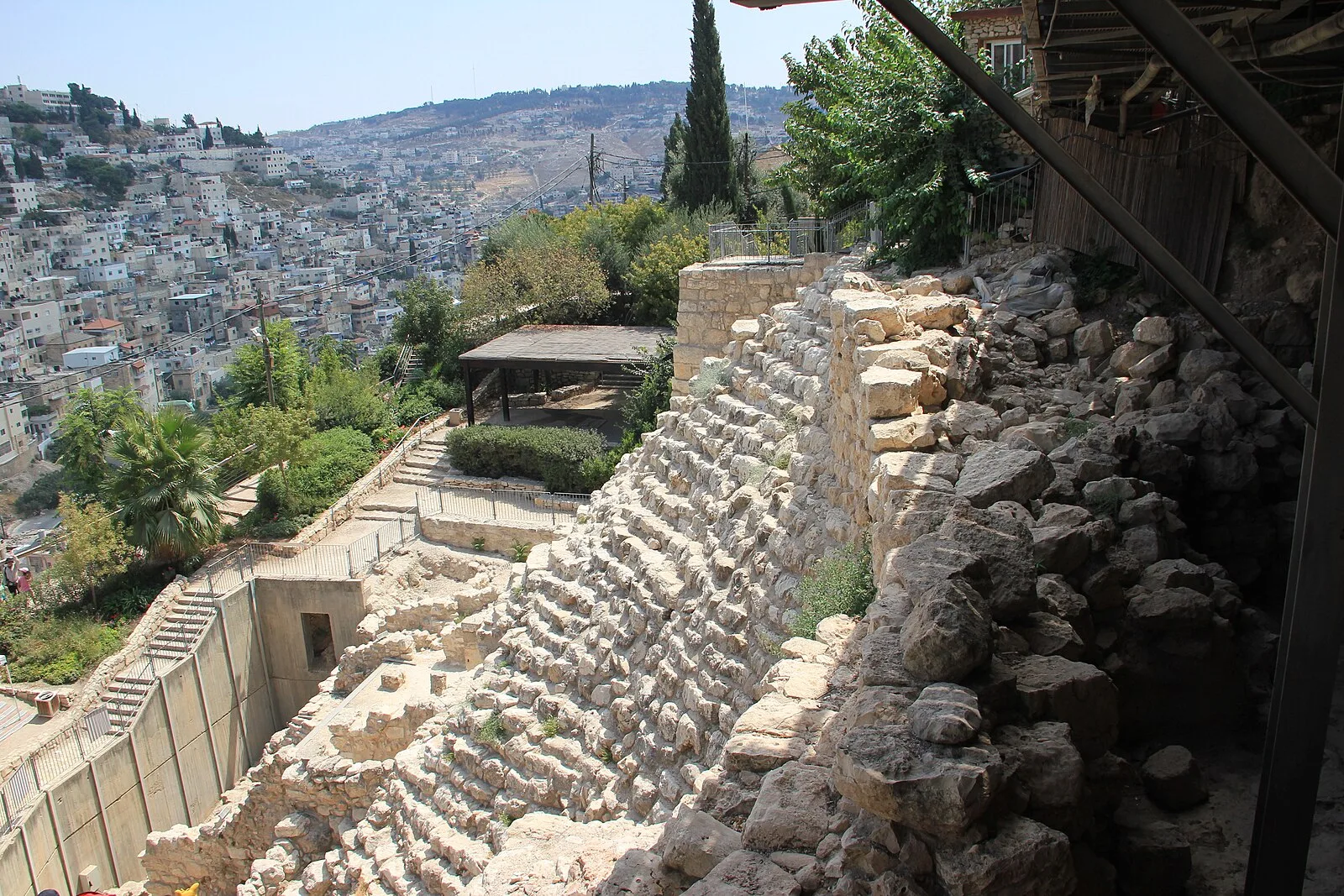
The City of David, known locally mostly in Arabic as Wadi Hilweh, is the name given to an archaeological site considered by most scholars to be the original settlement core of Jerusalem during the Bronze and Iron Ages [1]. Remains of a defensive network dating to the Middle Bronze Age were found around the Gihon Spring; it remained in use throughout subsequent periods [1]. Remains from the early Roman period include the Pool of Siloam and the Stepped Street, which stretched from the pool to the Temple Mount [1]. The first professional archaeologist to identify the site as the City of David was Raymond Weill in 1913 [1]. The beginning of its settlement dates back to the Chalcolithic period and the Early Bronze Age, largely built-up around the natural spring, although not known then by the name City of David [1]. Archaeological exploration of the area began in the nineteenth century, with excavations undertaken by Charles Warren in 1867 [1].
Text: Wikipedia – 'City of David (archaeological site)' (revision of 2026-08-16), CC BY-SA 4.0 · sentences selected and shortened by an AI system · source →City of David
Also known as: 다윗성, Aai o Tavita, Baile Dhaibhidh, Bajarê Dawidî, Cathair Dháiví, Cetatea lui David, Cidade de Davi, Cidade de David, Cite de David, Città di David, Città di Davide, City Daud
| Type | City/town/settlement |
|---|---|
| Period | 4500 - 3000 BC |
| Country | Israel |
| Coordinates | 31.7735° N, 35.2356° E |