
 Iraq
IraqUr was a major Sumerian city-state in ancient Mesopotamia, located at the site of modern Tell el-Muqayyar in Dhi Qar Governorate, Iraq [1]. The city dates from the Ubaid period c. 3800 BC, and is recorded in written history as a city-state from the 26th century BC, its first recorded king being Mesannepada [1]. The site is marked by the partially restored ruins of the Ziggurat of Ur, which contained the shrine of Nanna [1]. The temple was built in the 21st century BC, during the reign of Ur-Nammu and was reconstructed in the 6th century BC by Nabonidus, the last king of Babylon [1]. Excavation in the old city of Ur in 1928 revealed the Lyres of Ur, instruments similar to the modern harp but in the shape of a bull and with eleven strings [1]. However, the city started to decline from around 530 BC after Babylonia fell to the Persian Achaemenid Empire, and was no longer inhabited by the early 5th century BC [1].
Text: Wikipedia – 'Ur' (revision of 2026-09-21), CC BY-SA 4.0 · sentences selected and shortened by an AI system · source →Ur
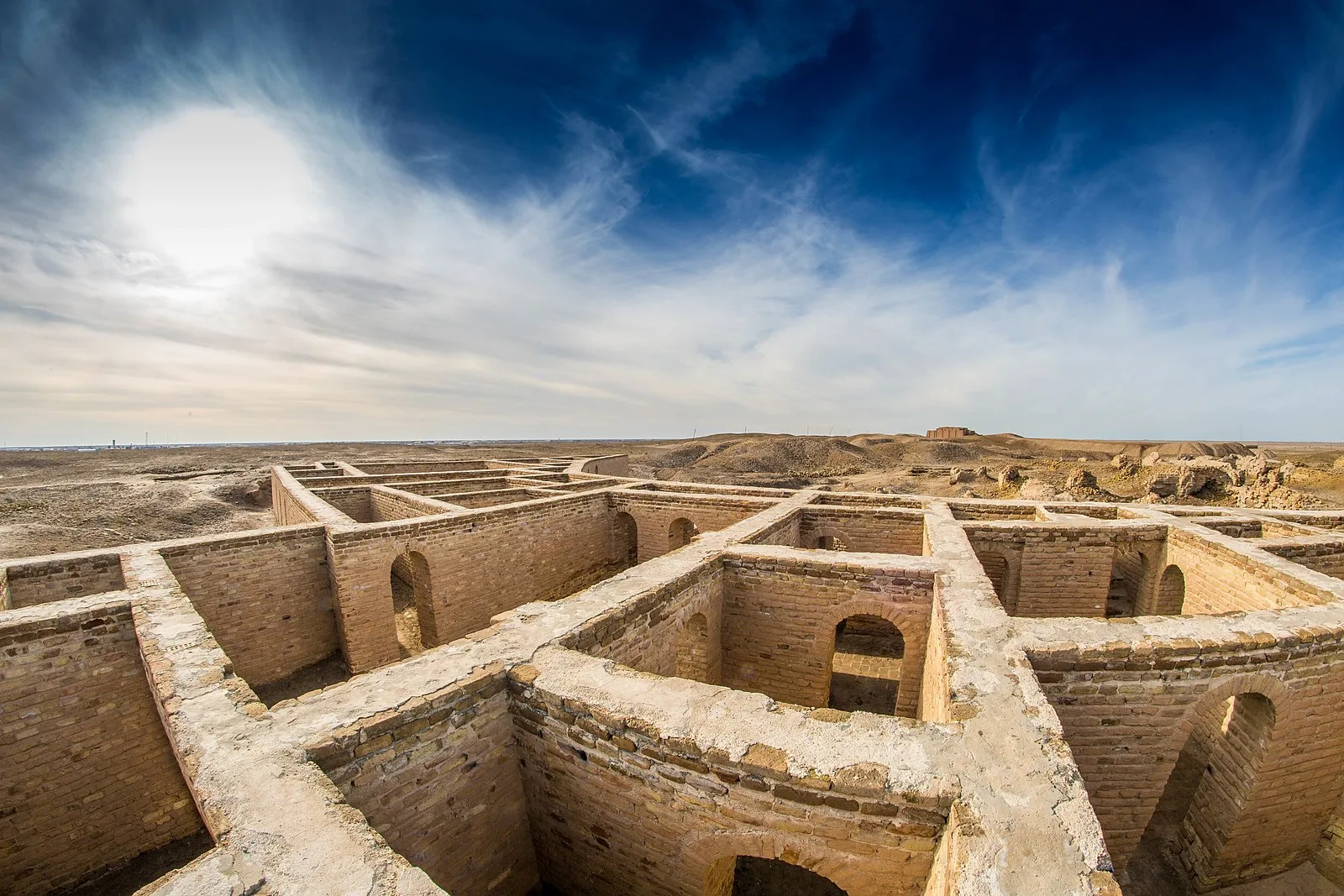
Also known as: Mugajjar, Mukadžar, Mukaijar, Oer (Soemer), Oer (Sûmearje), Ora (tanàna mesôpôtamiana), Tall al-Mukajjar, Tell al-Mukaijar, Tell al-Muqayyar, Ūra, Ur (antik kent), Ur (arkiyolohiyang dapit)
| Type | City/town/settlement |
|---|---|
| Period | 4500 - 3000 BC |
| Country | Iraq |
| Coordinates | 30.9612° N, 46.1051° E |