
 Iraq
IraqThe Royal Library of Ashurbanipal, named after Ashurbanipal, the last great king of the Assyrian Empire, is a collection of more than 30,000 clay tablets and fragments containing texts of all kinds and in various languages from the 7th century BCE [1]. Among its holdings was the famous Epic of Gilgamesh [1]. Ashurbanipal's Library gives modern historians information regarding people of the ancient Near East [1]. The materials were found in the archaeological site of Kouyunjik (ancient Nineveh, capital of Assyria) in northern Mesopotamia [1]. The site is in modern-day northern Iraq, within the city of Mosul [1]. The library is an archaeological discovery credited to Austen Henry Layard; most tablets were taken to England and can now be found in the British Museum, but the first discovery was made in late 1849 in the so-called South-West Palace, which was the Royal Palace of king Sennacherib (705–681 BCE) [1].
Text: Wikipedia – 'Library of Ashurbanipal' (revision of 2026-08-07), CC BY-SA 4.0 · sentences selected and shortened by an AI system · source →Library of Ashurbanipal
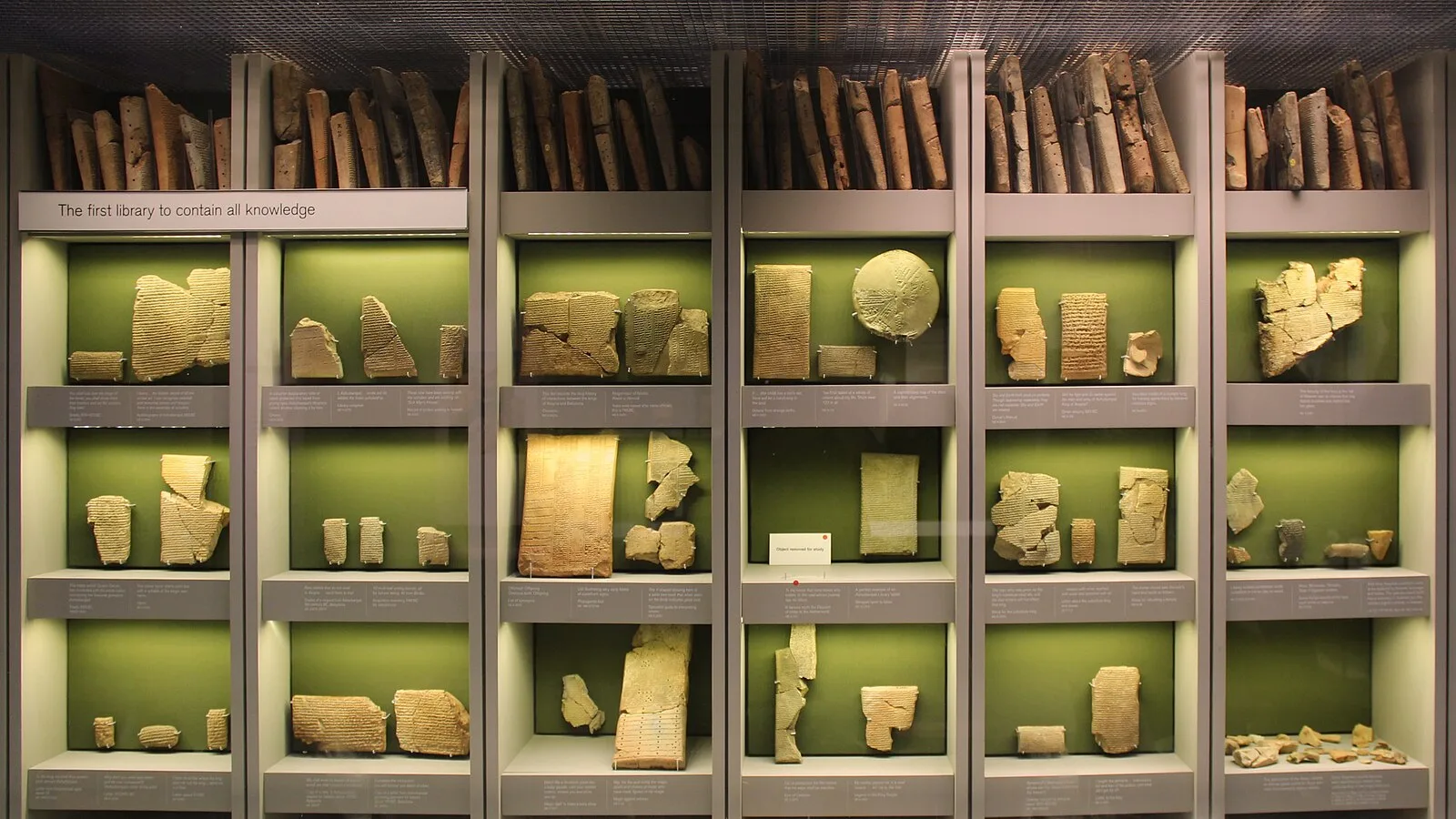
Also known as: 아슈르바니팔 도서관, Aklatan ni Ashurbanipal, Ashur-bani-pals bibliotek, Ashurbanipals bibliotek, Assur-bán-apli könyvtára, Assurbanipalbiblioteket, Assurbanipalin kirjasto, Aşşurbanipalın kitabxanası, Aššurbanipalova knihovna, Aššurbanipalova knižnica, Asurbanipalen Liburutegia, Asurbanipal Kütüphanesi
| Type | Palace |
|---|---|
| Period | 1500 - 500 BC |
| Country | Iraq |
| Coordinates | 36.3596° N, 43.1527° E |