
 Iraq
IraqThe Ziggurat (or Great Ziggurat) of Ur is a Neo-Sumerian ziggurat in what was the city of Ur near Nasiriyah, in present-day Dhi Qar Province, Iraq [1]. The structure was built during the Early Bronze Age (21st century BC) by King Ur-Nammu of the Third Dynasty of Ur [1]. It had crumbled to ruins by the 6th century BC of the Neo-Babylonian period, when it was restored by King Nabonidus [1]. Its remains were excavated in the 1920s and 1930s by international teams led by Sir Leonard Woolley [1]. The ziggurat was a piece in a temple complex that served as an administrative center for the city, and which was a shrine of the moon god Nanna, the patron deity of Ur [1]. The remains of the ziggurat consist of a three-layered solid mass of mud brick faced with burnt bricks set in bitumen [1]. The lowest layer corresponds to the original construction of Ur-Nammu, while the two upper layers are part of the Neo-Babylonian restorations [1].
Text: Wikipedia – 'Ziggurat of Ur' (revision of 2026-07-15), CC BY-SA 4.0 · sentences selected and shortened by an AI system · source →Great Ziggurat of Ur
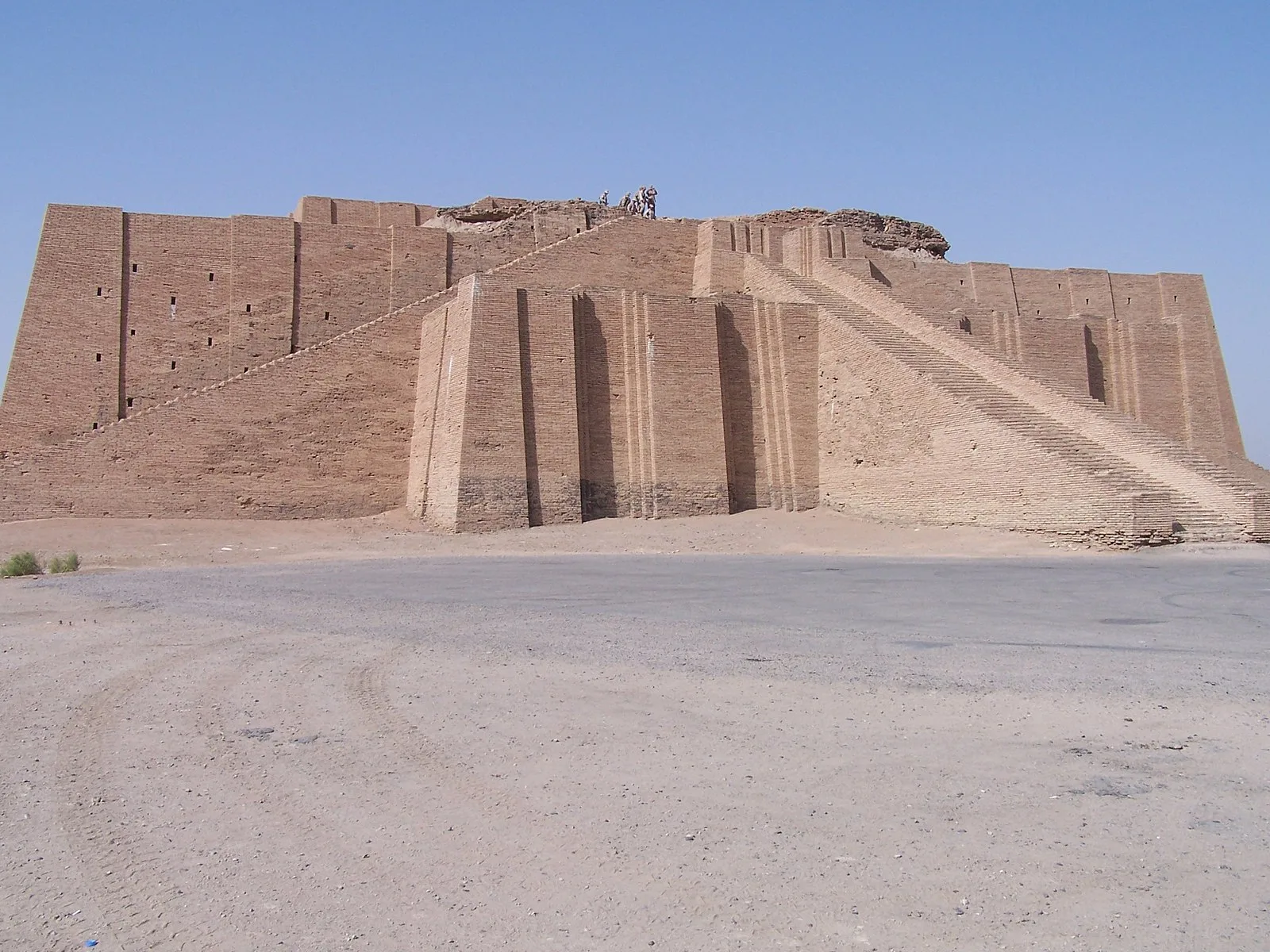
Also known as: 우르의 지구라트, Büyük Ur Zigguratı, Etemennigur, Siogúrat Ur, tempelj v Uru, Tempel van Ur, Temple of Ur, Templul din Ur, Ūras zikurāts, Urin zikkurat, Urko zigurata, Urreko zigurata
| Type | Temple complex |
|---|---|
| Period | 3000 - 1500 BC |
| Country | Iraq |
| Coordinates | 30.9628° N, 46.1031° E |